Written by Palmetto Bluff
Sep 09, 2026
Photographs & Story by Hailey Wist
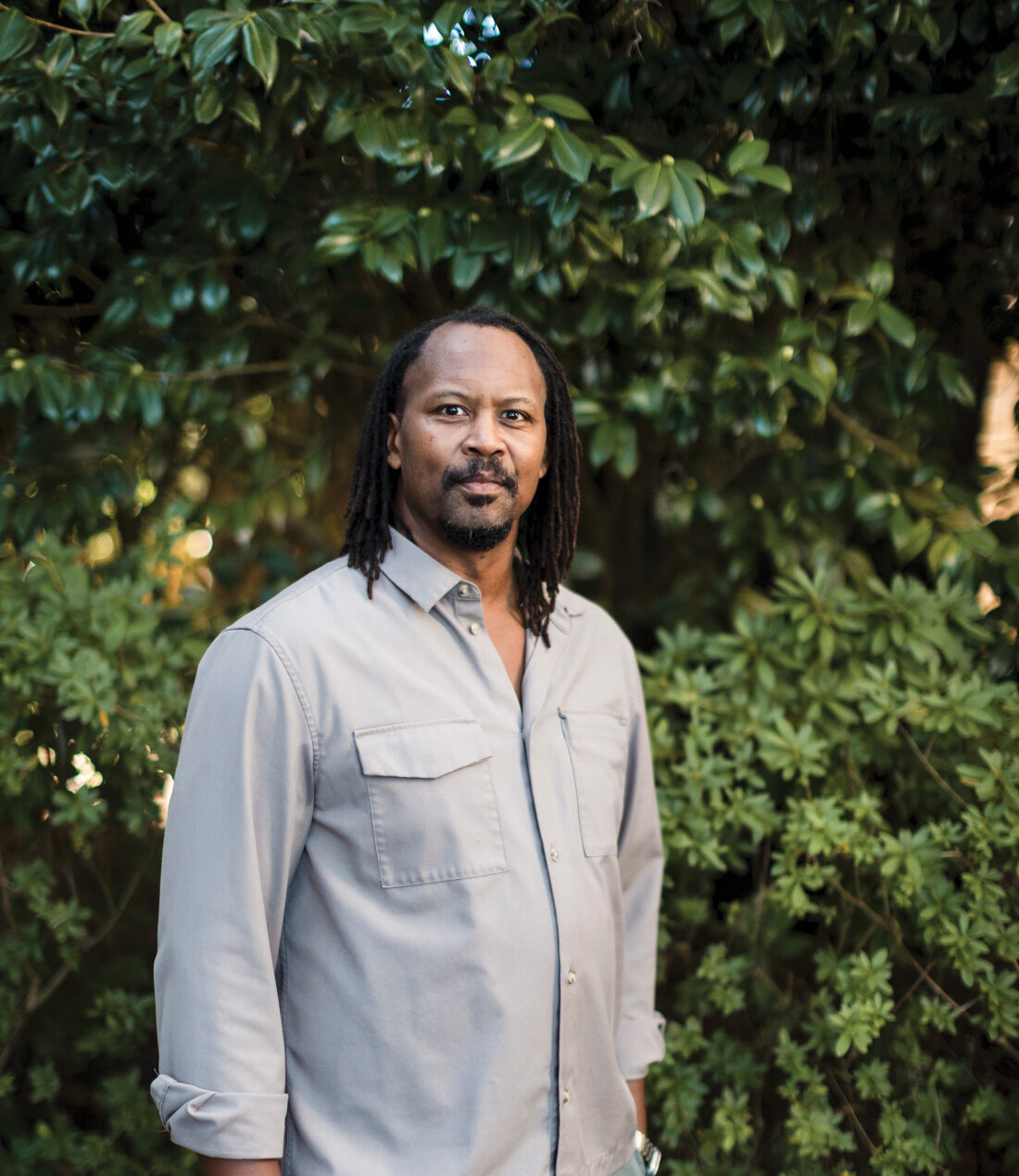
As the November Artist in Residence with The Arts Initiative at Palmetto Bluff, Arun Drummond showcased a practice that balances form and cultural memory, emphasizing how portraiture can both honor and illuminate.
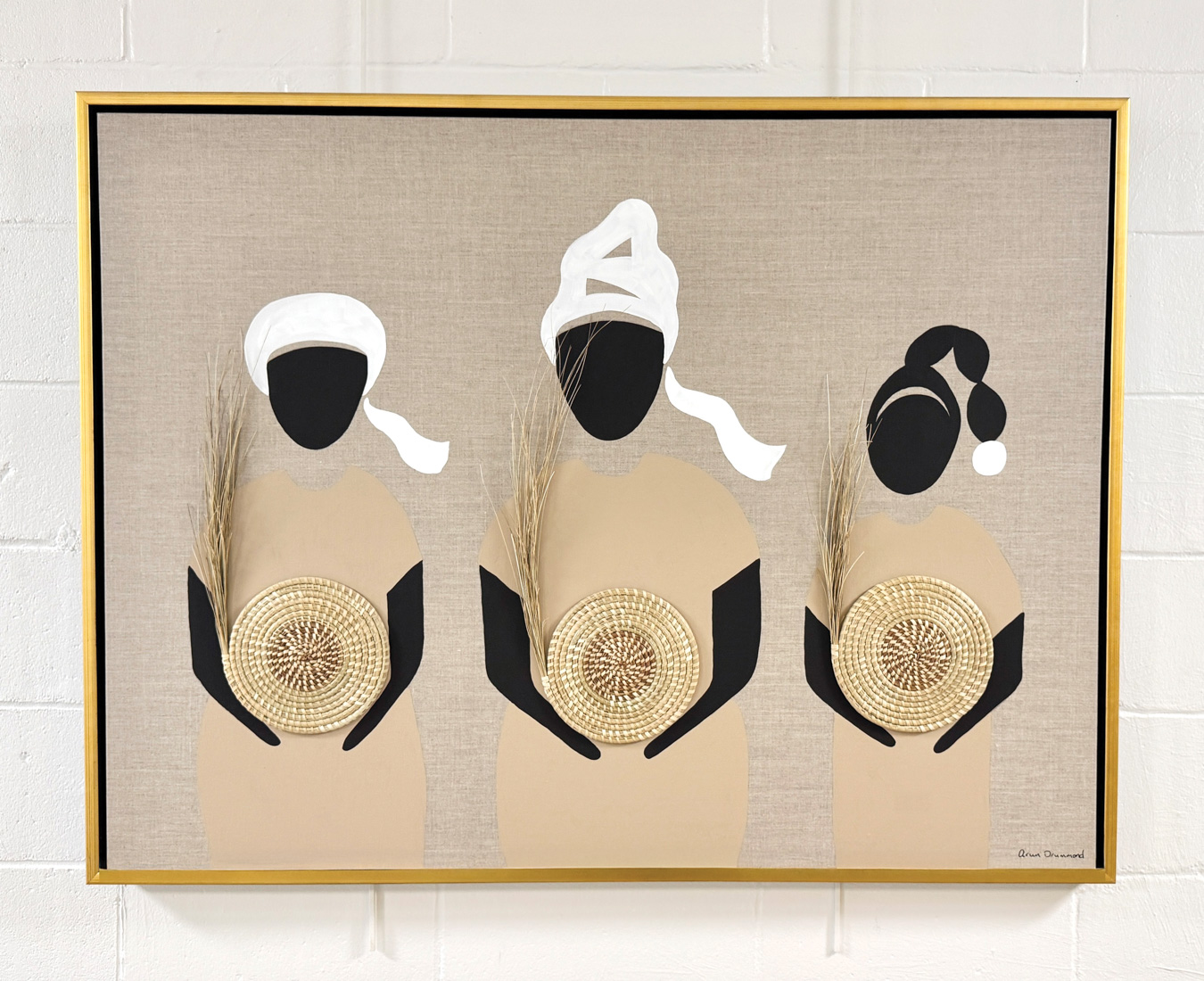
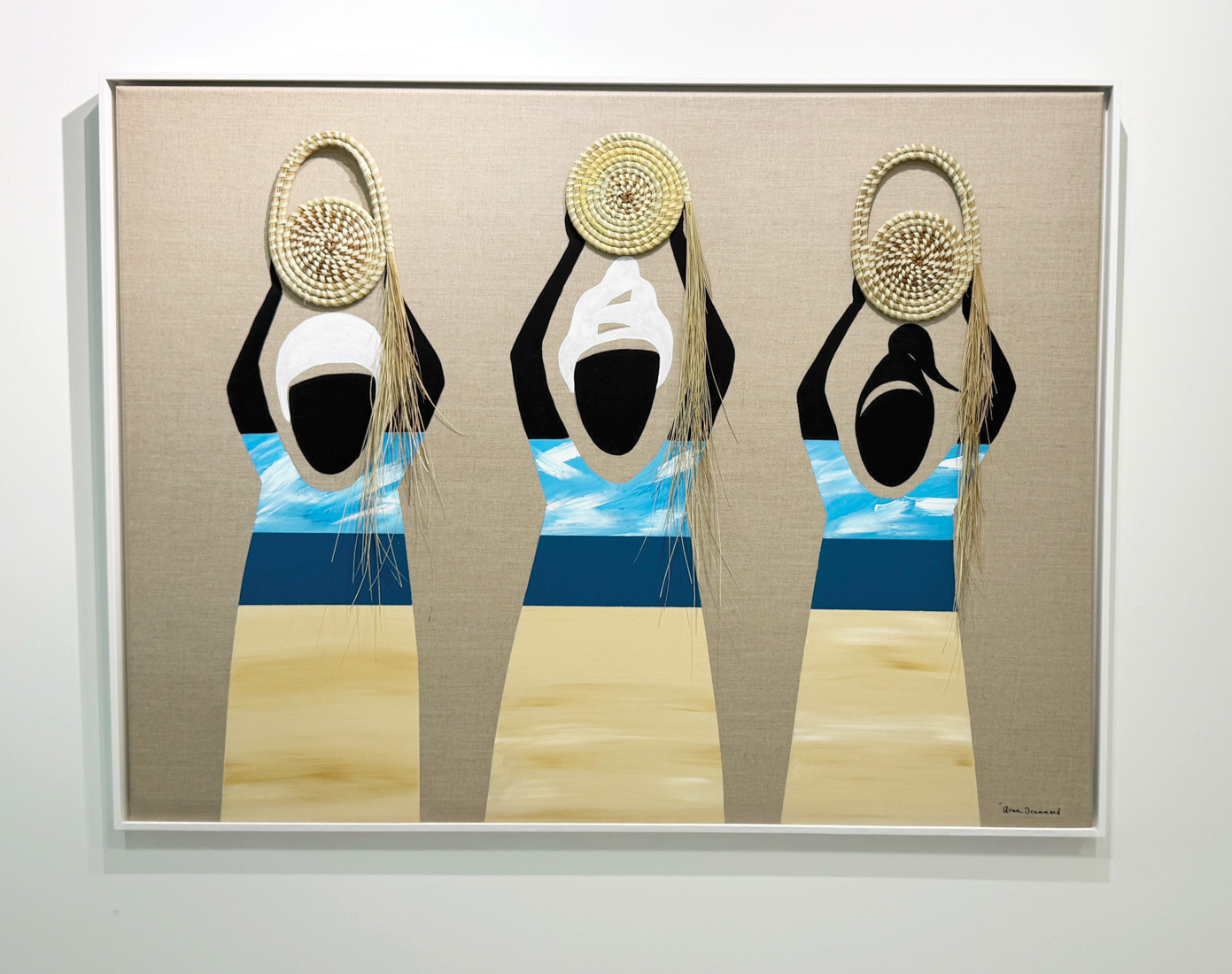
Arun Drummond’s portraits are, at first glance, striking in their restraint: silhouettes rendered with clean lines, simple palettes, and a deliberate absence of facial detail. Look longer, and the layers of meaning surface. The unfinished coils of sweetgrass held in painted hands reference a culture still in process, still becoming. Figures that echo the color of their backgrounds suggest what can fade if not preserved, while the separation between head and body reflects the distance many African Americans feel from ancestral origins. For Drummond, representation is not decoration but inheritance, and each piece is a record against erasure—an argument for memory, continuity, and cultural stewardship.
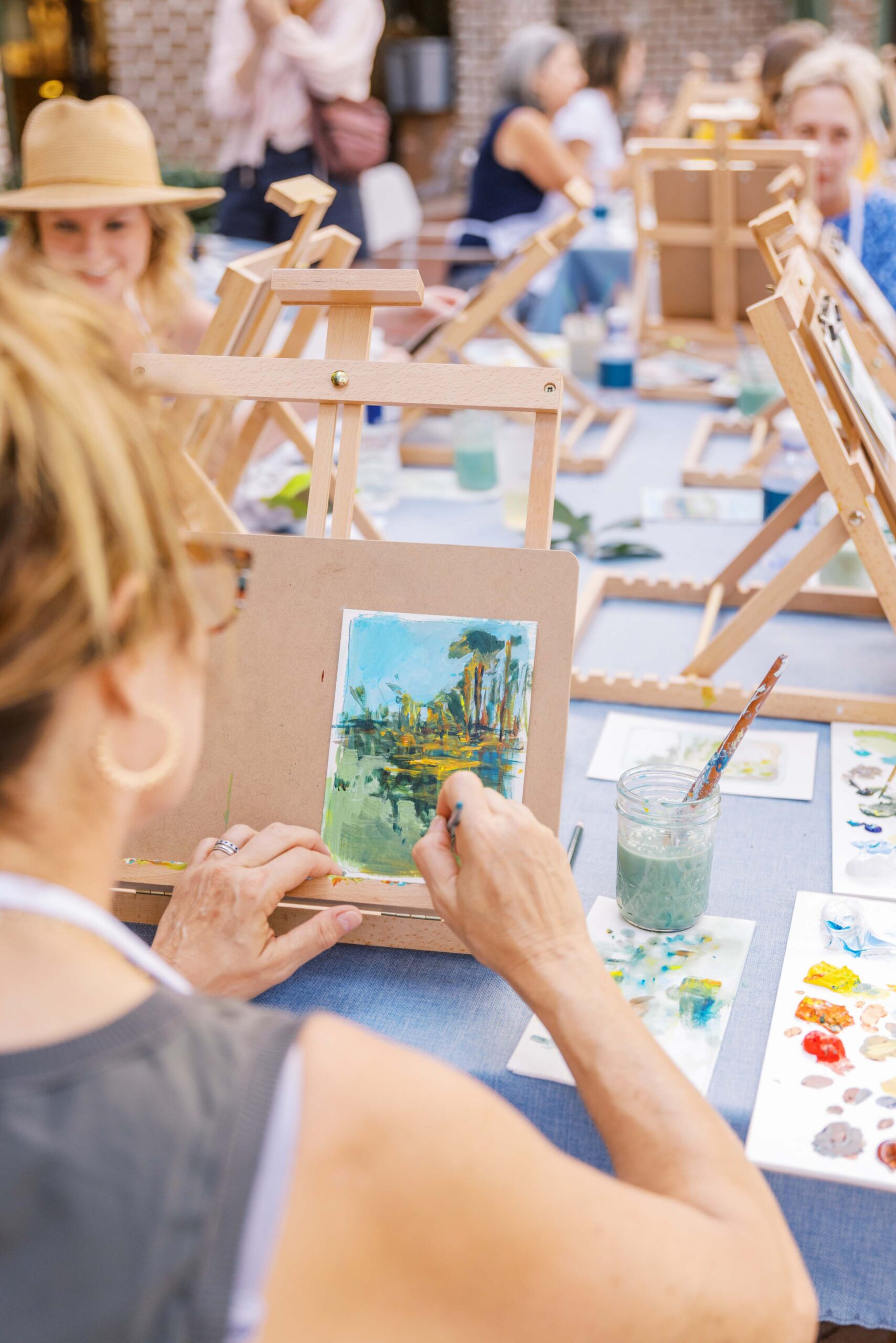
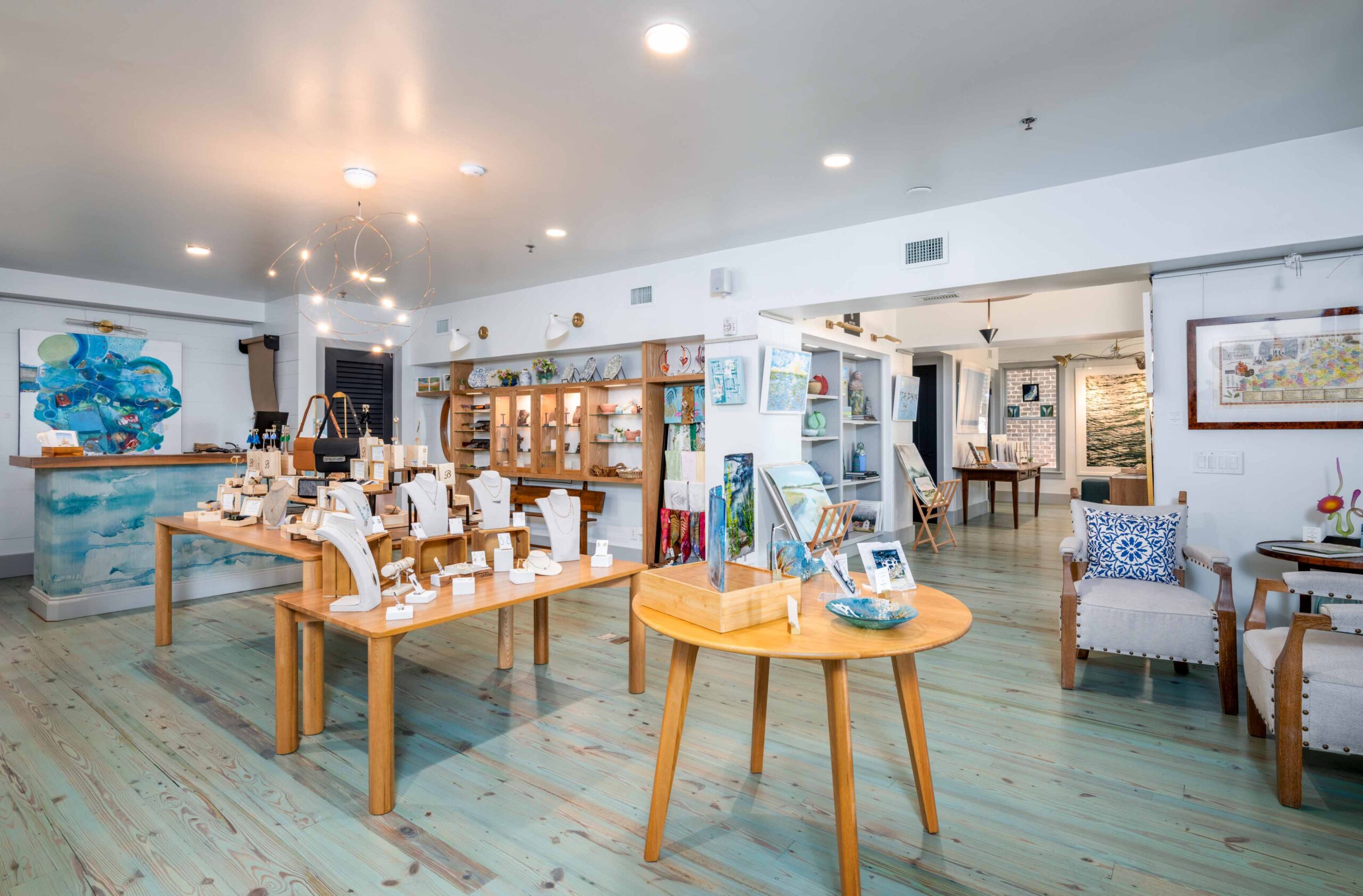
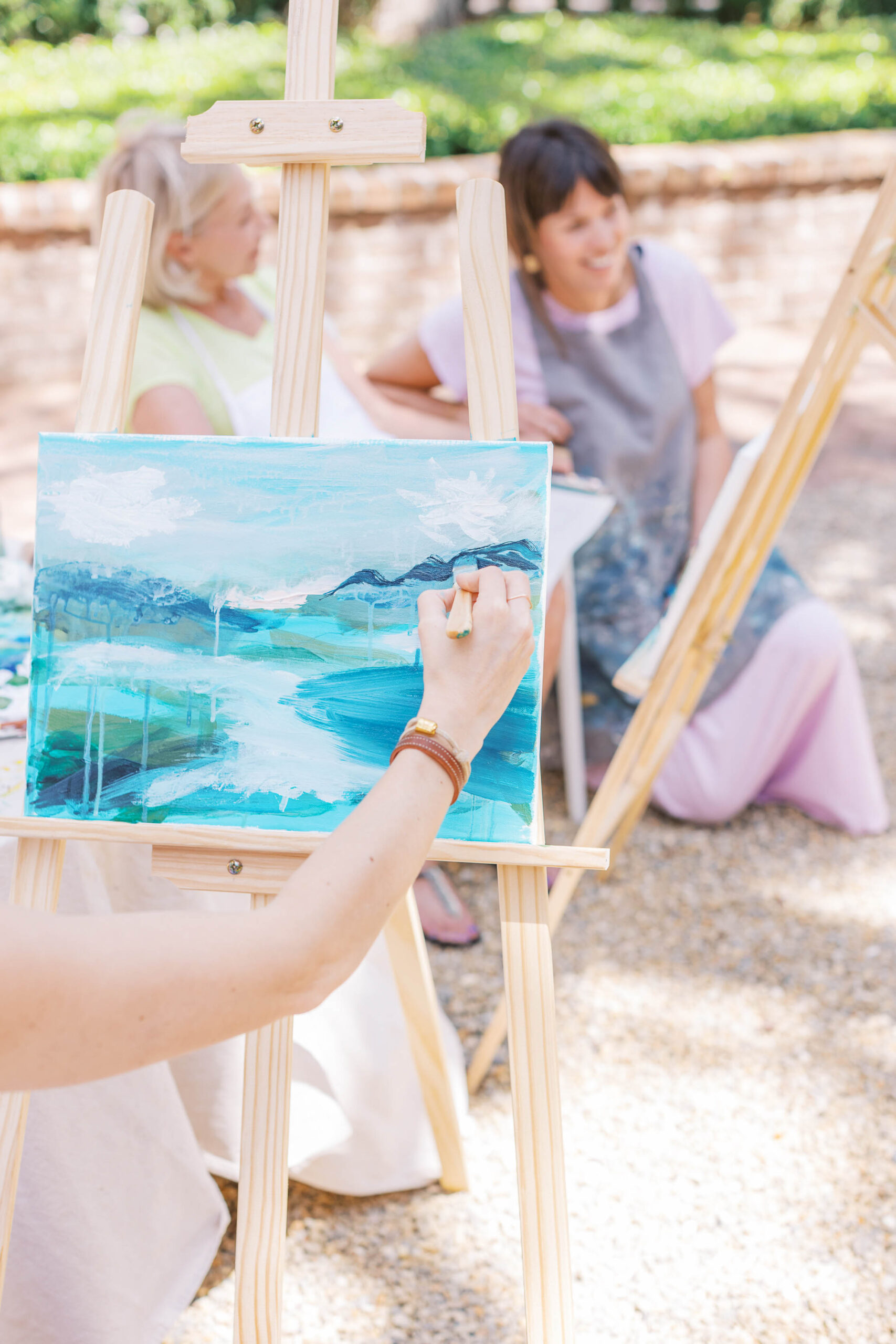
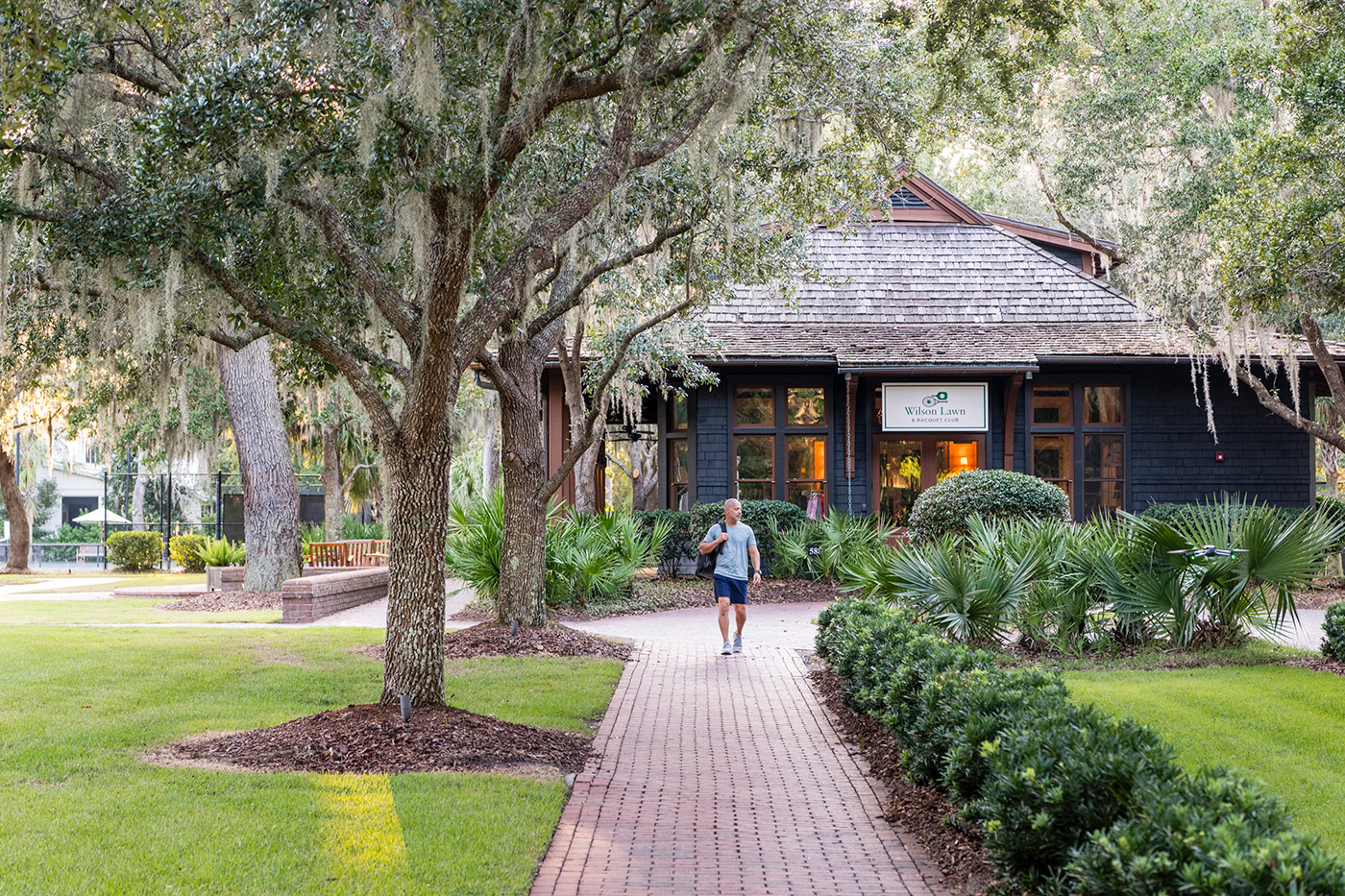
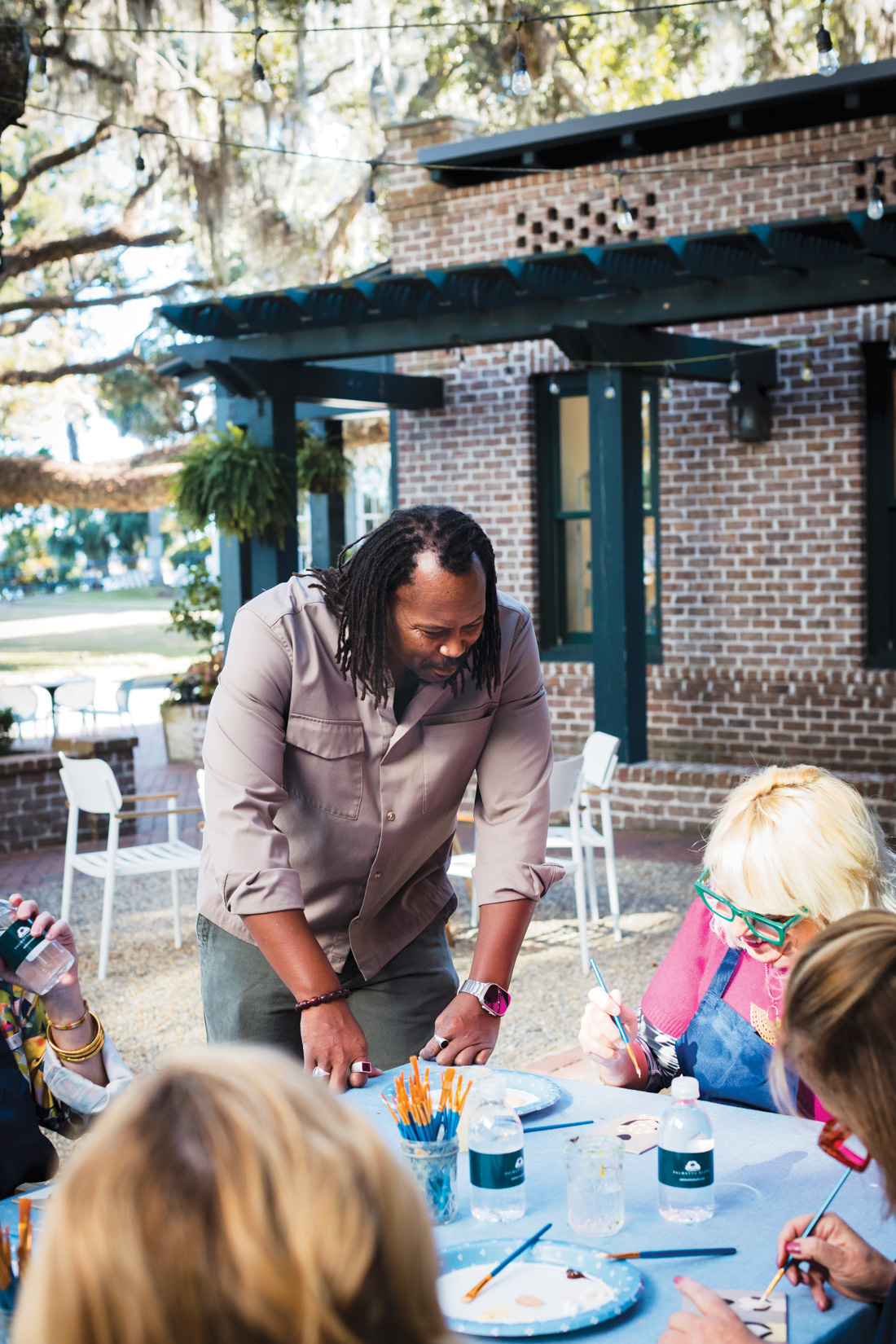
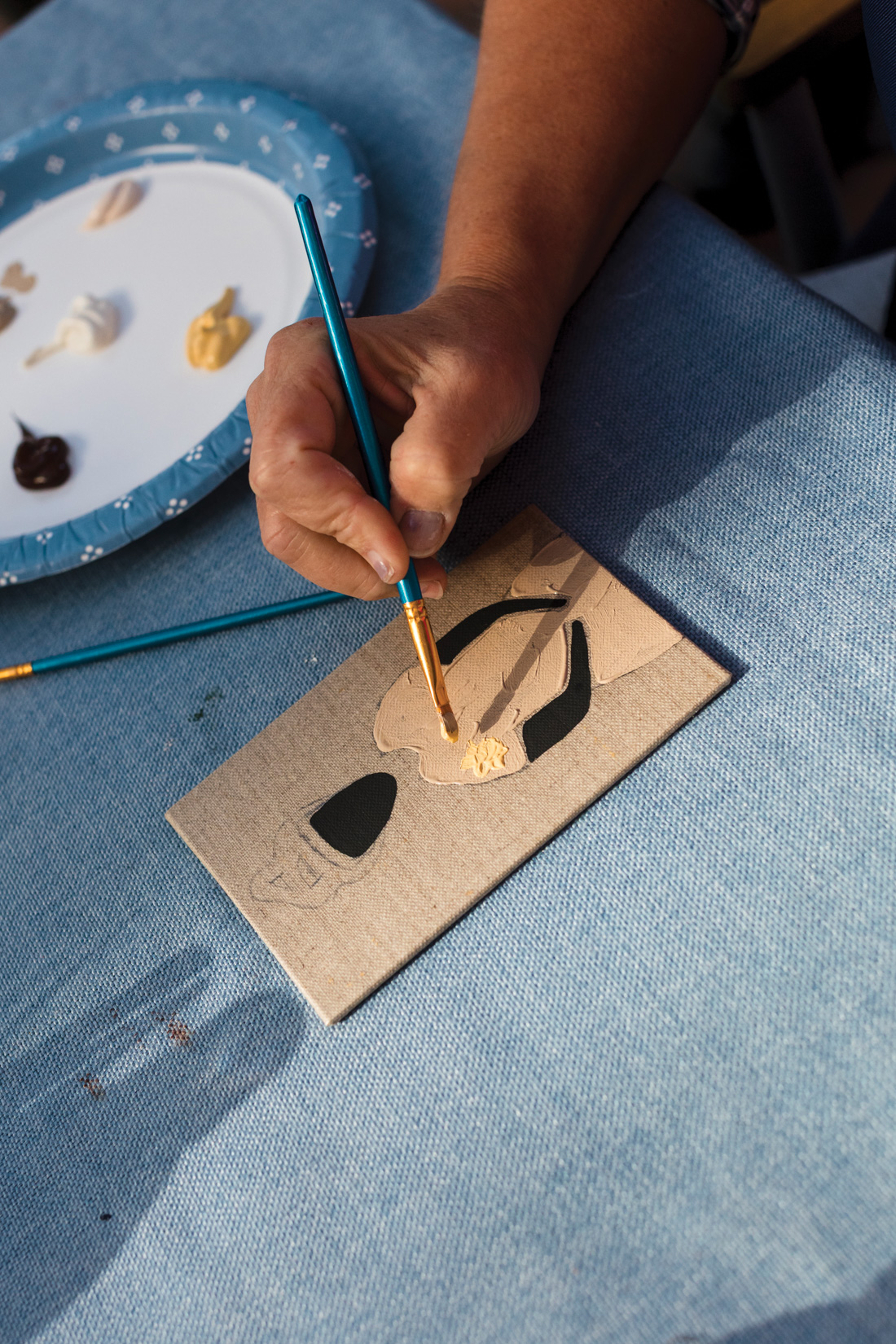
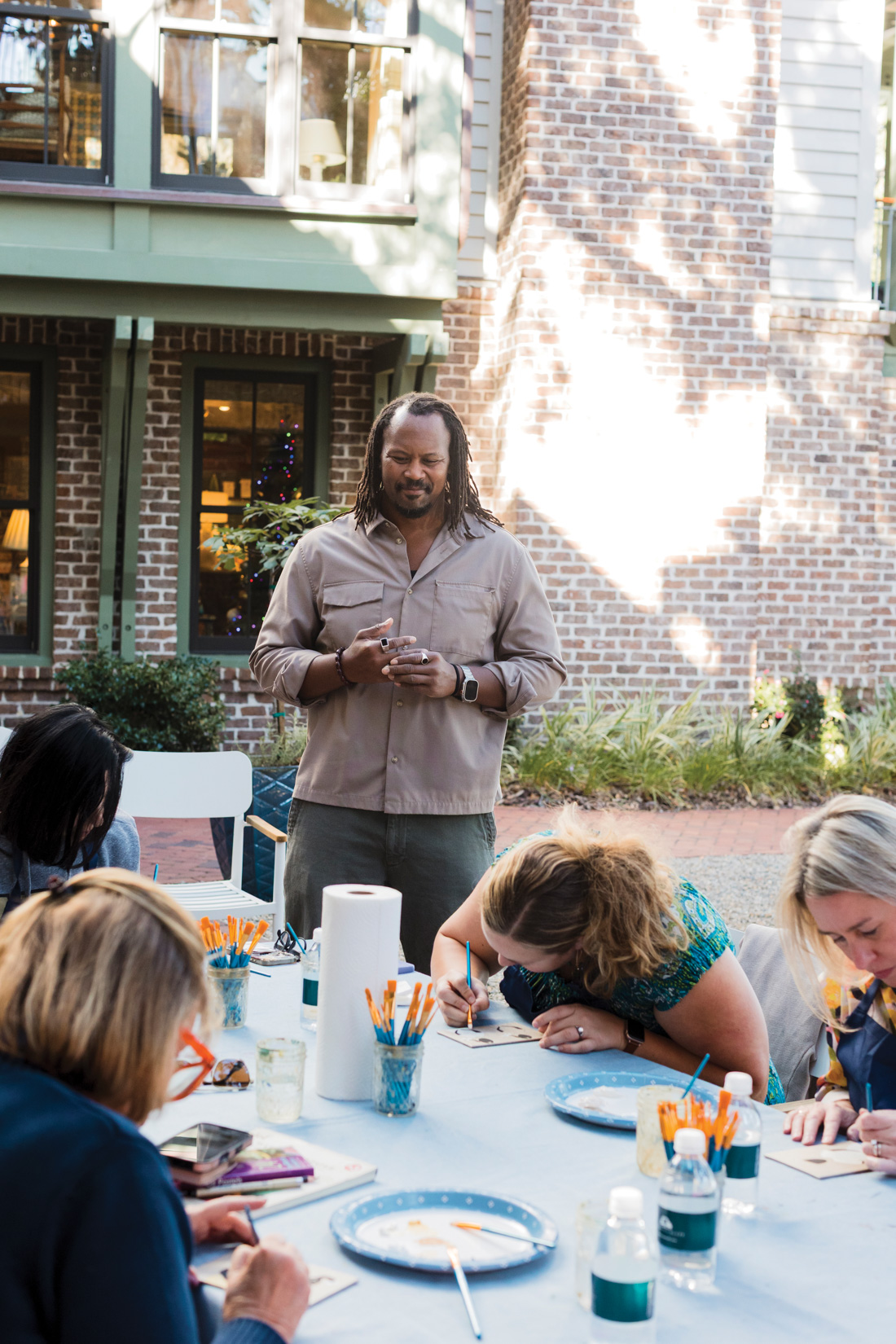
On a sunny November afternoon outside FLOW Gallery + Workshop in Wilson Village, that philosophy translated into practice. Drummond led a hands-on workshop in the courtyard, guiding participants through their own silhouettes. He offered adjustments and suggestions here and there, encouraging personal interpretation rather than mimicry. When the paint dried, he helped each guest place a small coil of sweetgrass at the figure’s hands, the beginning of a basket that connected their portraits to a gesture of cultural continuity.
Arun speaks often about how stories travel—what passes down, what gets lost, what must be remembered. His own path into artmaking was not immediate. Raised in Greer, in South Carolina’s Upstate, he describes an upbringing largely unmarked by formal artistic influence. “A lot of my influences were not artistic,” he recalls, “until I became an adult and started working in the art industry.” That moment arrived in 2004 when he moved to Charleston and took a framing job at Gallery Chuma. In the back room, surrounded by the work of Jonathan Green, he learned to mat, measure, and cut. Eventually, he moved out front to greet visitors and collectors and to speak about what hung on the walls.
Those conversations shaped him. Green’s celebrated depictions of Gullah life were not simply images; they were continuities, visual affirmations of a culture that has endured along the coastal South for generations. Arun understood quickly that art could do more than decorate. It could preserve. It could teach. “I dedicated my time to educating everyone who walked through that door about Gullah culture,” he says. He developed fluency in the significance of sweetgrass baskets, the origins of the language, the foodways and craft traditions that remain points of connection to West African ancestry. It became his life’s work.
When asked to describe his own artistic practice, Arun returns to one principle: storytelling. “It doesn’t matter if you are a writer, a photographer, a chef, or a visual artist,” he says. “Storytelling is one of the most powerful things we can do.” His silhouettes, regardless of palette or posture, always contain a social element. They are meant to stir awareness, to catalyze questions, to keep cultural erasure at bay. His symbolism is deliberate. The figures whose bodies echo the color of the background, for instance, a reminder that if heritage is not recorded, it recedes. The unfinished basket coils reference what is still in progress, still alive, still being made.
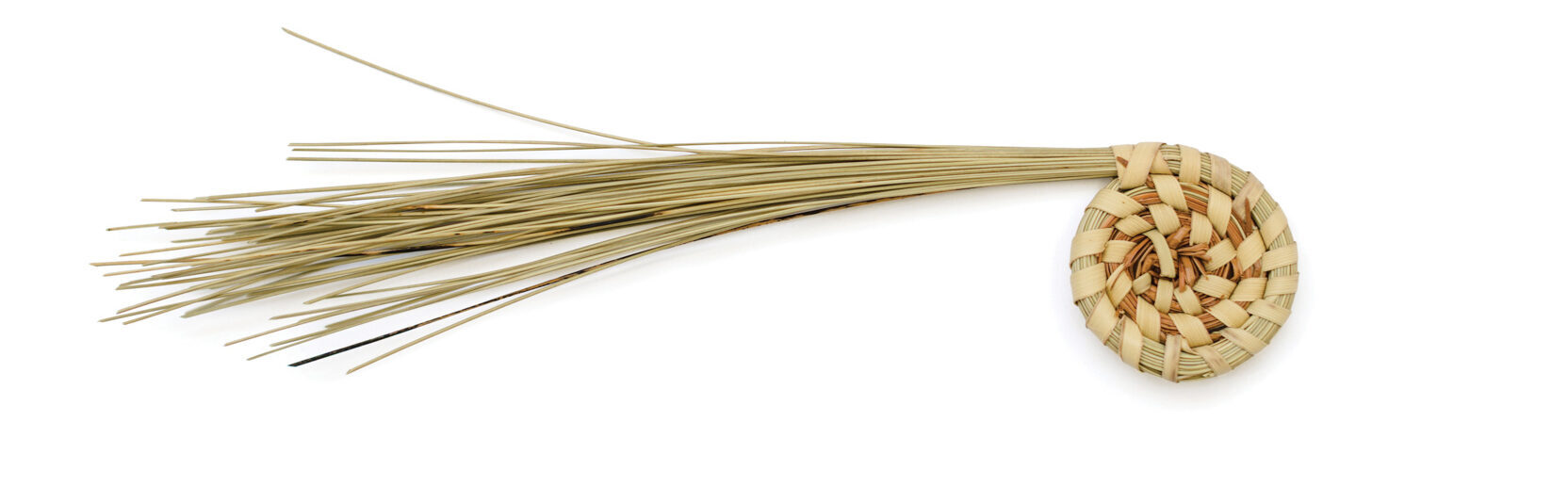
The path to that signature style was not linear. He first worked in abstract forms, then in folk representation after the death of his father. “A lot of his stories went along with him,” Arun says. That loss altered his trajectory. He began painting specific figures, anchoring memory in form. When he learned basketry techniques, the work shifted again into mixed media. Sweetgrass—materially and symbolically—entered the frame.
His palette, once bold under Green’s influence, has moved to refined neutrals in recent years. The silhouettes are not anonymous; they are archetypes of lived experience. Many of the men are infused with the presence of his father, one of ten siblings who grew up working the land. Overalls, sun hats, and agricultural postures—these gestures memorialize labor and endurance.
Arun’s newest work expands that continuity into three-dimensional form. Symbolic sculptural pieces, including one currently on display at the Avery Institute, address place-making, equity, and cultural space. His series begins with A Seat at the Table—a meditation on who historically has been allowed access to institutional and creative platforms, and who must be brought into the room.
In October, Arun opened his own gallery in Charleston. The milestone carries an important symmetry: He began in a gallery helping present others’ work, and he now owns a space that brings emerging artists into public view. It is, he says, about accessibility. Making art less intimidating. Creating opportunities for first exhibitions. Offering a seat at the table.
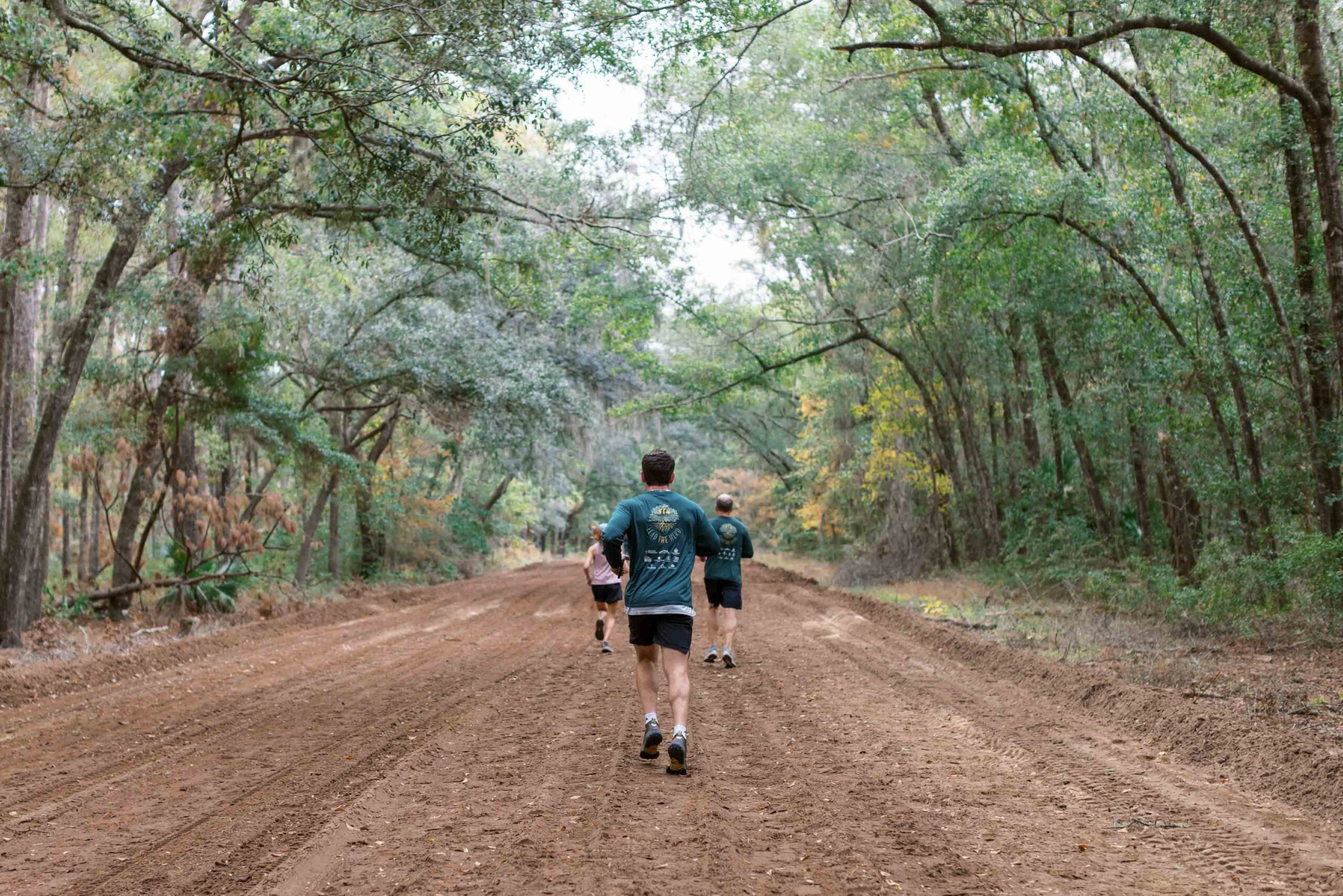
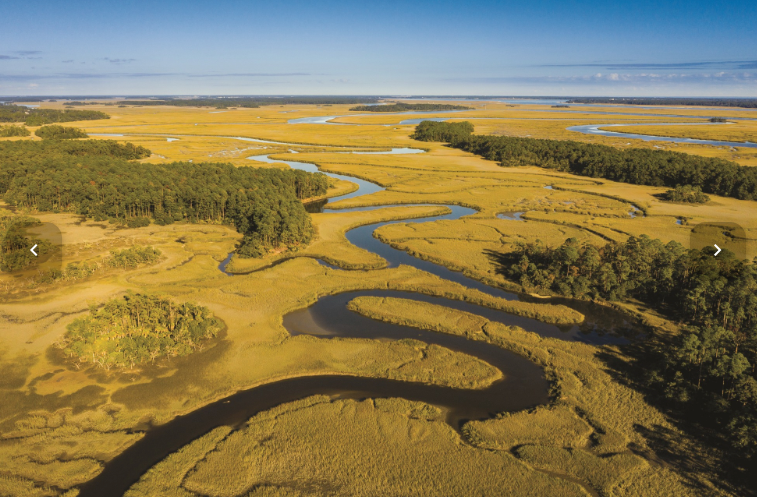
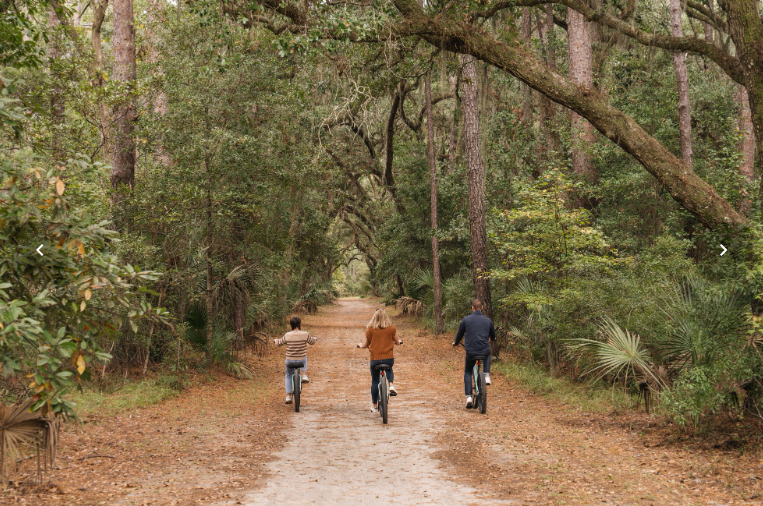
This ethos traveled with him to Palmetto Bluff during his November residency. He walked the trails, biked the nature loops, and studied the tides. He speaks about the landscape with the same circumspection that marks his teaching. “I really realized how special this place is,” he says. Nature is not backdrop; it is context. Rice cultivation and sweetgrass basketry is fundamental to the history of the Sea Islands. To encounter a place like Palmetto Bluff is to remember these historical resources.
At FLOW Gallery, the women in his workshop approached their own versions with curiosity. Some painted figures that echoed family members or ancestors, others played with unexpected color, and one participant built dimension with thicker paint. When everything had dried, each added a neat twist of sweetgrass to the figure’s hands.
Arun describes his work as tied to history but motivated by the present. Cultural spaces, he notes, are vulnerable. Traditions are not guaranteed. His art, in this way, is insistence—a record that refuses to fade into background color. His figures, women in headpieces, men in overalls, silhouettes holding the first loop of sweetgrass, ask the viewer to consider the narratives that outlast time, migration, and change.