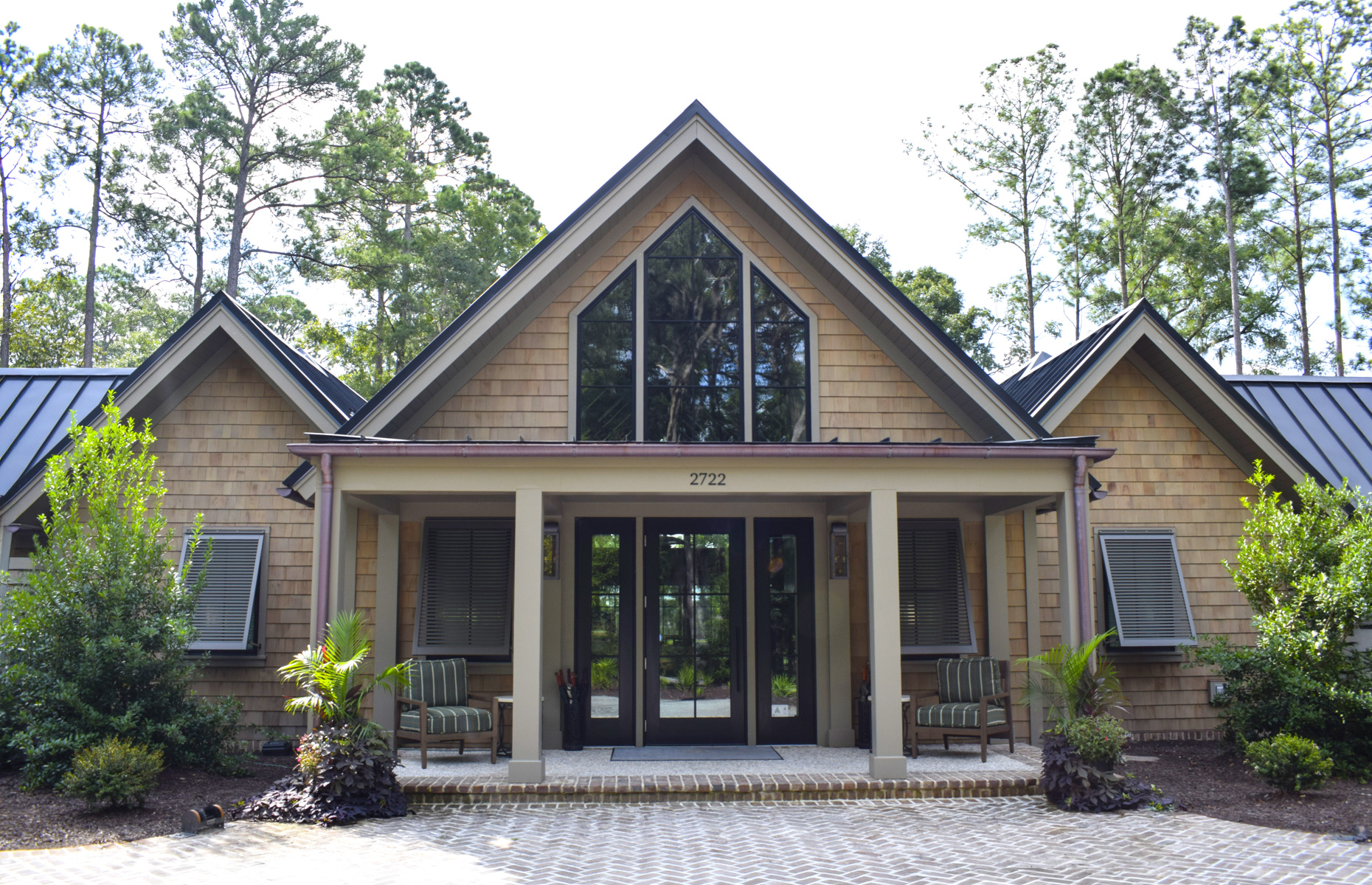
Palmetto Bluff Real Estate Company Sales Office
Office Hours
Monday-Friday 9am - 5pm
Saturday 9am - 4pm
Sunday 12 - 4pm
Saturday 9am - 4pm
Sunday 12 - 4pm
By Alexandra Marvar
“There’s one. Oh, and there’s one.” He bends down to pick up a shark tooth. Then another, and another.
The mound of fossilized denticles cupped in my husband’s palm is growing so large, it’s about to require two hands. Most of the shark teeth are ebony black. Some are stout and dulled, while others are skinny and, even after thousands or even millions of years, still menacingly sharp.
This little stretch of beach, with a primordial forest at our backs, is just one of many places to treasure hunt on Georgia’s Cumberland Island—and not just for these tiny specimens. One might find boar tusks, dolphin bones, sea oats, starfish. And, surprisingly often, visitors turn up megalodon teeth along the island’s single “main road”—the rutty north-south artery paved with paleolithic seafloor dredged from nearby Kings Bay Naval Submarine Base. This thoroughfare is only lightly trafficked, by people on foot, horseback, or, rarely, one of the island’s few motorized vehicles.
The largest and southernmost of Georgia’s fourteen barrier islands, Cumberland is more than twice the size of Manhattan, yet it is among the least visited and most isolated of U.S. national seashores. Nearly a third of its approximately thirty-six-thousand acres are designated as protected wilderness, and only a maximum of three hundred visitors are permitted per day. Every visit requires a reservation, whether for a campsite with the National Park Service or for one of the fifteen rooms or two cottages at the Greyfield Inn.
About an hour ago, we set off down the road on bikes from the Greyfield. We might have another hour before the sun starts to set.
My travel companion is still at it with the tiny teeth. I, however, am lousy at spotting them. And anyway, I’m preoccupied not with what’s happening down in the surf, but in the sky above. Over the sound of the lapping wake, there’s a soft rustling overhead: nearly one hundred white ibis—big, elegant birds with banana-shaped, coral-pink beaks and stark, black wingtips—glide over us, from the Cumberland Sound eastward, across the island, toward the wild Atlantic coast.
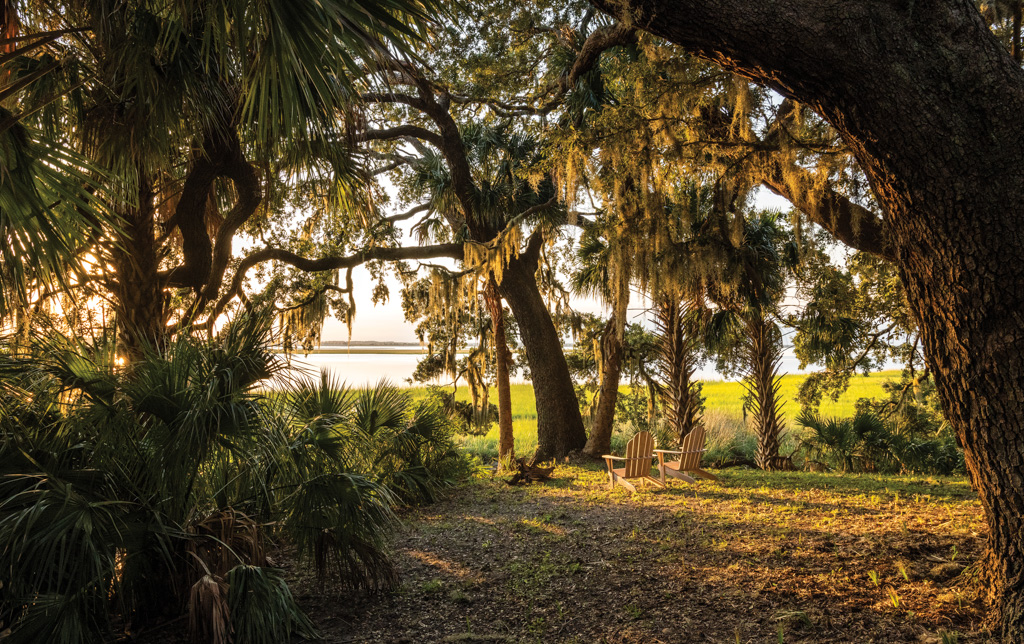
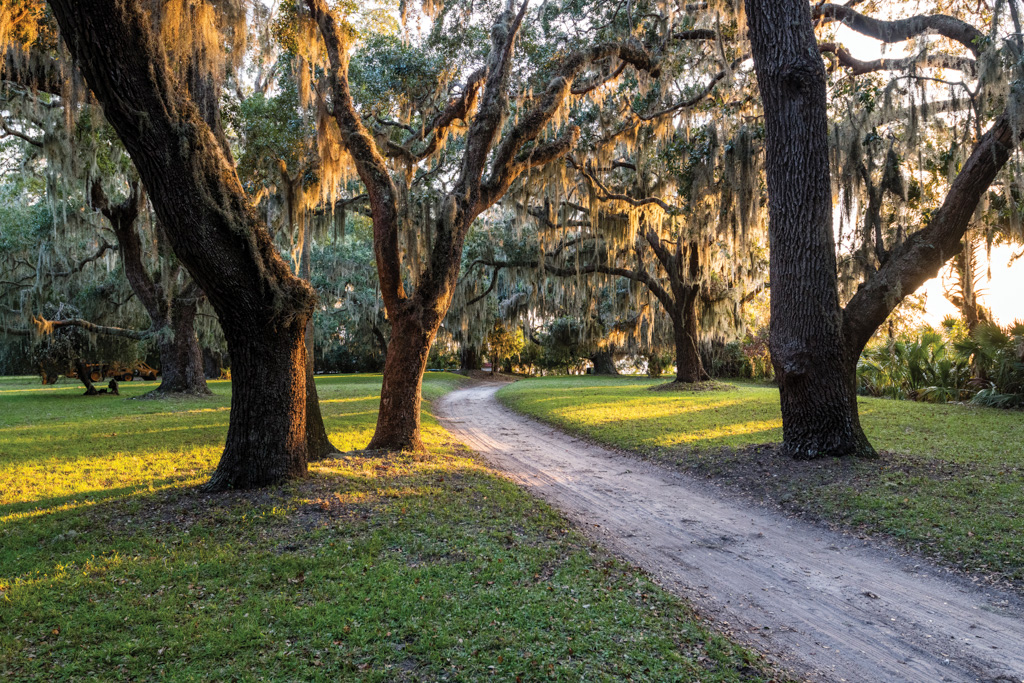
As a birder, I’m finding no shortage of distractions here. Bald eagles are scavenging the same stretch of sand that we are. A flash of vivid color in the distance: a painted bunting? This southern part of the island is cut through with miles of birding trails, elevated walkways, dunes, and beaches perfect for congregating black skimmers, red knots, oystercatchers, and plovers. Any admirer of nature will find something to absorb their attention here: The live oaks are draped in Spanish moss. Armadillos and wild boar amble about in the saw palmetto. Sea turtles nest along Cumberland’s nearly eighteen miles of coastline. Feral horses roam. And some of the planet’s fewer than four hundred remaining North Atlantic right whales calve just offshore.
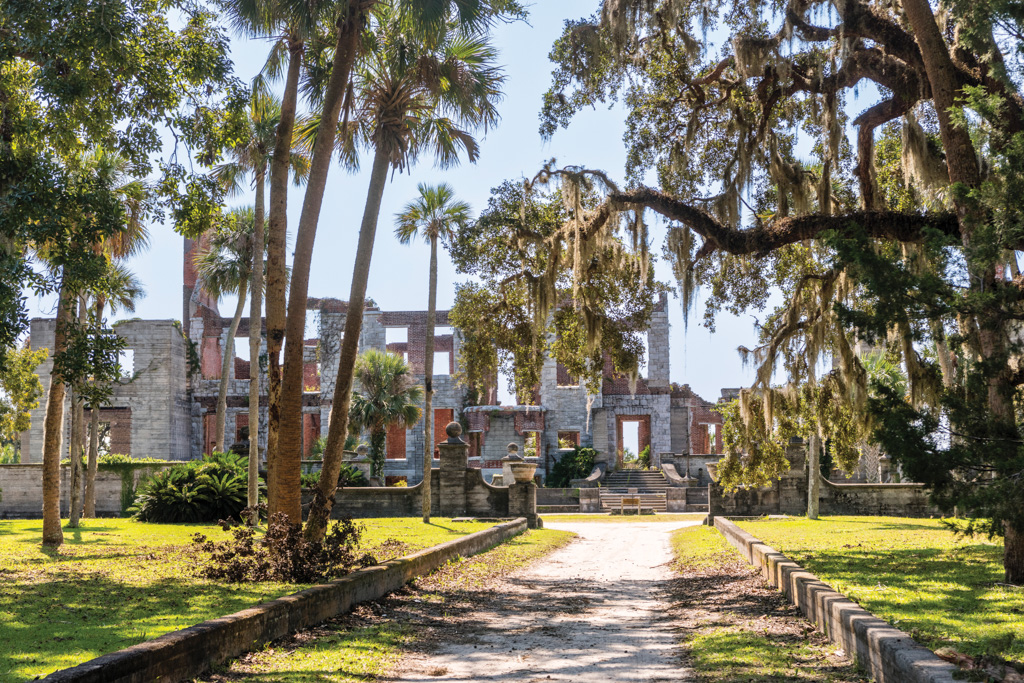
Staring out at the waves, or walking deep in the woods, it’s easy to forget that not so long ago, this seemingly pristine landscape was once dominated by agriculture, including plantations built and run by some of the Victorian era’s most powerful American families. But the remnants of their heyday are all around, including the looming ruins on the bluff above us. This is Dungeness, the thirty-five-thousand-square-foot vacation home built by the Carnegie family just over 140 years ago. It was all but abandoned in the early 1900s. It caught fire and burned in 1959. But the four stories of skeletal ruins that remain are a great help in imagining the Gilded Age grandeur that once filled its nearly five dozen rooms.
The Greyfield has a similar origin story—with a much happier outcome. The great house, with its grand columns, Victorian wallpaper, charming honor bar, and sprawling lawn dotted with centuries-old oaks, was built in the earliest years of the twentieth century as a private home for the daughter of matriarch Lucy Carnegie. Instead of falling to ruin, it opened to overnight guests in 1962. Ten years after that, the island became a U.S. National Seashore.
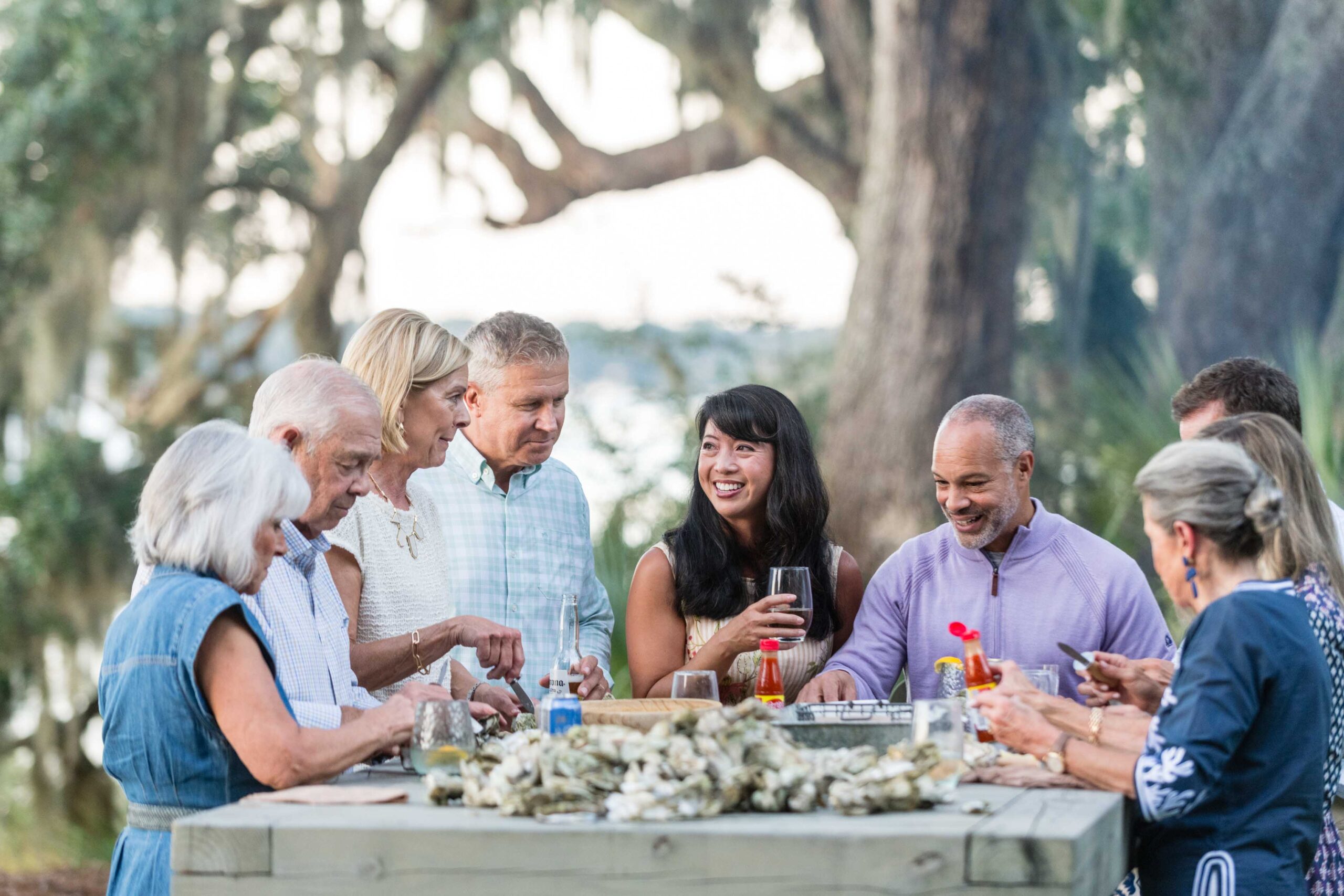
Today, relatives of the original inhabitants still live on the estate and operate the inn, and like the island at large, this house feels unchanged by time. Its enchanting living room is still furnished with the original family’s portraits, chairs, and velvet couches. Its shelves are still lined with their books and artifacts. A true escape, there is no television nor Wi-Fi here. Instead, guests pass their time reading on the porch swings, indulging in their room’s lush private bathtub, or shucking oysters in the moonlight.
By day, guests may sign up for guided outings, including excursions to a number of historical sites: Gullah/Geechee settlements established by formerly enslaved families, and Gilded Age mansions in various states of restoration or ruin. There is Plum Orchard — another former Carnegie family outpost—which was restored and is now maintained by the National Park Service. Many bumpy miles away on the island’s distant north end is the one-room First African Baptist Church, built by Gullah/Geechee residents in the 1890s. En route, you’ll pass the Chimneys, the only visible remains of the once sprawling Stafford Plantation: twenty-six free-standing sets of brick hearths and chimneys, marking what had been twenty-six single-room homes to the enslaved families who once powered the plantation’s cotton harvest.


“It was good to be able to touch the very things that my ancestors touched,” the chieftess of the Gullah/Geechee nation, Queen Quet, once told me of her own visit to Cumberland Island.
They were the ones that created those bricks. They were the ones that laid those bricks. So the chimneys themselves have a certain warmth, even though a fire is not lit in them. And I really hope that they light the fire of preservation, conservation, continuation of cultural heritage—that everybody gets an opportunity to go to Cumberland and see them.”
The best time for such an adventure is between October and June. (The Greyfield is typically closed in August.) And while it feels a world apart from the mainland, it’s only a few miles from shore. A National Park Service ferry runs twice daily from the sleepy village of St. Marys, Georgia, and the Greyfield operates its own private boat from Amelia Island, just across the Florida line.
Now, it’s mid-winter, and the sun is sinking fast. We mount our bikes in front of Dungeness and make our way back down the main road, through the tunnel of arching oak branches, mysterious animals rustling in the undergrowth. We’re back to the Greyfield in time to see strings of lights come on over a long, wooden table, set for the evening oyster roast. Tomorrow, there’s more treasure-hunting in store.
A secretive, twelve-seat dinner series leads Palmetto Bluff Club members into the community’s most beautiful and hidden landscapes.Story by Hailey Wist | Photographs by Summer PagatpatanDeep within Palmetto Bluff’s forests and winding back roads are landscapes...
With the excitement and activity of summer on the horizon, this edition of the bluff magazine captures the moments and memories that define life at Palmetto Bluff. From the magic of watching dolphins strand feed along the local waterways to secret dining exper...
Becoming a Palmetto Bluff Club Member means each day offers something new to explore, learn, and create. A thoughtfully curated annual calendar ensures residents enjoy experiences that extend well beyond traditional club programming. Each April, the RBC Her...
42 Flicker Street: $5,250,000 Palmetto Bluff Real Estate on the Moreland Inland Waterway Trail 42 Flicker Street claims one of Moreland's most coveted positions; set along the inland waterway, with a covered dock and water trail views that extend all the wa...
At Palmetto Bluff, no two rounds of golf are the same. The tides, the wind, and the light shifting across the marsh all play their part. Three courses, each crafted by a legendary architect—each offering golfers a distinctly different story to experience. E...
How the Palmetto Bluff Conservancy Protects 20,000 Acres of Lowcountry Land Every Day Set at the confluence of the May, Cooper, and New Rivers in South Carolina’s Lowcountry, Palmetto Bluff spans 20,000 acres of some of the most ecologically rich land on the ...
Photographs by Lindsey Shorter Ingredients:Thyme Sugar2 cups granulated sugar30 thyme sprigs, Remove the thyme leaves and discard the stalks.Process sugar and thyme in a food processor.Set aside until ready to use.Bundt Cake2...
The Palmetto Bluff Conservancy plays an active role in caring for the land and wildlife that make Palmetto Bluff so special, and you might be surprised to learn that fire is one of their most powerful land management tools. During the winter and early spri...
Palmetto Bluff Real Estate Market 2025: Home Values, Sales Trends, & What’s Ahead There’s a certain kind of community where the market data tells more than a financial story—it tells a human one. Palmetto Bluff is exactly that kind of place. The people w...
Palmetto Bluff Real Estate: A $4,195,000 Four-Bedroom with Screened Porch, Private Courtyard, and Carriage House Some homes are beautiful. Others are beautifully considered. At 11 Skeet Road, the difference is felt the moment you arrive—in the Savannah brick ...
We do not attempt to independently verify the currency, completeness, accuracy or authenticity of the data contained herein. All area measurements and calculations are approximate and should be independently verified. Data may be subject to transcription and transmission errors. Accordingly, the data is provided on an “as is” “as available” basis only and may not reflect all real estate activity in the market”. © [2023] REsides, Inc. All rights reserved. Certain information contained herein is derived from information, which is the licensed property of, and copyrighted by, REsides, Inc.