By June, migration has wound down. What remains on the land are the species that chose the Lowcountry as their breeding ground—nesting, calling, and raising young across 20,000 acres of some of the most ecologically varied land on the South Carolina coast. For residents, it means Painted Buntings at the feeder, an Osprey over the river, and Chuck-will’s-widows calling after dark.
What the Habitat Makes Possible
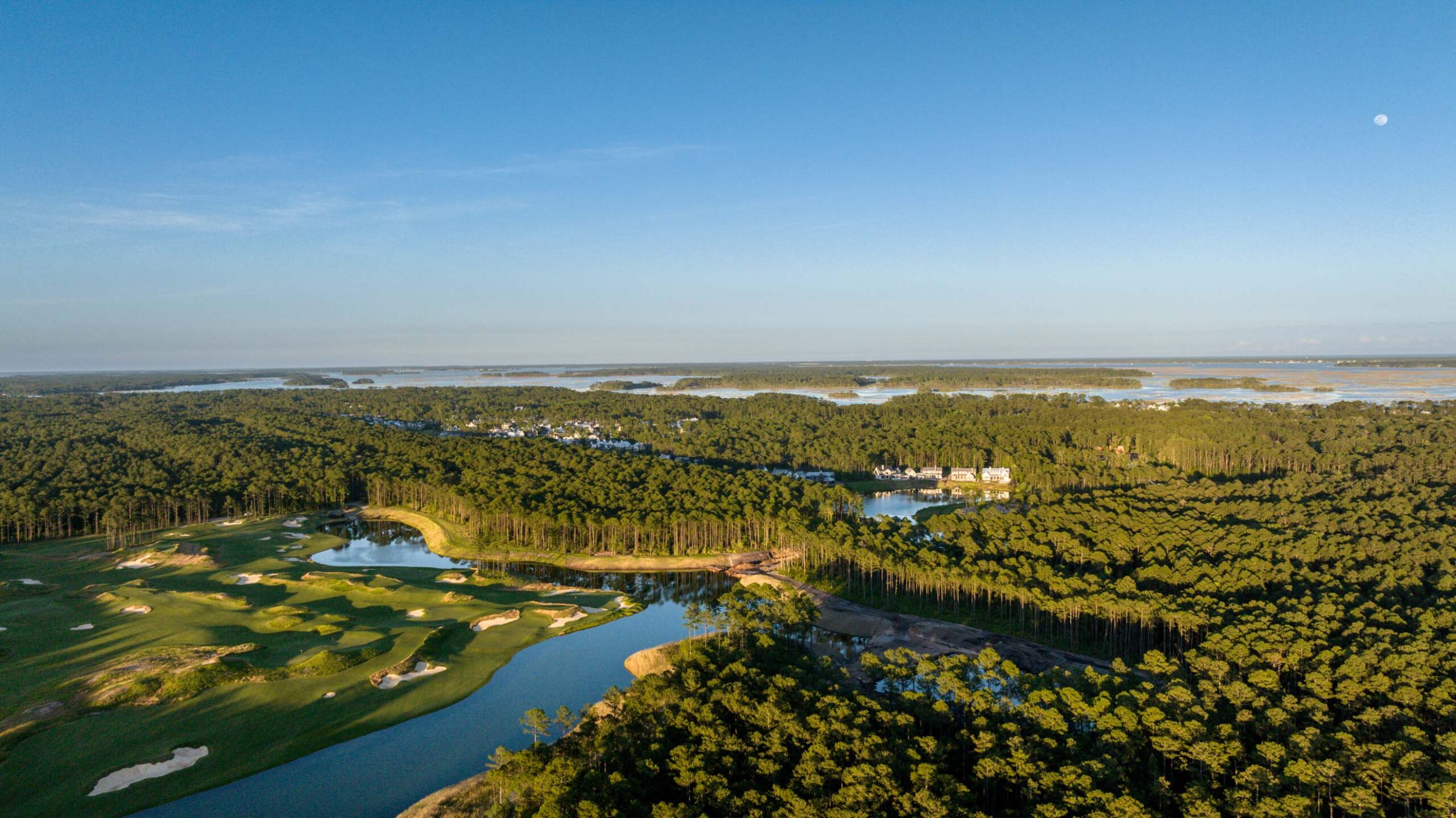
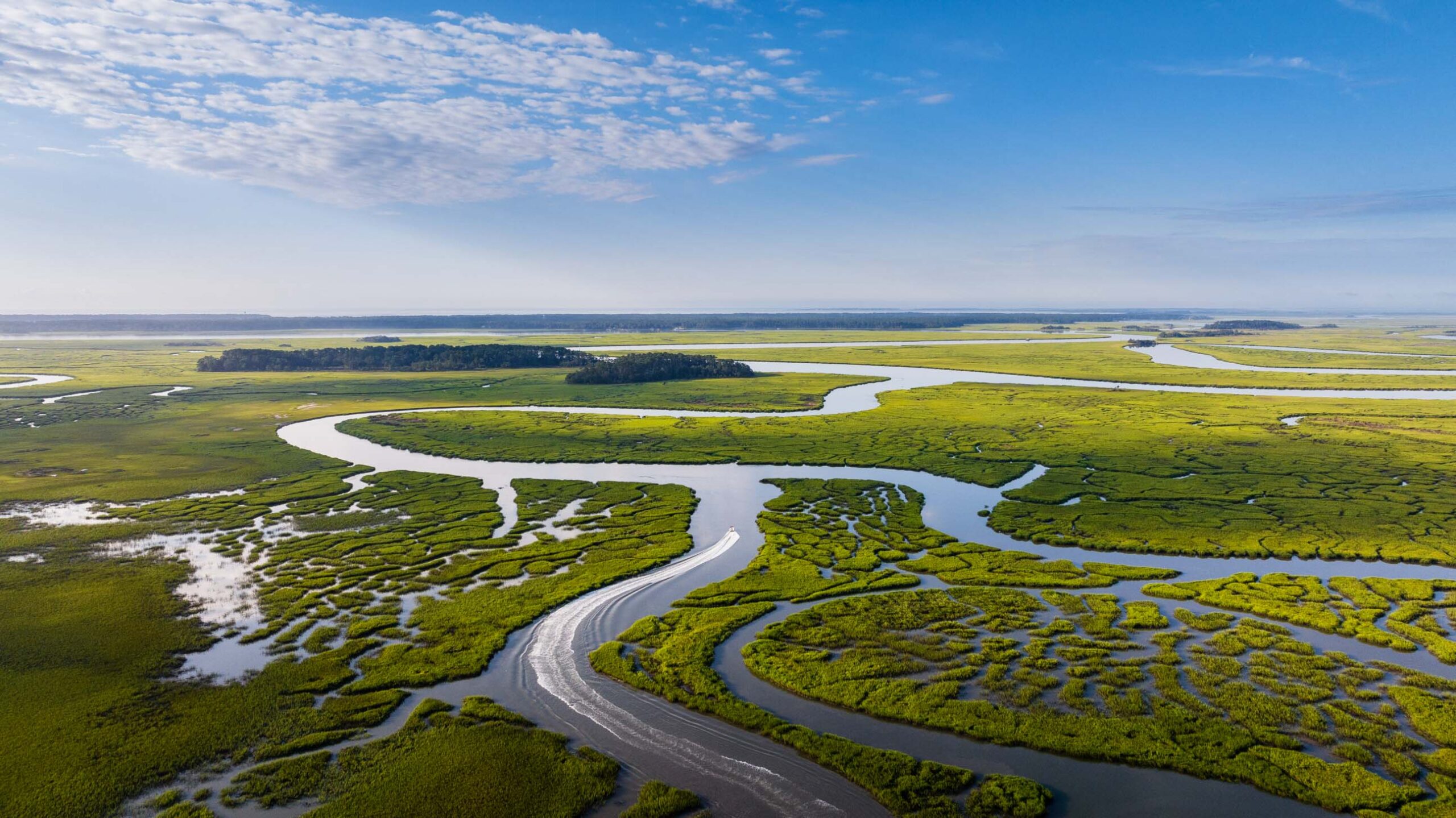
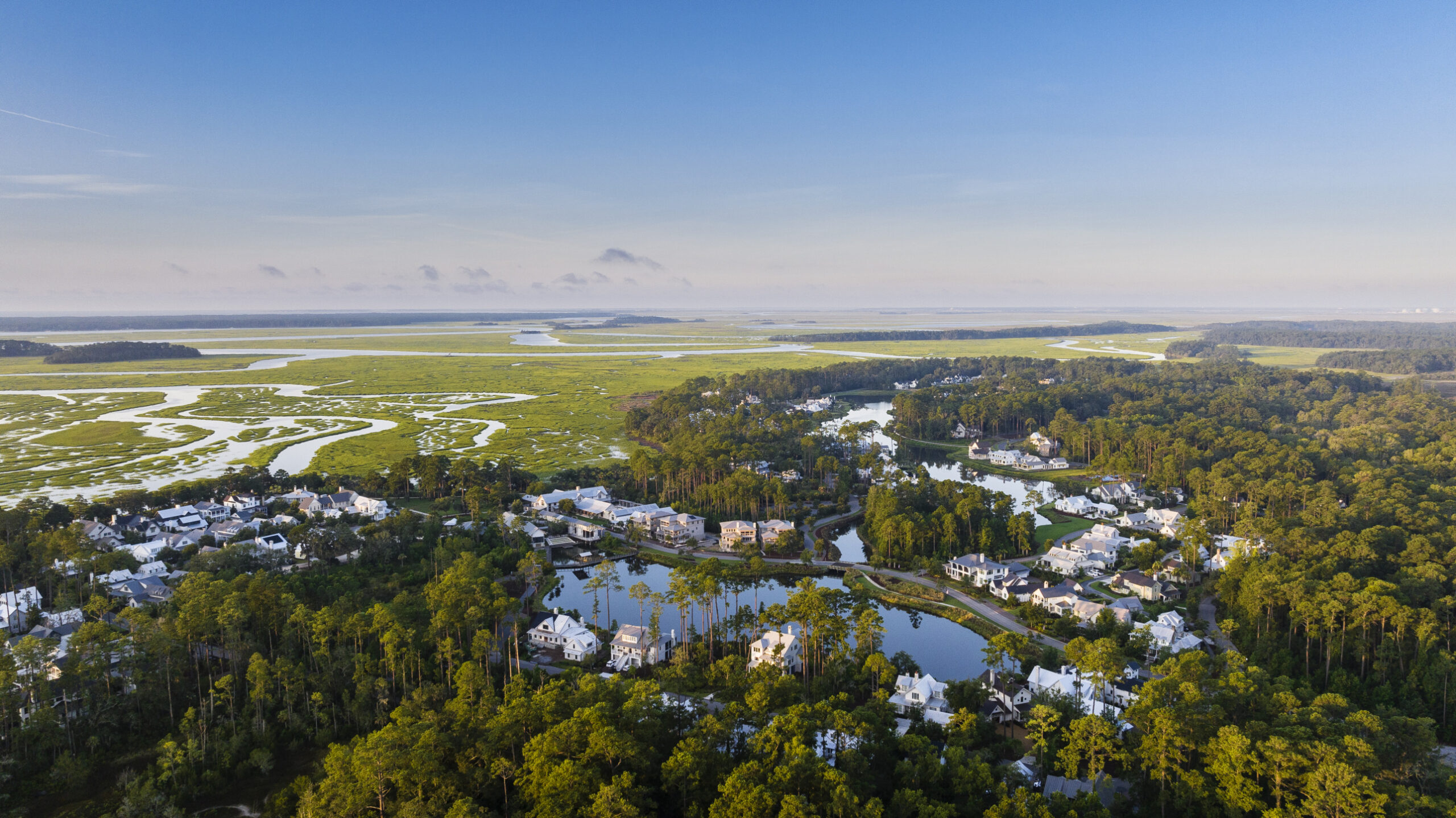
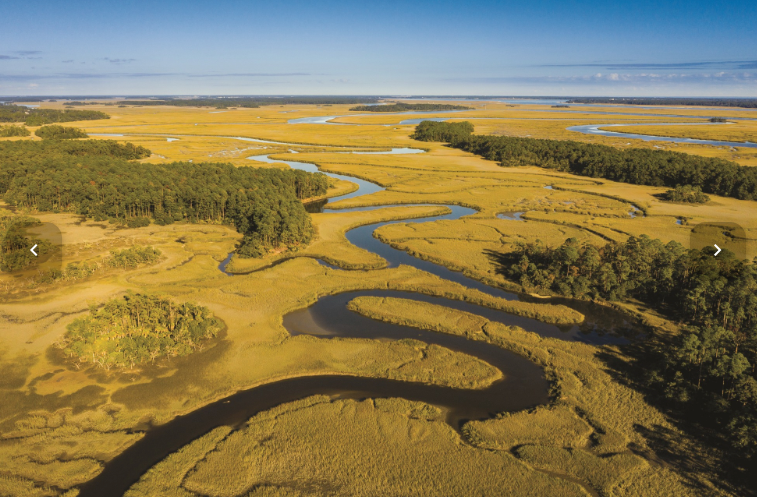
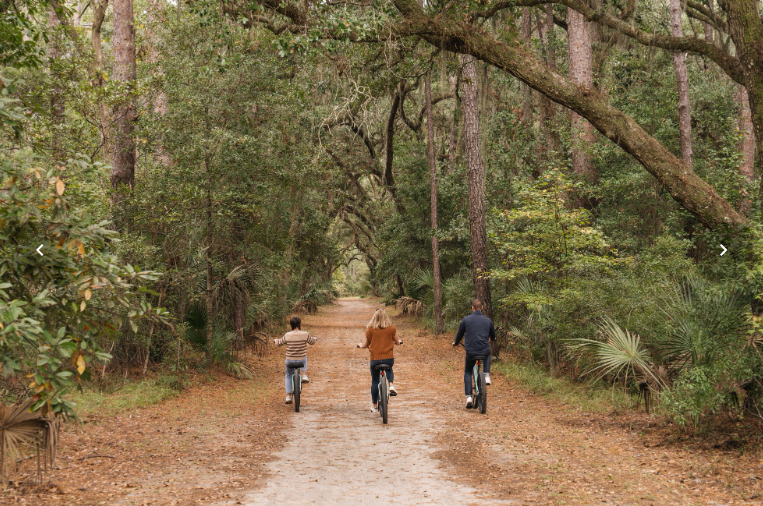
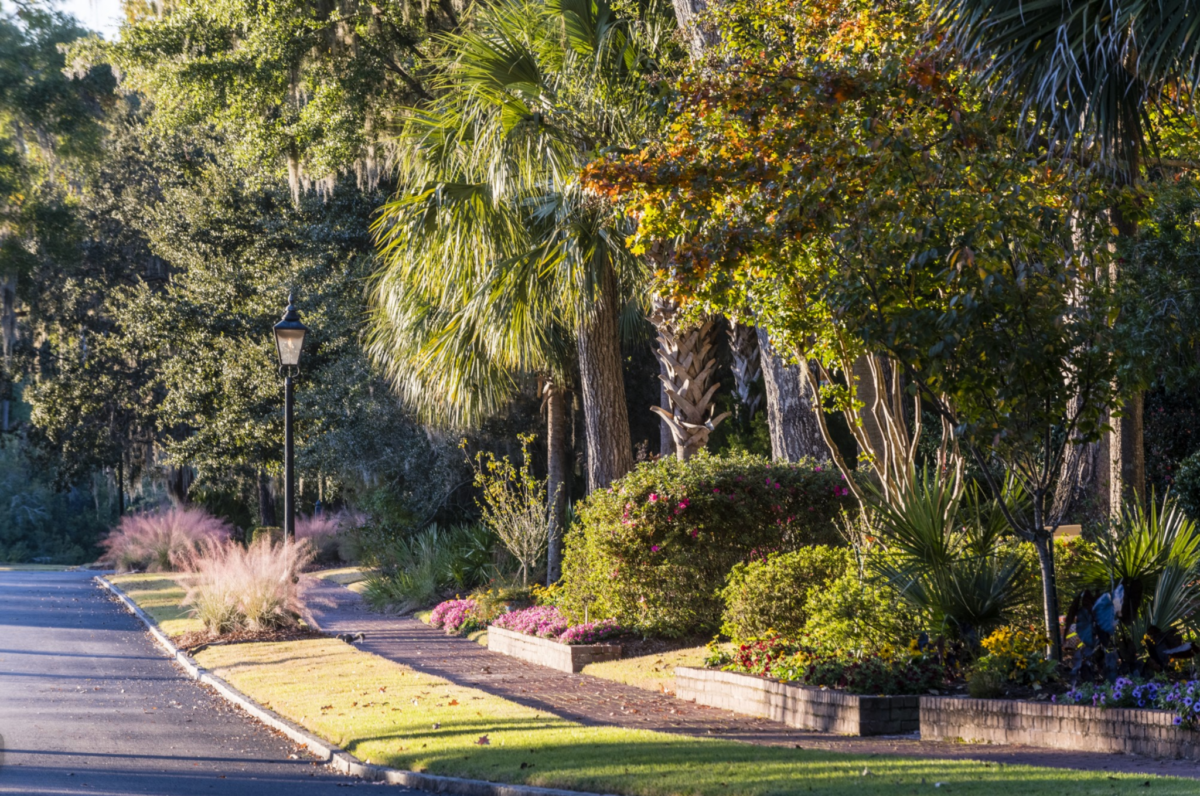
Palmetto Bluff’s landscape isn’t uniform, and that variety is what makes it significant for birds. The land spans distinct habitat types, including maritime forest, upland pine forest, and saltwater marsh. Each draws a different community of species, and together they create conditions that support one of the most ecologically diverse bird populations on the South Carolina coast.
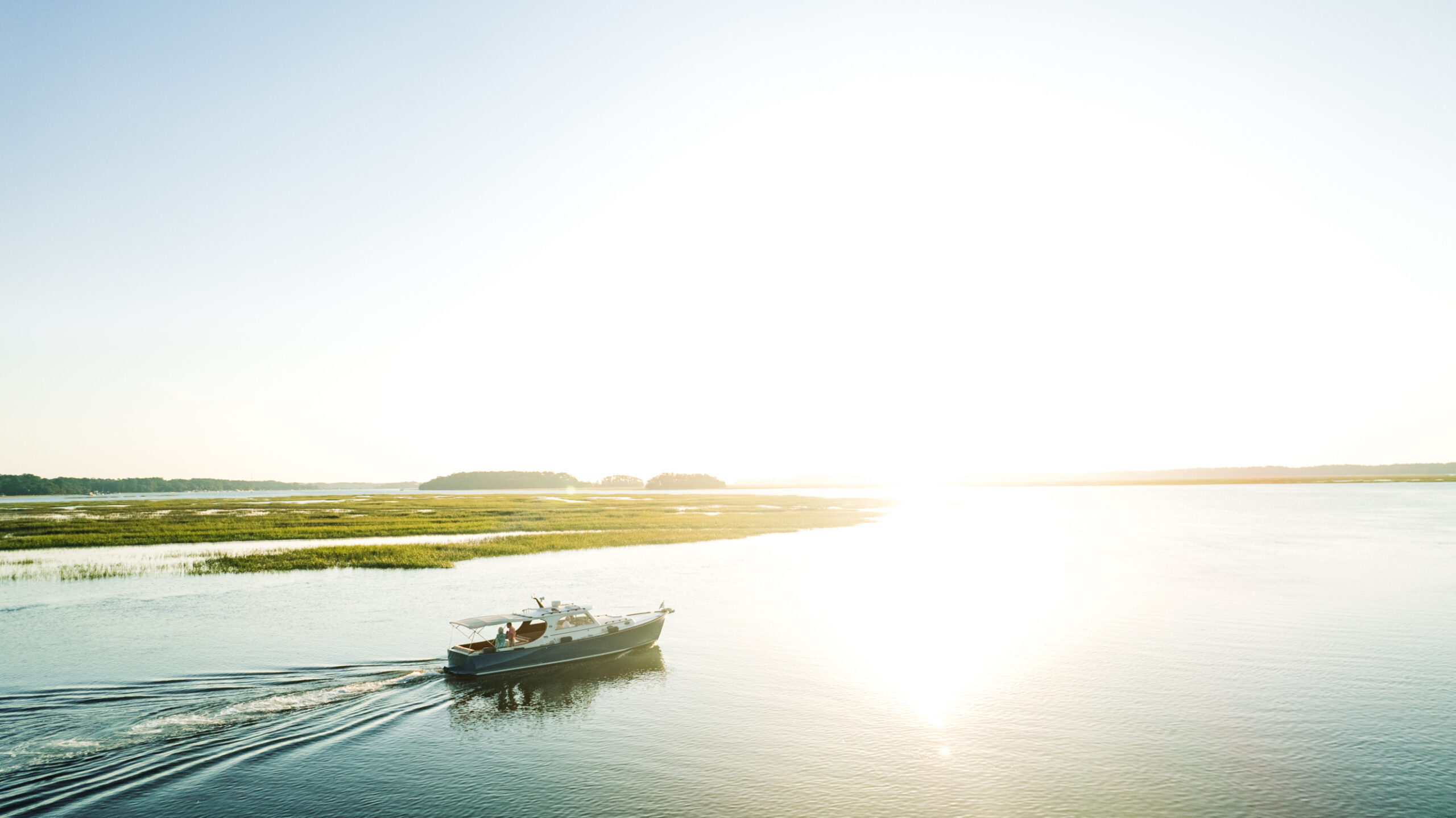
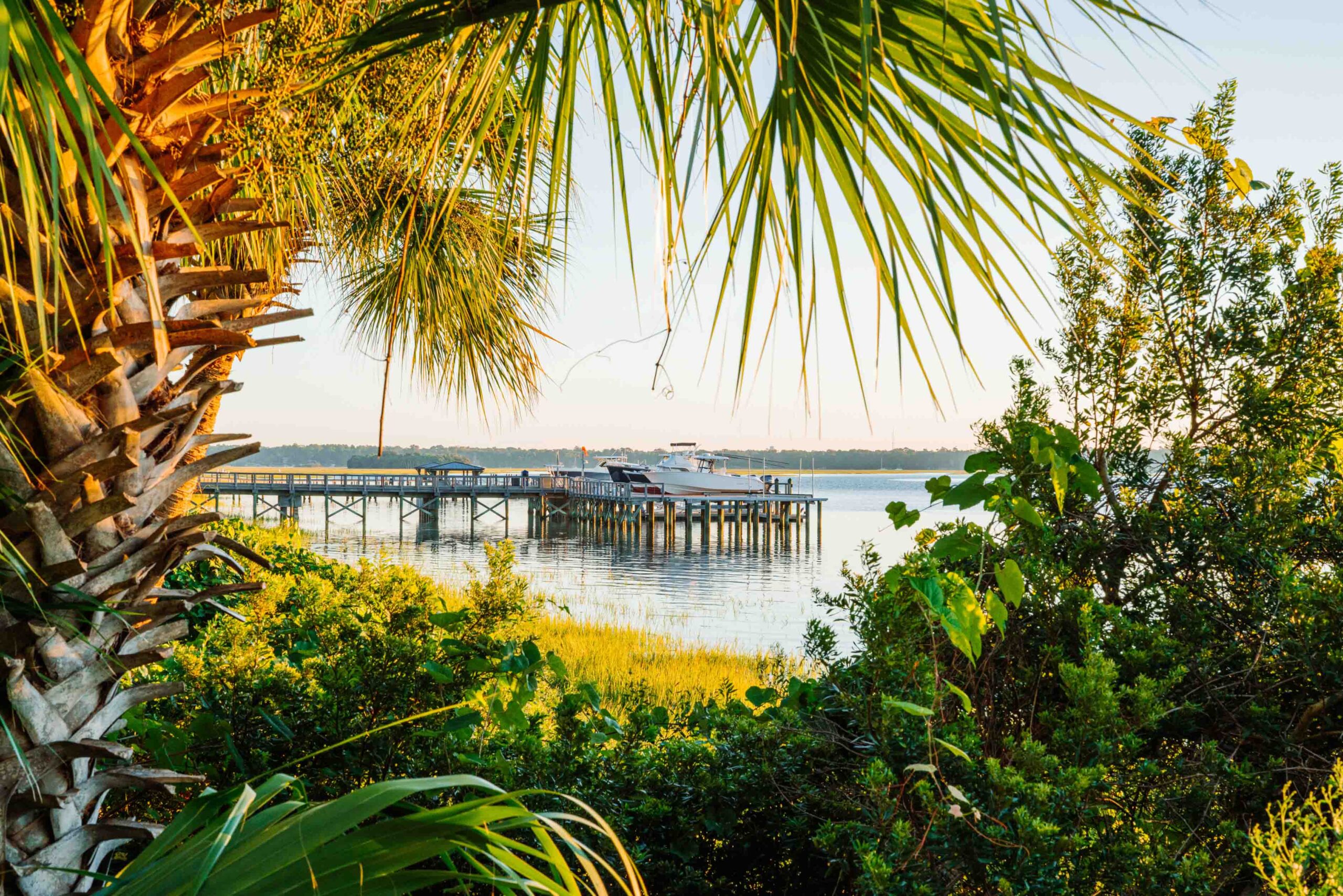
In the maritime forest, the canopy shelters Northern Parula and Yellow-throated Warblers throughout the long breeding season. The saltwater marsh edges, where the May, Cooper, and New Rivers meet the land, are hunting grounds for herons, egrets, and shorebirds at the height of their nesting cycles. The upland pine forest supports species that need open habitat structures and cavity sites, including Indigo Buntings and Great Crested Flycatchers. What residents encounter on a morning walk depends entirely on where they are on the land—each habitat holds a different set of birds.
Species to Watch This Summer
The Chuck-will’s-widow is one of the Lowcountry’s most distinctive summer presences and one of its most elusive. A nocturnal species, it’s rarely seen but unmistakable after dark, its call carrying through the Bluff’s quieter neighborhoods from early summer onward. The Conservancy documents Chuck-will’s-widows annually through structured nightjar surveys, making Palmetto Bluff part of a broader national monitoring effort.
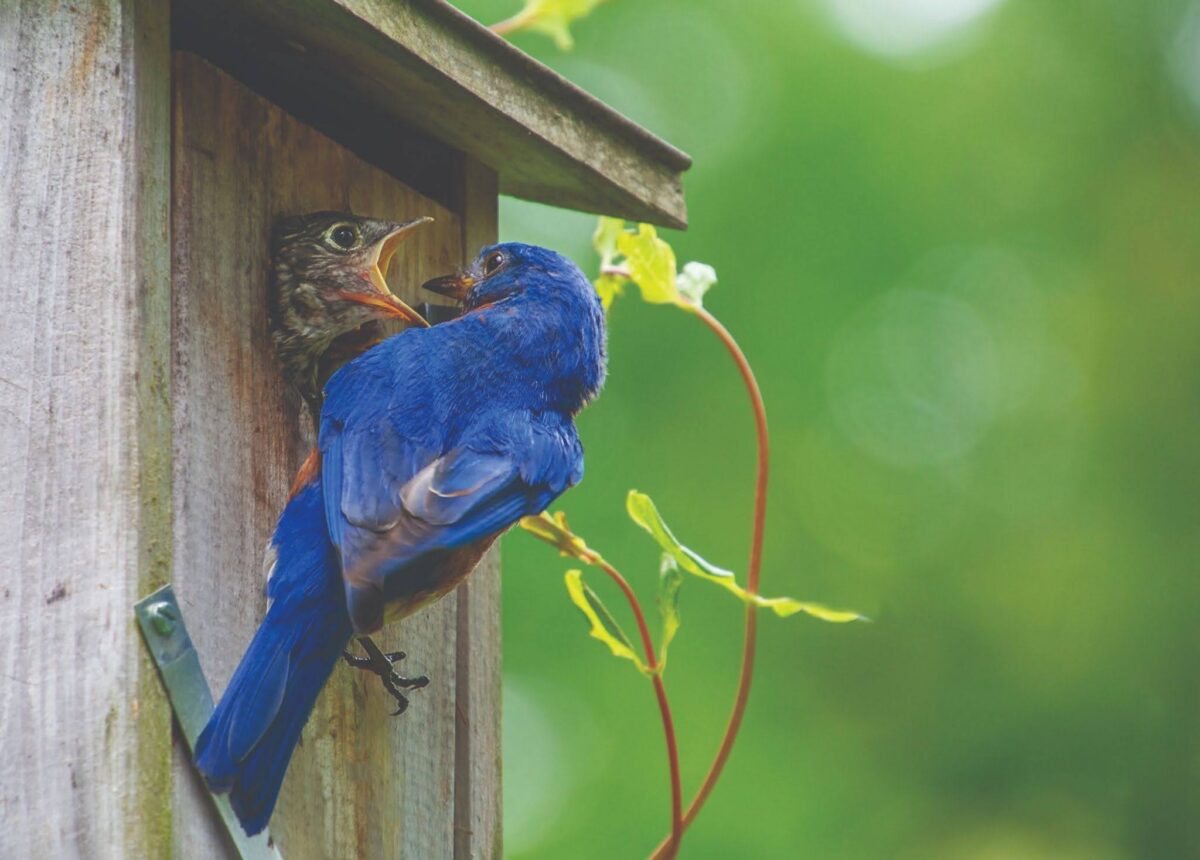
The Eastern Bluebird is among the most reliably spotted birds on the land through the summer months. Breeding in South Carolina runs from mid-March to early August, and bluebirds can raise two to three broods a year—meaning an active nest box in June may already be on its second clutch. The Carolina Wren, Carolina Chickadee, and Tufted Titmouse are year-round residents and equally active through the breeding season.
Painted Buntings also breed at Palmetto Bluff during the summer, making the Lowcountry one of the few places on the East Coast where residents encounter them reliably. Ospreys are equally present—by early summer, most are either still on eggs or tending to young chicks in the nest, visible along the rivers and tidal creeks that run through the land. Several warbler species breed here as well, including Pine Warbler, Yellow-throated Warbler, Northern Parula, Common Yellowthroat, and Ovenbird. Herons and Egrets are active throughout the year, nesting in large numbers along marsh edges and waterways.
The Conservancy at Work
The birds residents and visitors encounter at Palmetto Bluff aren’t incidental. They’re the result of active land stewardship.
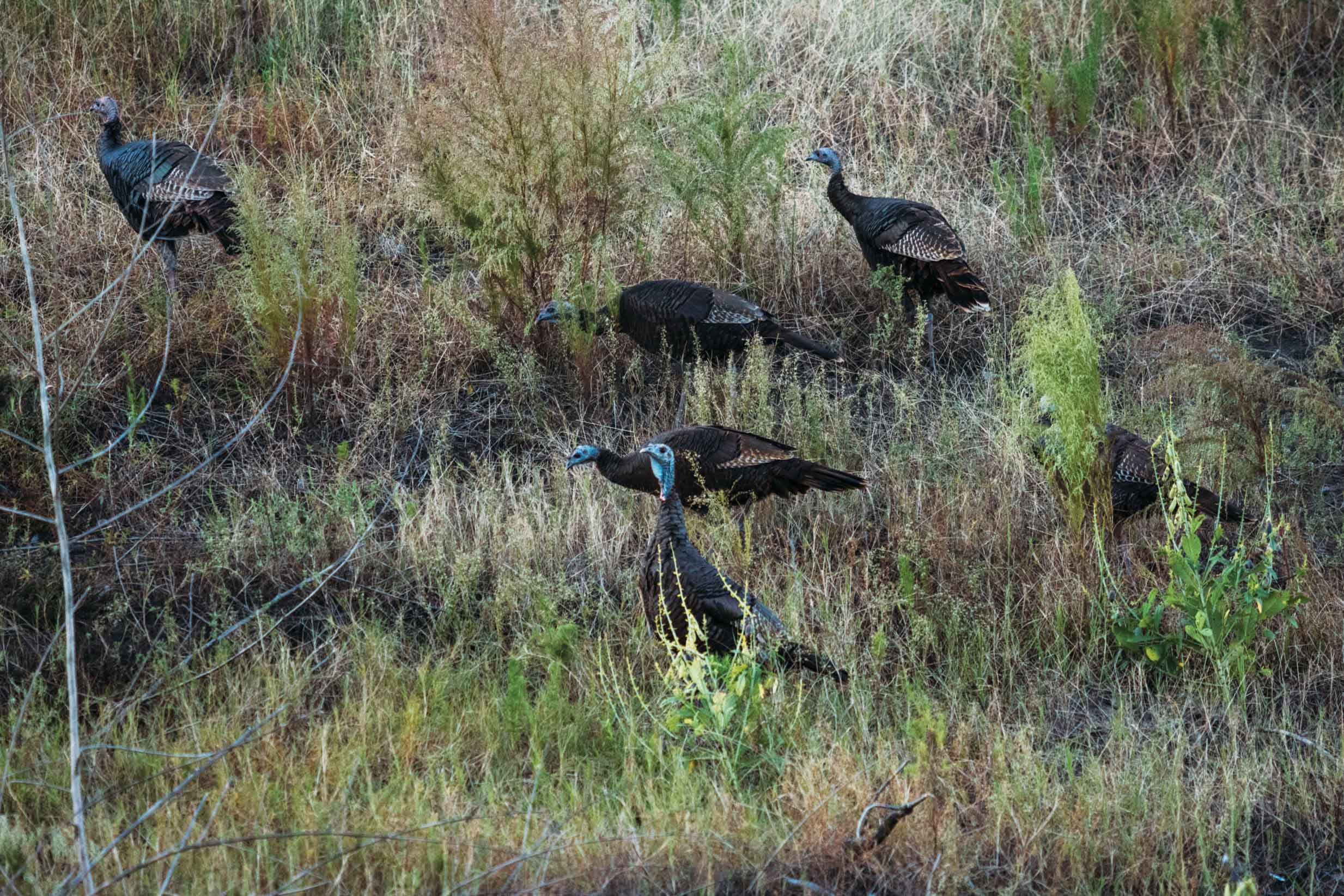
The Conservancy’s Land and Wildlife Management program is built around the Eastern Wild Turkey—a keystone species whose well-being depends on a mosaic of healthy habitats. Managing the land for turkey means maintaining maritime forest, upland pine forest, and open marsh in balance. That same mosaic supports the warblers, bluebirds, shorebirds, and raptors that share those habitats. When the turkey thrives, the broader bird community does too.
The Conservancy has also partnered with the Avian Research and Conservation Institute (ARCI) to evaluate changes in avian diversity over time, with a focus on the spring breeding season. Using point-count surveys, vegetation assessments, and GIS mapping, the work builds a long-term picture of how the land’s bird communities respond to habitat change.
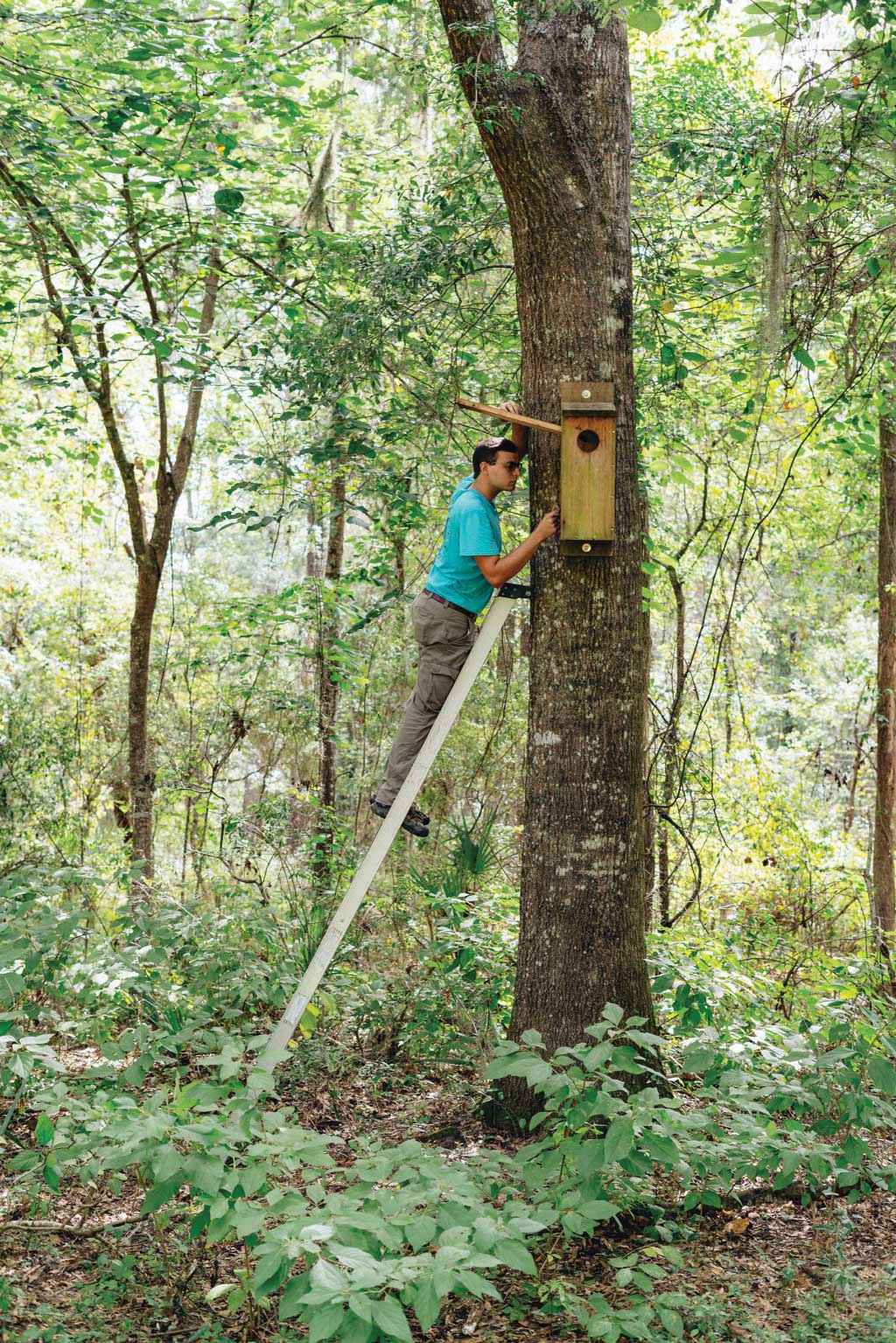
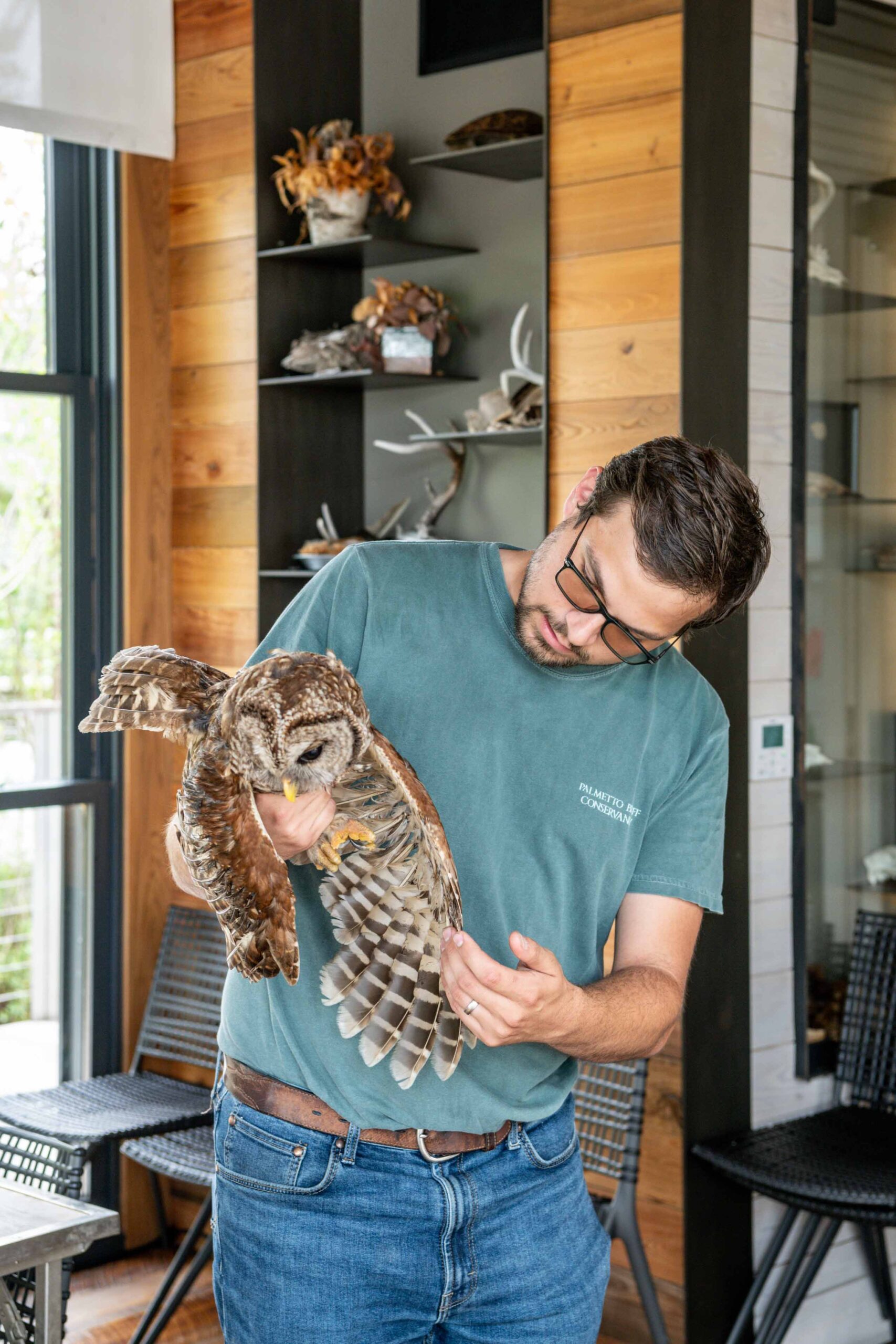
The bluebird nest box program adds a more direct layer of stewardship. The Conservancy monitors more than 70 nest boxes across the land from mid-March through mid-August, documenting nest-building, egg-laying, and chick-hatching at each site. That data goes directly to NestWatch, a citizen science program run by the Cornell Lab of Ornithology.
How Members Participate
Members at Palmetto Bluff don’t have to be passive observers. The Conservancy’s Education and Outreach programs put fieldwork within reach for anyone who wants it.
Through the breeding season, that includes nightjar surveys, where participants help document species like the Chuck-will’s-widow after dark. It includes NestWatch checks, where volunteers visit nest boxes to record what’s happening inside. The Conservancy also participates in Global Big Day, an annual event organized by the Cornell Lab of Ornithology in which birders worldwide document as many species as possible in a single day. That participation generates data that contributes to national and global conservation databases—records from the Bluff’s 20,000 acres of the South Carolina Lowcountry that might otherwise go undocumented.
Living Where the Land Matters
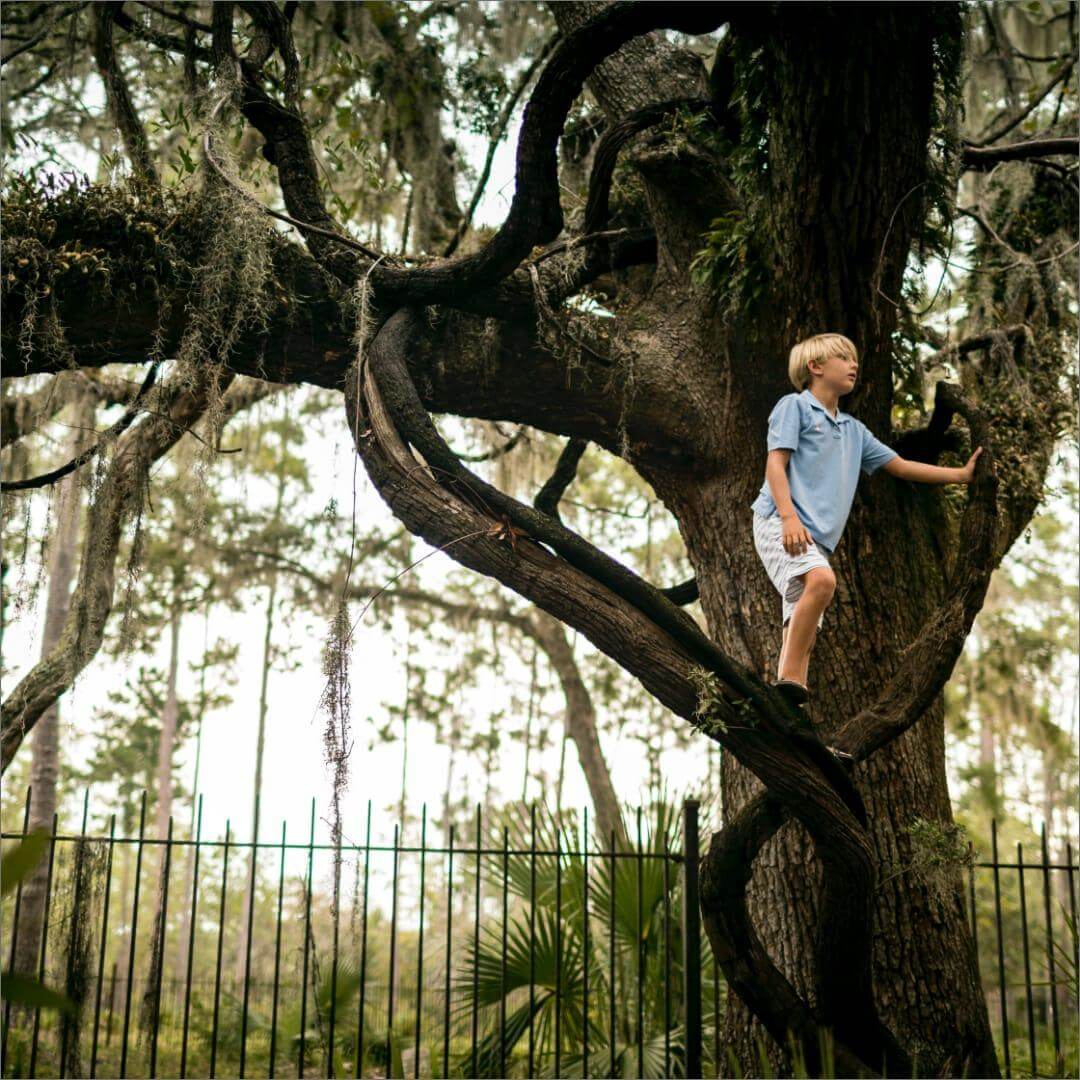
The birds of the Lowcountry are here because the land supports them. At Palmetto Bluff, that’s not a coincidence. The Palmetto Bluff Conservancy manages the land’s ecological health as a permanent commitment—one that shapes what Members and guests see from their porches, hear on the trails, and pass along to their families season after season.
If the land matters to you as much as the home itself, explore what’s available at Palmetto Bluff.