Written by Palmetto Bluff
May 26, 2026
Story by Hailey Wist | Photographs by Lawson Builder
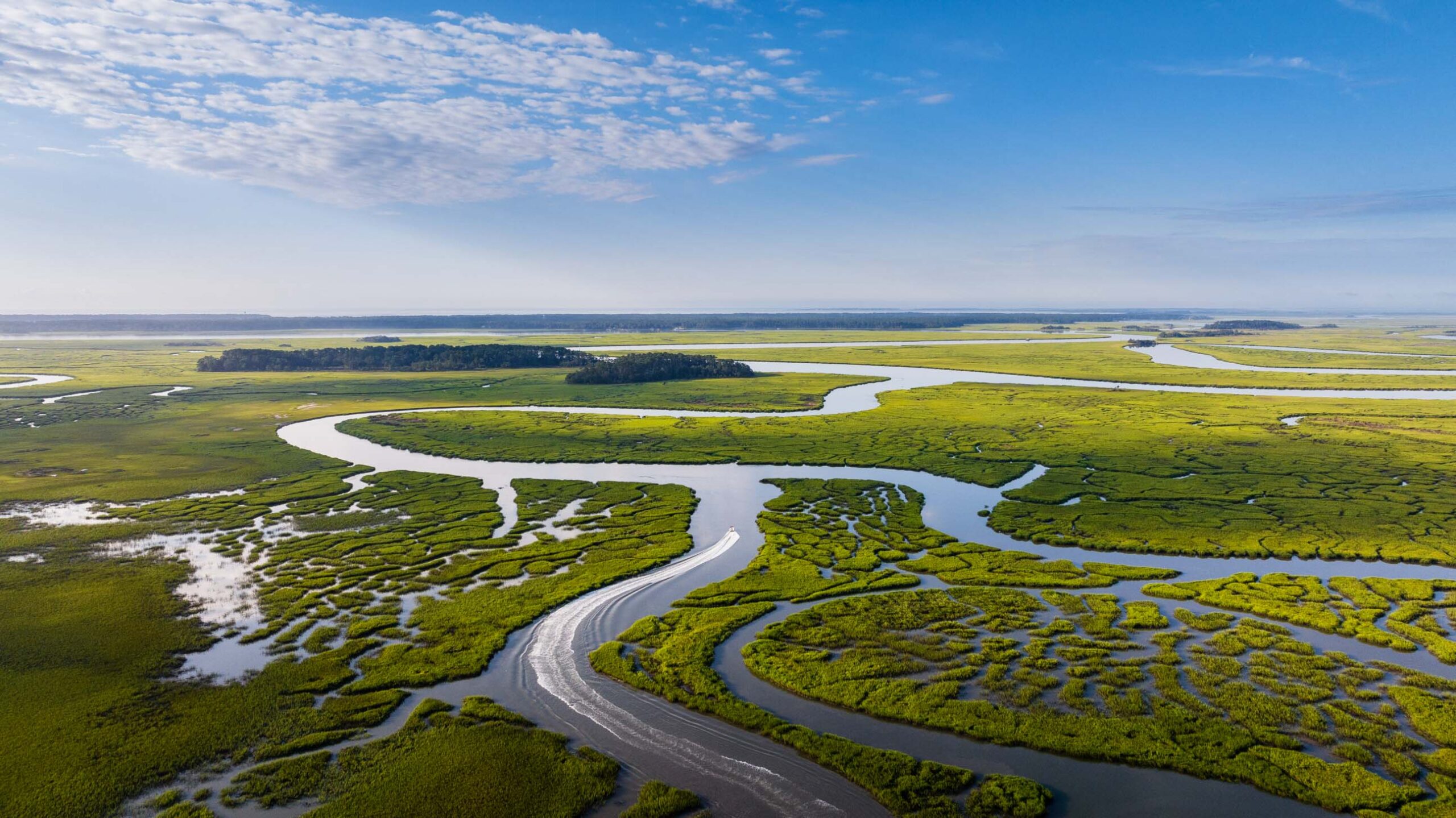
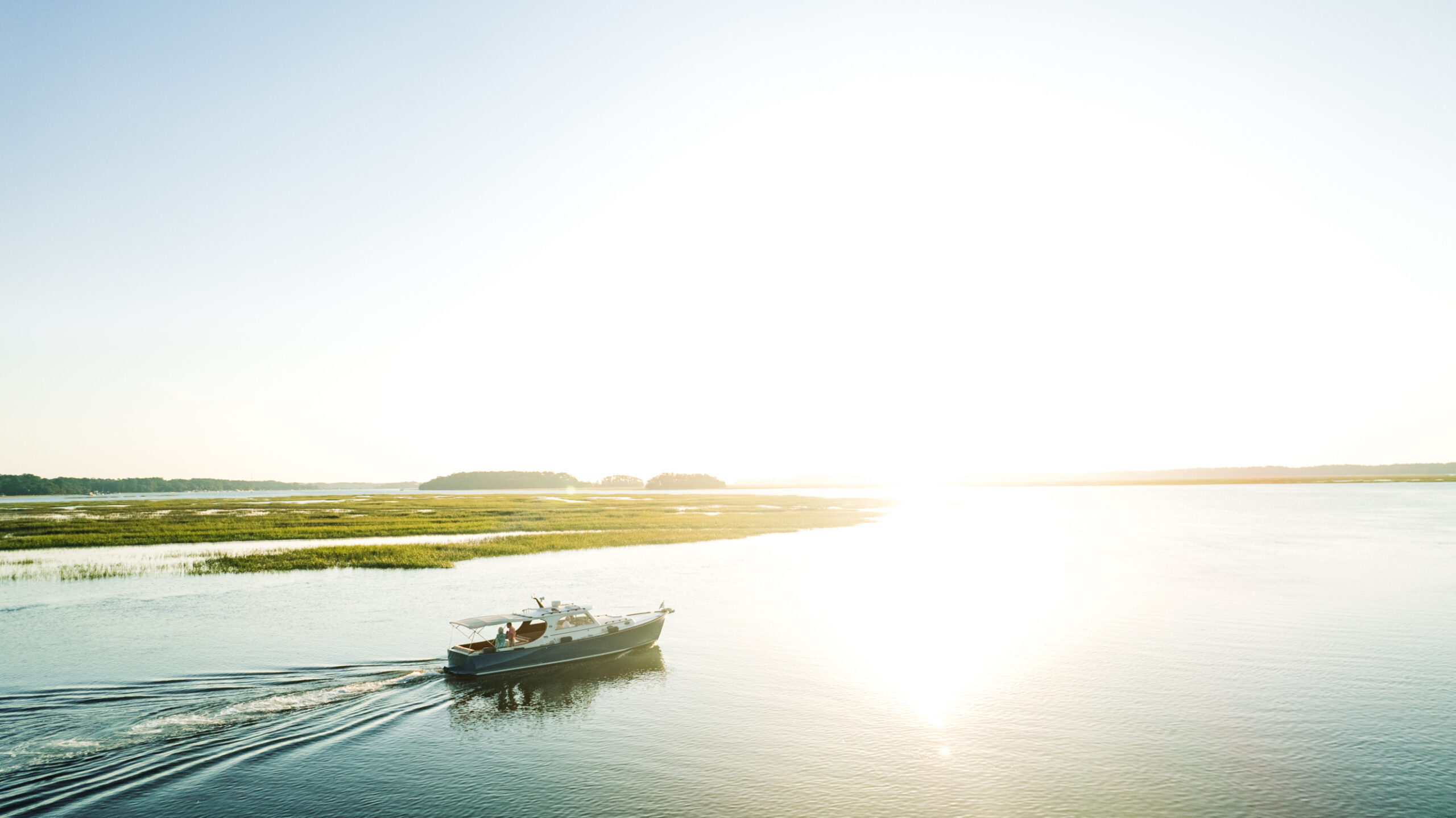
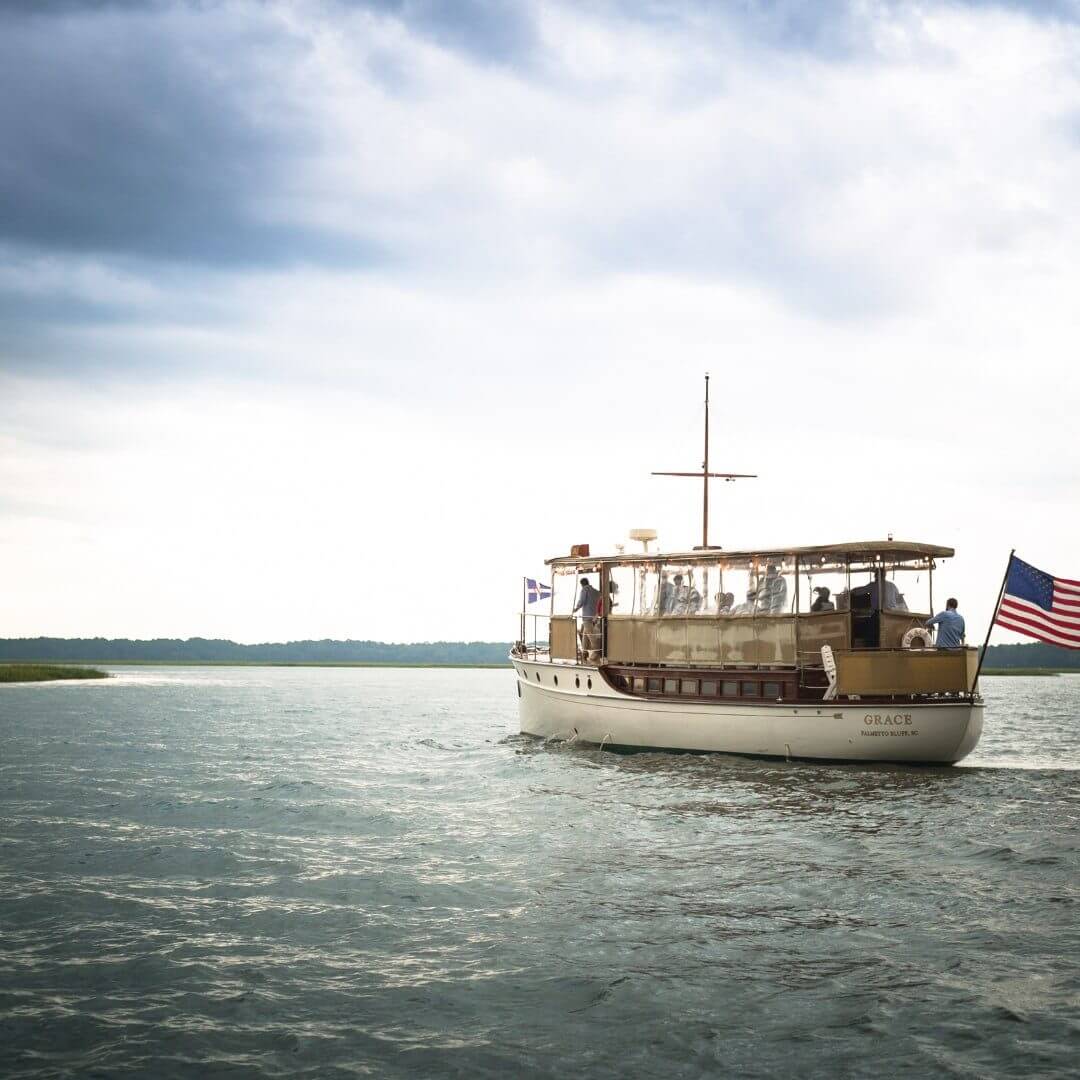
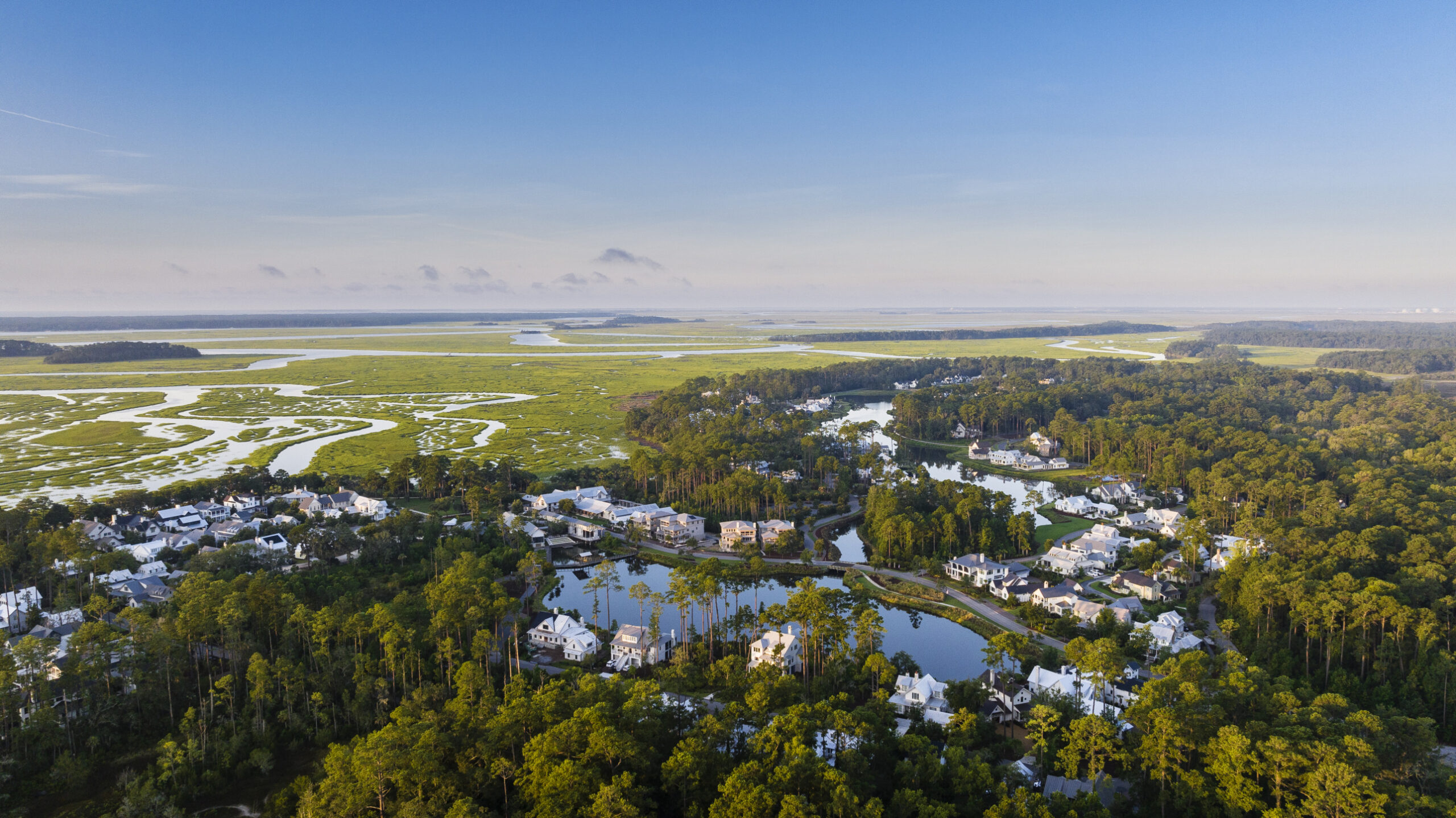
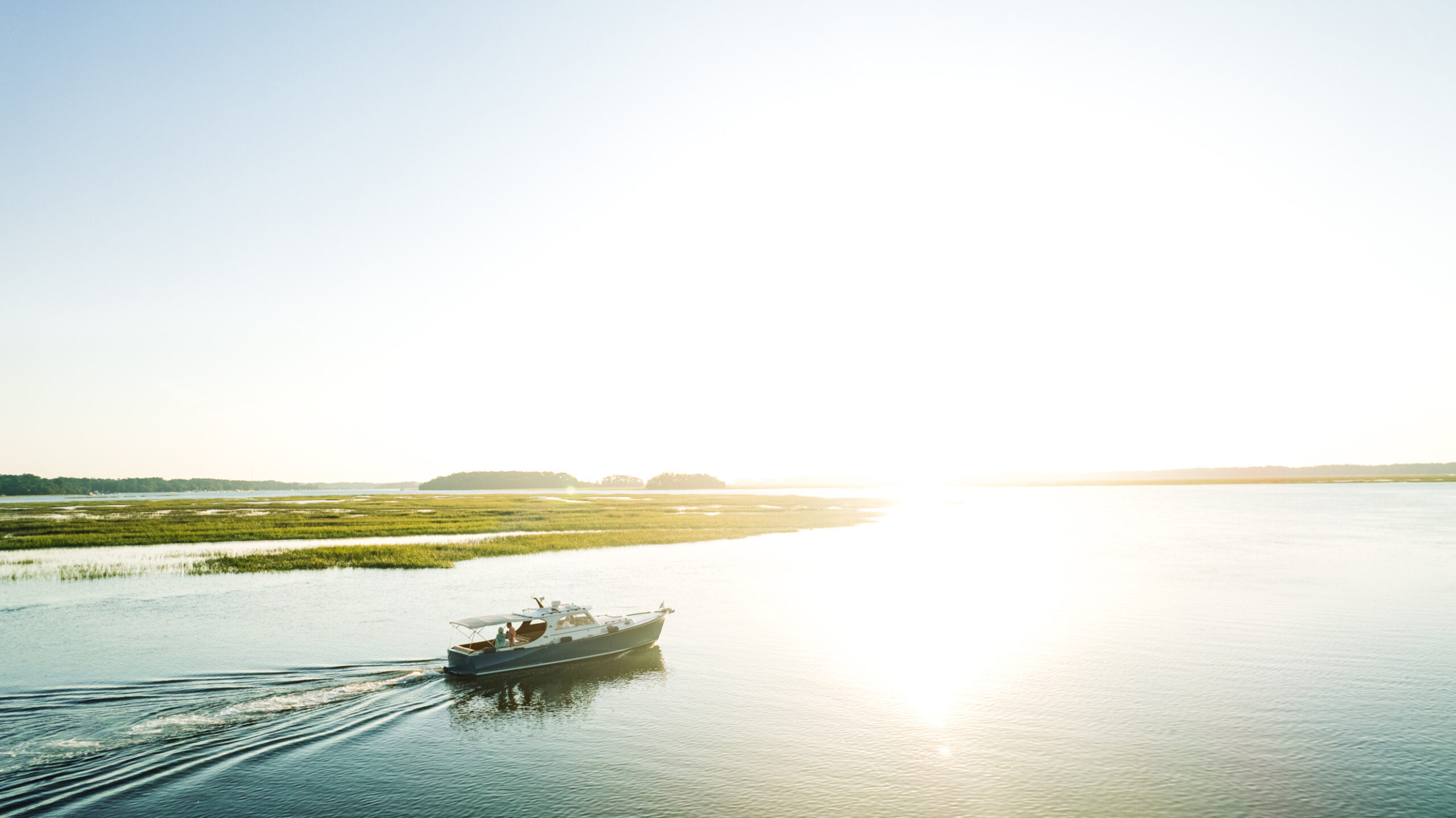
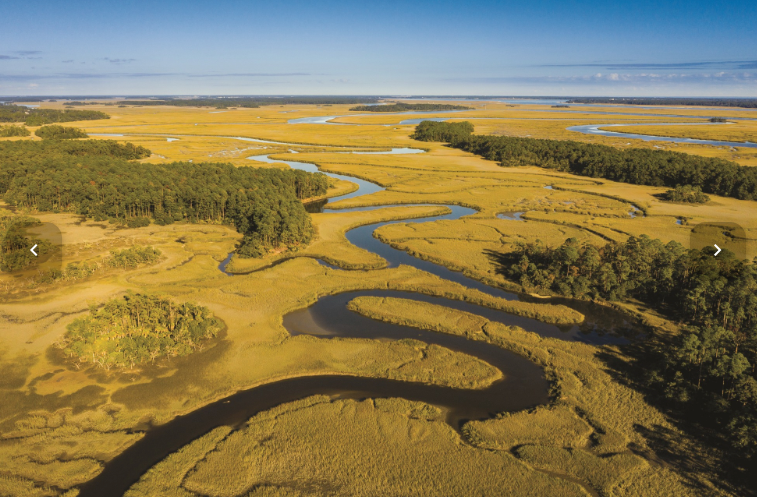
Sunlight glances off the water’s shifting surface, gulls ride thermals overhead, and the brackish air carries that unmistakable Lowcountry amalgam of salt and humidity. Palmetto Bluff members John and Nicole Semeraro settle their three boys into their seats, everyone’s eyes trained on the horizon.
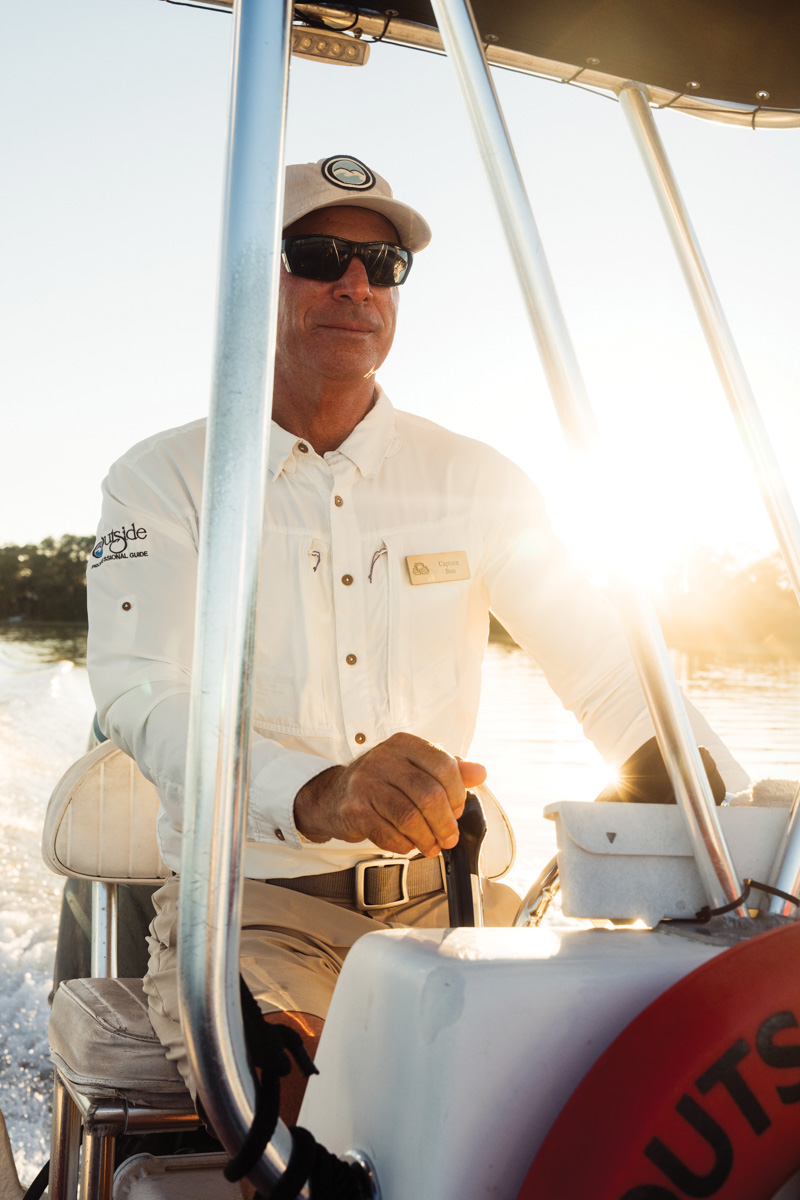
For Captain Boo, the river is familiar territory. He spent his childhood on these creeks, fishing and swimming. In the early 2000s, he earned his captain’s license and has led tours around Palmetto Bluff ever since. “Every excursion I do, there’s always an opportunity to see dolphins in their natural habitat,” he says. “And it never gets old.”
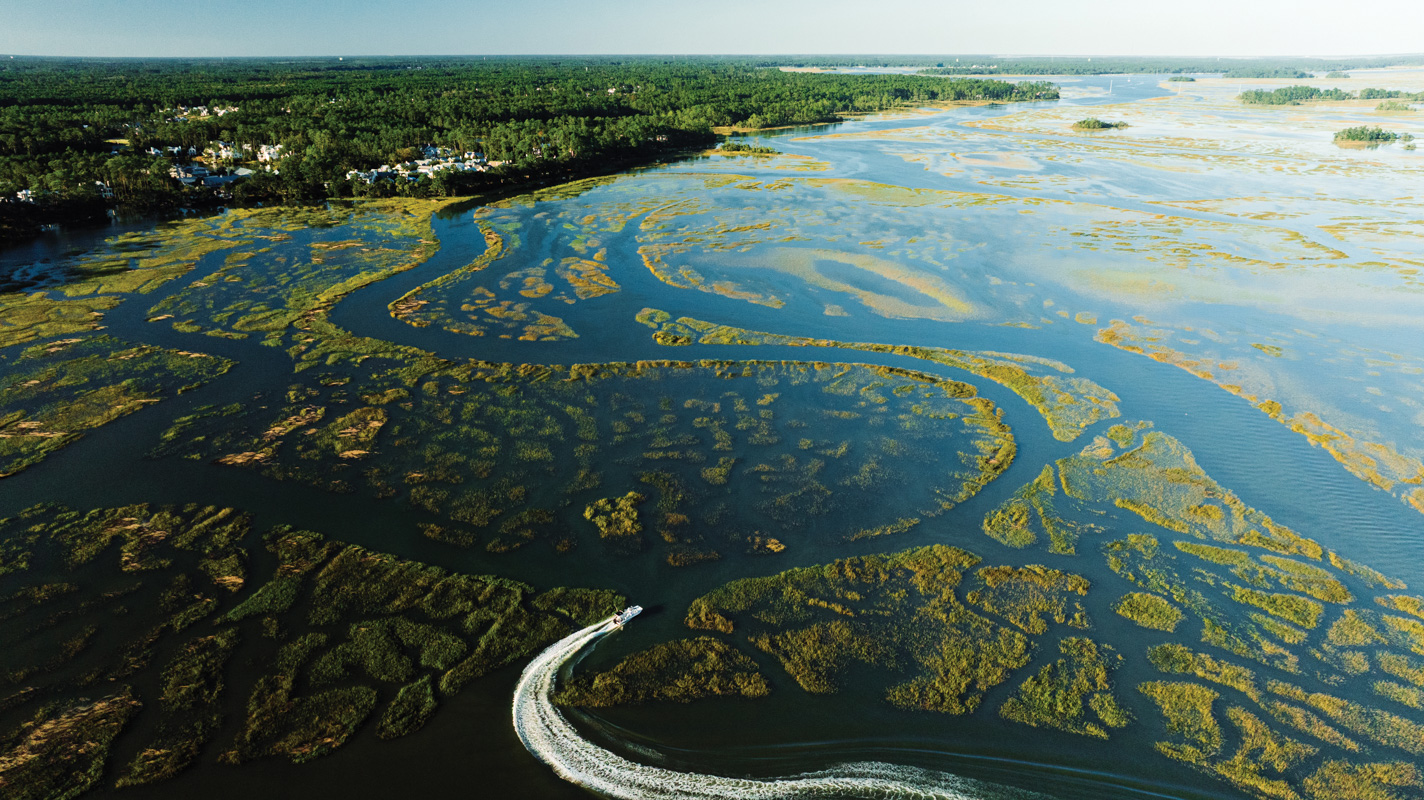
The Lowcountry is one of the most reliable places in the region to see bottlenose dolphins. The May River and surrounding creeks provide a stable food source and calm conditions for raising young. Many dolphins here are residential, spending most of their lives in the same estuary system. But their sightings shift seasonally. Winter often brings fewer animals as some travel to deeper, warmer water where prey is more available. “They will go to where the food sources are if they need to,” Boo explains. “Then they come back up here during the spring and summer.”
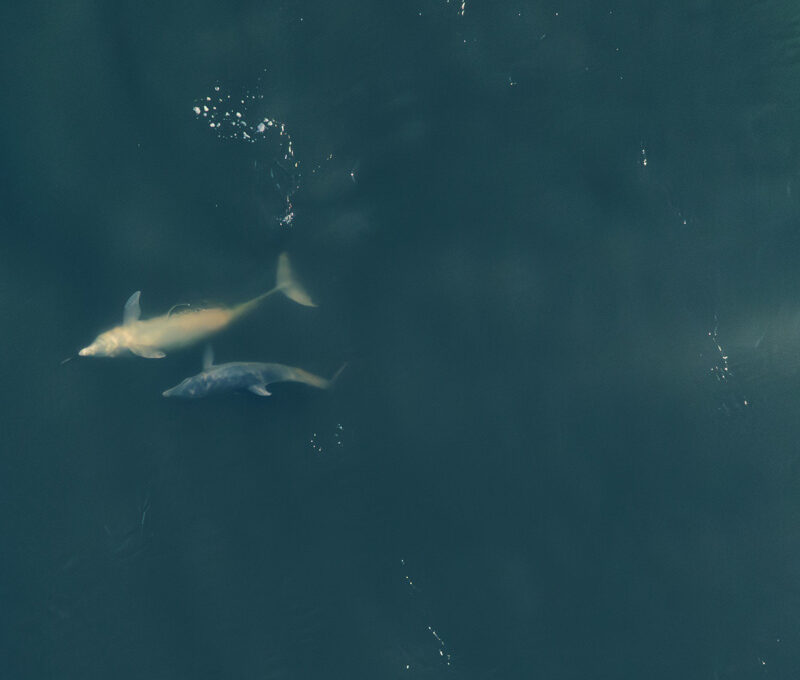
Calves are born in late spring and early summer after a year-long gestation. Mothers nurse for more than a year and keep their calves close for up to three years. Young dolphins learn navigation, communication, and feeding strategies by following their mothers through the creeks. Adult males often form alliances, while juveniles sometimes travel on their own; something Boo notices often in winter. “The ones we do see tend to be juveniles by themselves,” he says. “That’s part of the weaning process.”
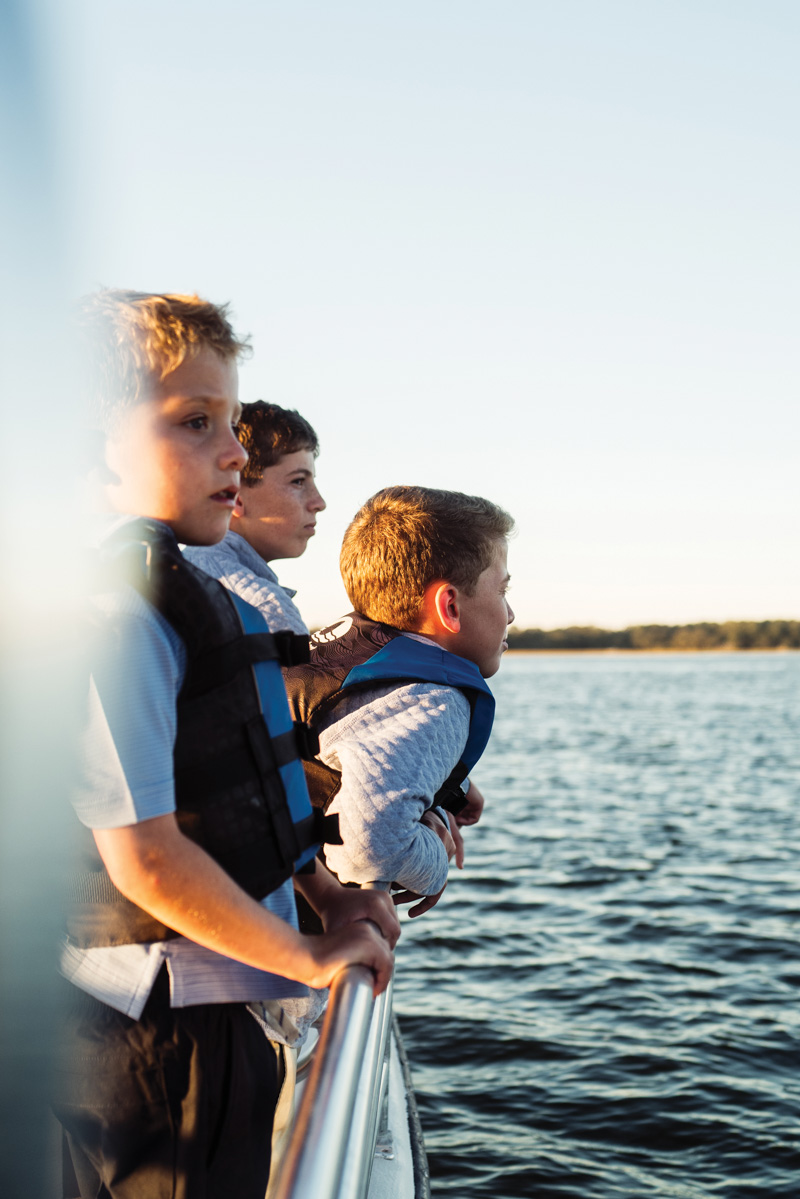
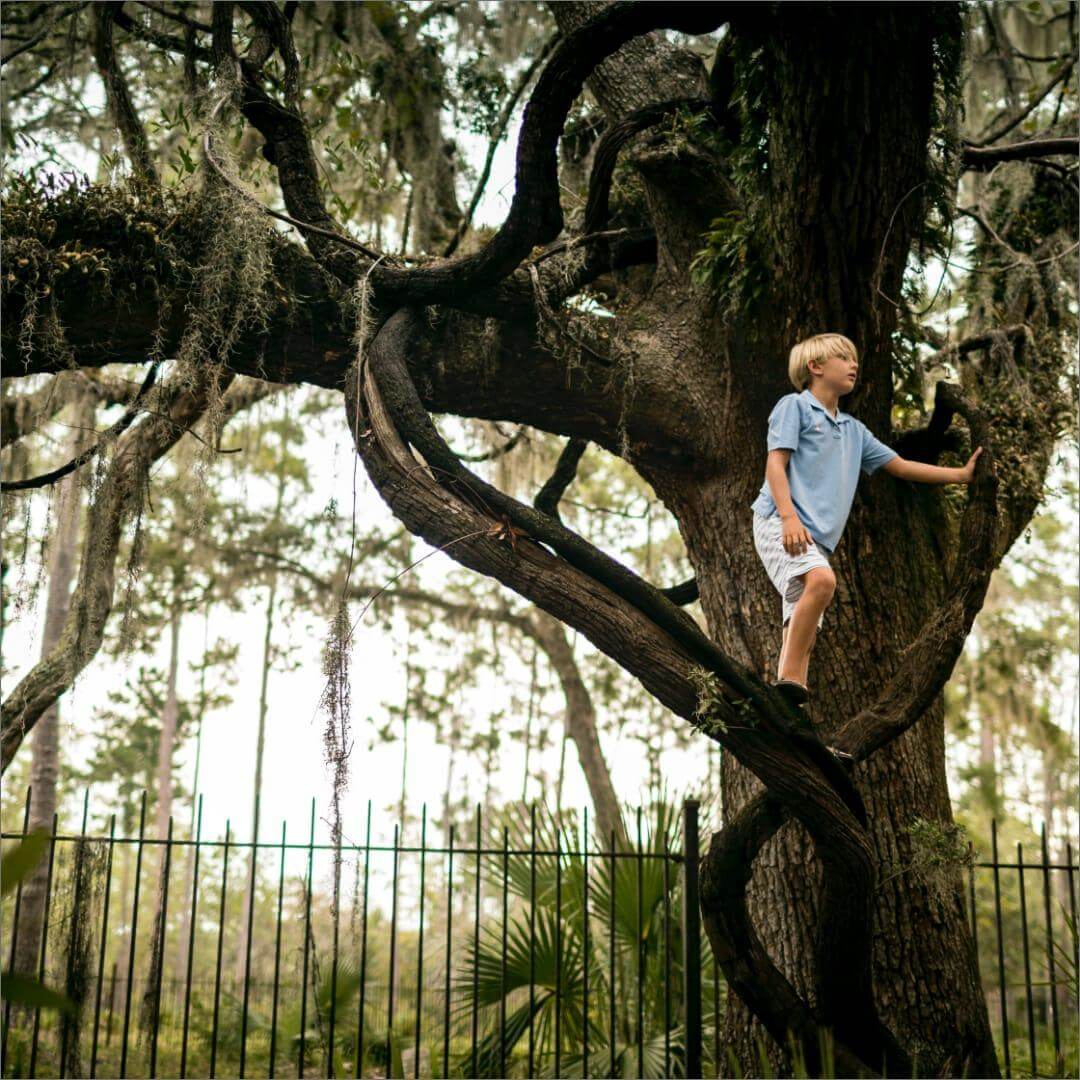
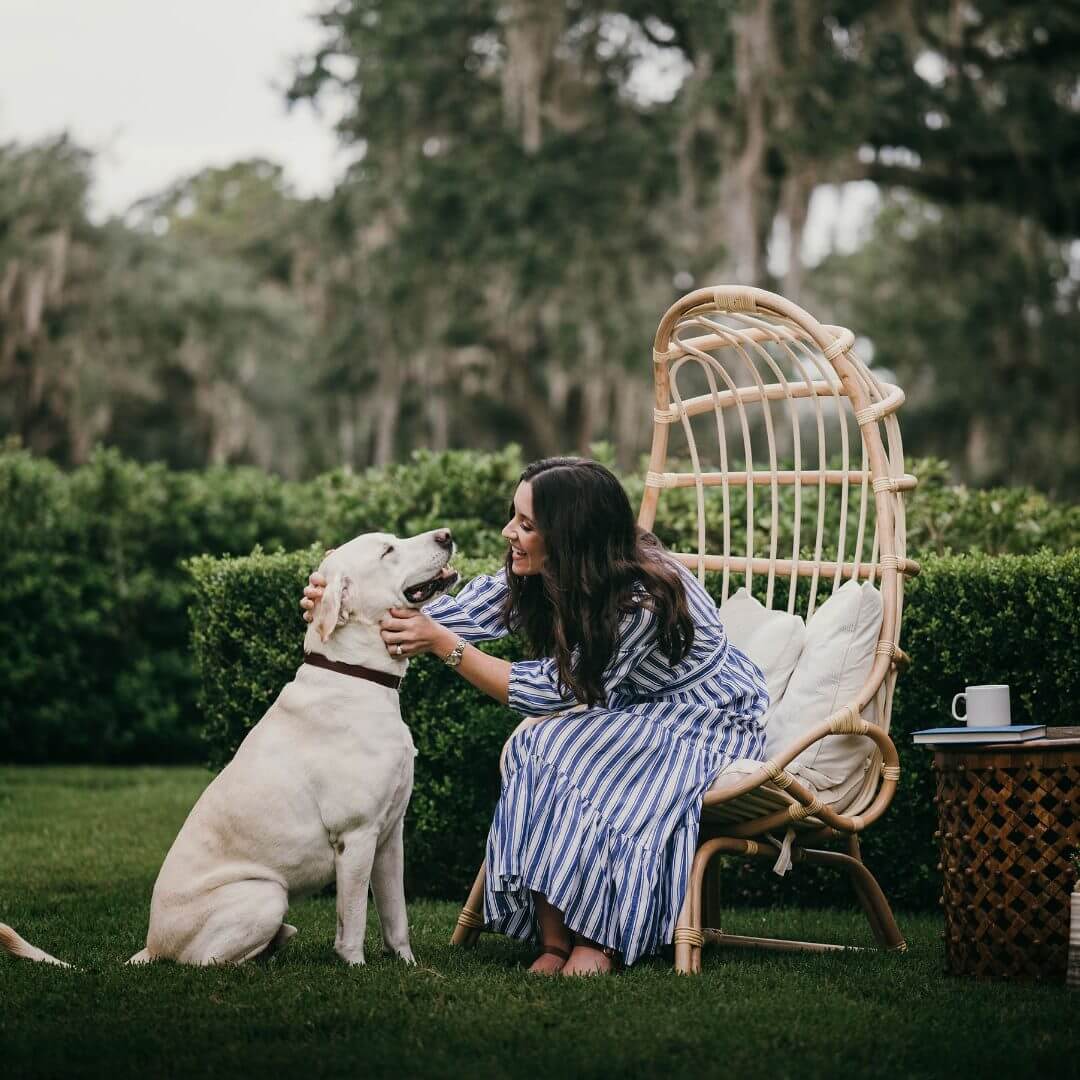
For many families, dolphins are part of daily life on the water. The Semeraros recently shifted from second-home visits to full-time living at Palmetto Bluff, and the natural surroundings played a major role in the decision. “Our family thrives here—being outdoors, being at the golf course, being on the water,” says Nicole. “The peace and calm allow us to take a breath.”
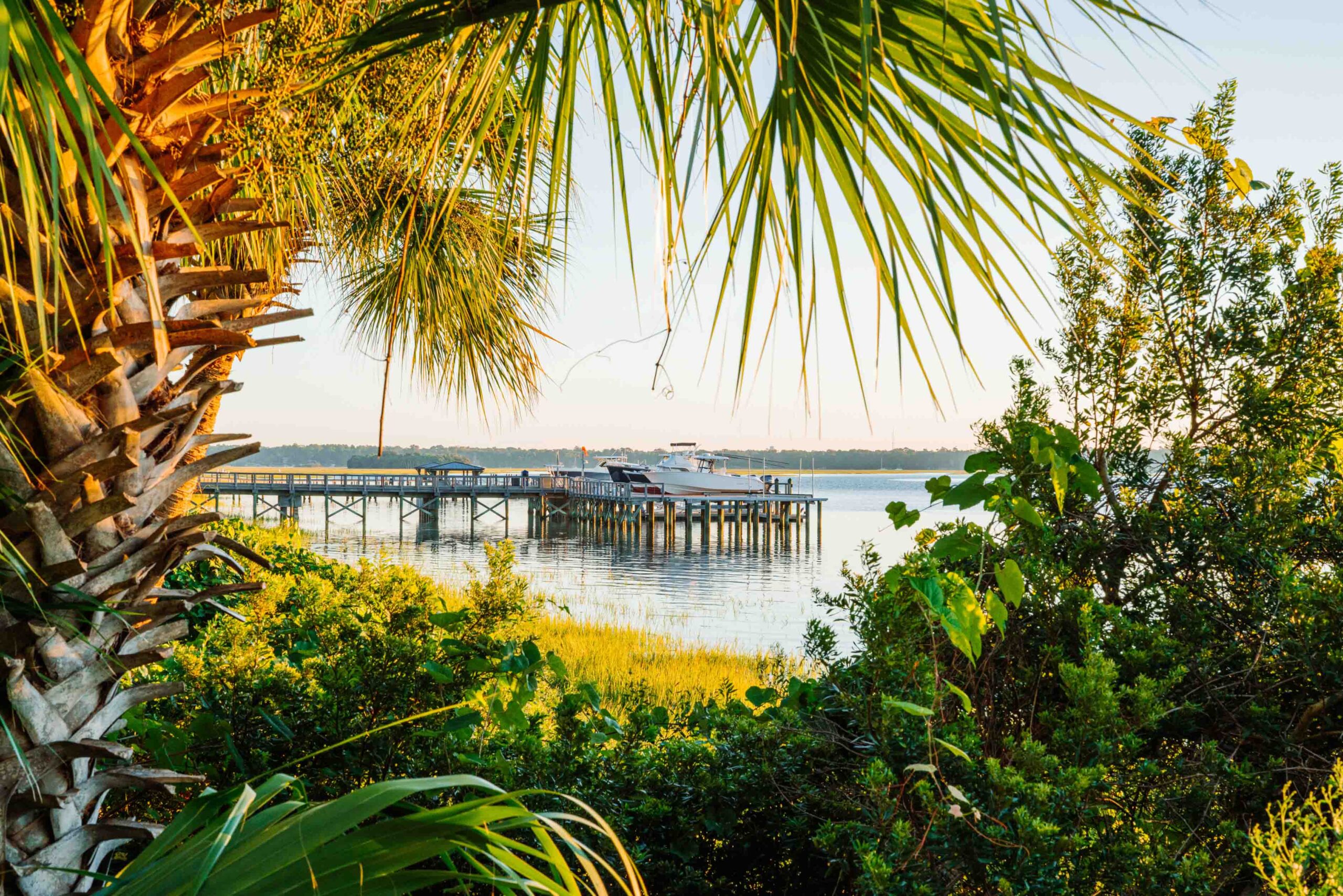
Her connection to dolphins is personal. She regularly goes to the Wilson Village dock at sunrise, where she journals and plans her day. “When I’ve gone through some of the hardest times, dolphins pop up and give me a sense of peace,” she says. “They symbolize hope, guidance, and protection.”
Cutting the engine, Boo explains how to read the surface of the water. Small changes in texture, movement near oyster beds, or shifts in the tide indicate where dolphins might be feeding. Bottlenose dolphins rely heavily on echolocation, especially in murky estuary water, and their feeding activity increases when the tides change. They hunt both cooperatively and independently, depending on conditions.
He also described one of the most unusual behaviors in the region: strand feeding, where dolphins work together to push fish onto mudbanks before lunging up to grab them. It’s rare to witness and documented in only a few places in the world.
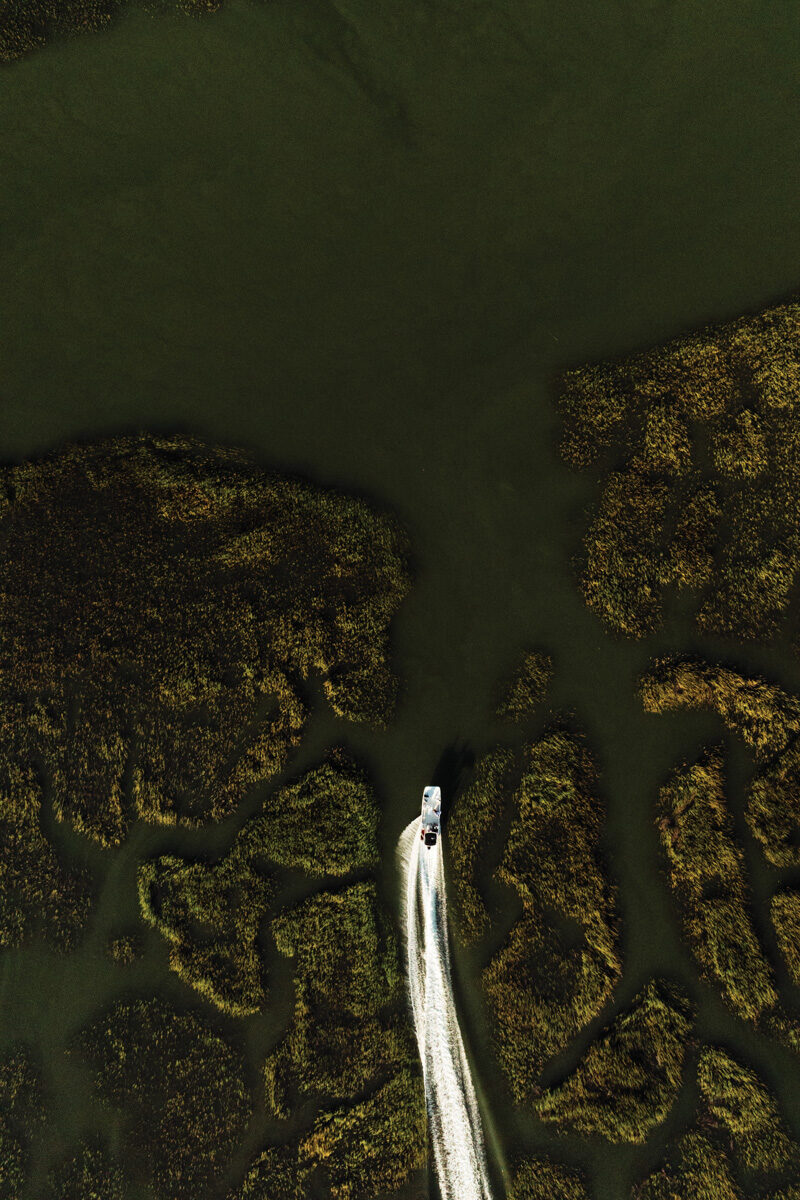

On this warm October day, the boys shout as several mother-calf pairs circle the boat, and a few juveniles surface further out. At one point, a dolphin comes close enough for the kids to see its eye. “I love when they come out of the water with their eyes,” Boo says. “If you see their eyes, they’re definitely observing you.”
Nicole lives for these moments. “It takes your breath away!” She says. “It makes you appreciate this place, not just Palmetto Bluff but the waterways around it.” She often feels the same thing when she’s out at sunrise or fishing with her family in the evenings.
Responsible dolphin viewing is critical in these shared waterways. Federal guidelines require at least fifty yards of distance and prohibit feeding, approaching, or harassing wild dolphins. Boo follows those regulations closely, avoiding erratic movements, minimizing noise, and keeping clear of mothers with calves. Feeding dolphins is illegal and disrupts their natural foraging patterns, putting the animals at risk.
Dolphins are also indicators of environmental health. Changes in their behavior, feeding patterns, or movement can reflect shifts in fish populations or water quality. Observing them in the wild provides a clearer understanding of the broader ecosystem.
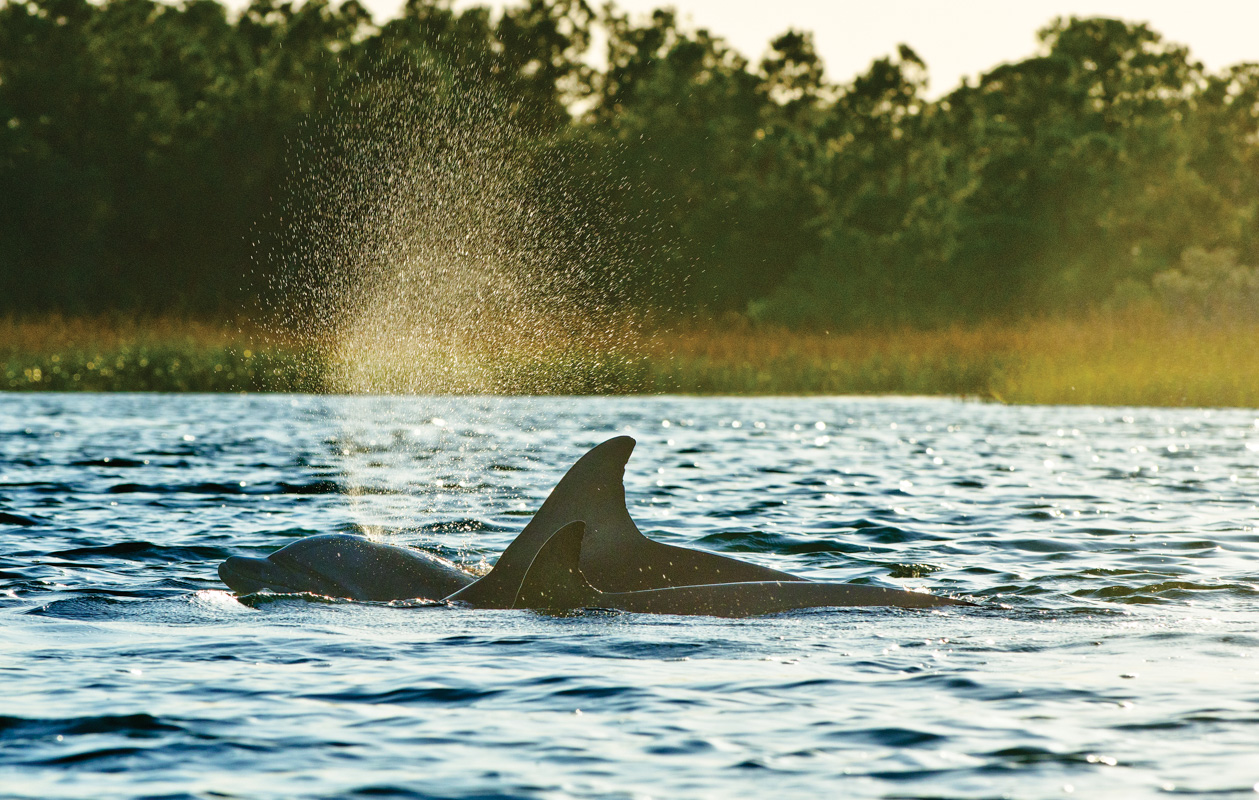
As the tour wraps up, the light softens across the water. A final pair of dolphins surfaces near the boat, moving steadily along the current. The kids lean forward, quiet for the first time, watching as the animals travel together before disappearing beneath the surface.
Boo finds meaning in watching people experience the genuine magic of the river, where wildlife reveals itself on its own terms. “When someone sees a mom and a calf for the first time, they often have a pretty emotional response,” he says. “It’s incredible to see.”
Walking off the boat that evening, the Semeraro’s are still buzzing from the encounter, the boat ride at speed. The experience delivered what makes these tours memorable—authentic connection to the natural world, wildlife in situ, and an important primer on how our Lowcountry environment supports this iconic species.