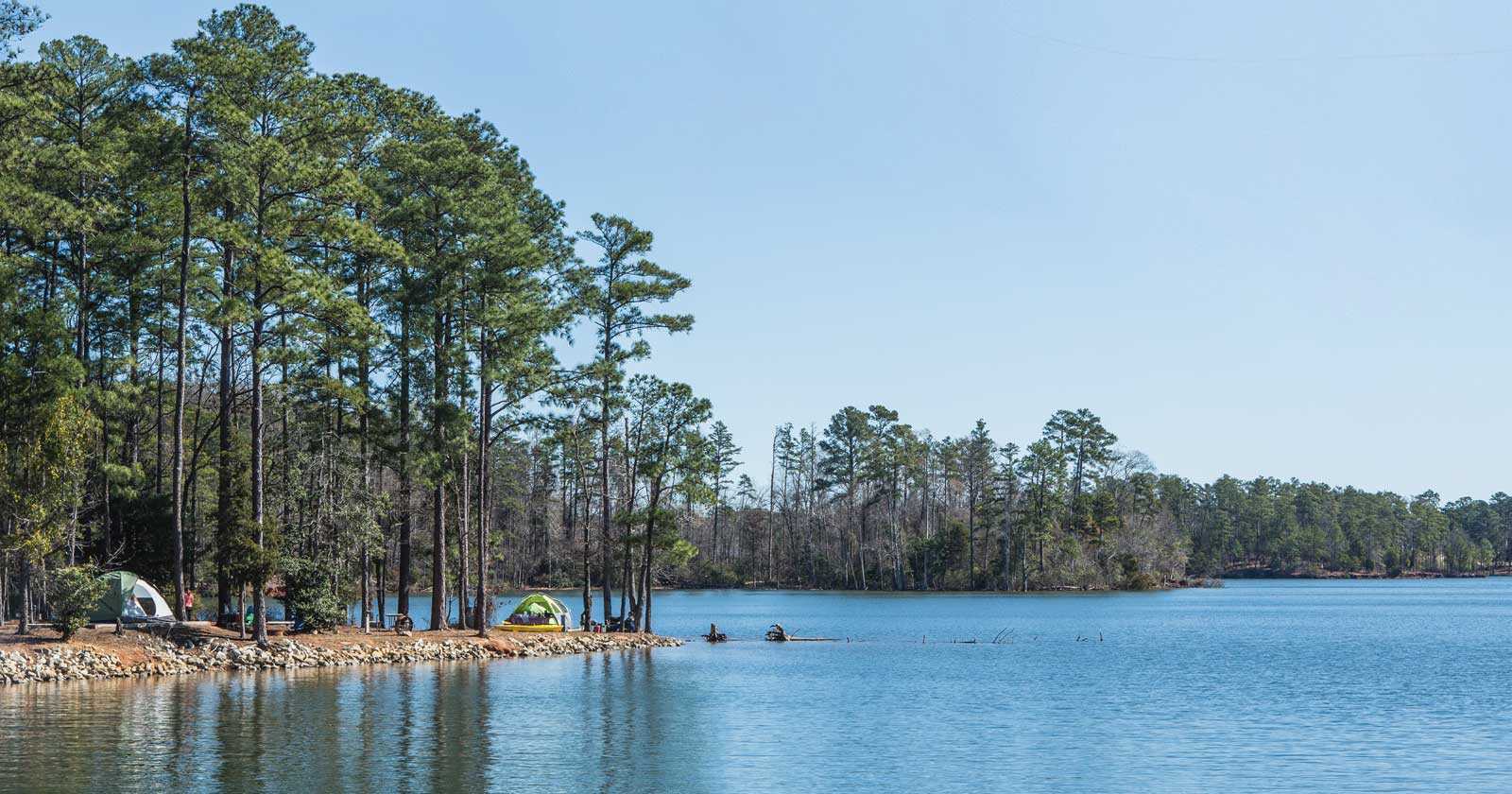
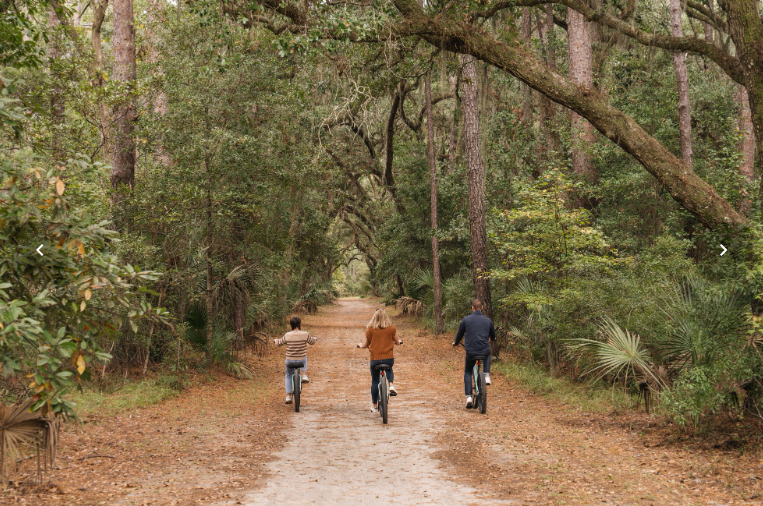
Camping, with its loosely defined rules and requirements, can successfully occur on any landscape, with any amount of equipment, and on any date. Are you camping in a high-end RV? Sure. Camping in a mountain cabin? Yeah, that works I suppose. In a tent? Maybe a hammock? A lean-to shelter? Cave? Now you are tickling my fancy. Near the ocean, mountains, creek, hunting ground, fishing hole? Yes, indeed! There is no wrong answer. There are, however, details that are consistent with most exceptional camping trips. I’ll bet there were biking, hiking, and kayaking opportunities close by. There was also most likely some pristine wilderness. And the chosen campsite probably had a good view.
South Carolina has an enormous array of opportunities for camping. In fact, there are almost too many options. For this article, we will focus our attention on the Lowcountry. More specifically, we will look at South Carolina state parks within an hour’s drive of Palmetto Bluff. By choosing from a few semi-local sites, we can lay out some trips for a weekend excursion. It would be poor form to recommend a camping area without visiting the location first, so for research (and fun), I loaded up my little familial unit and hit the road.
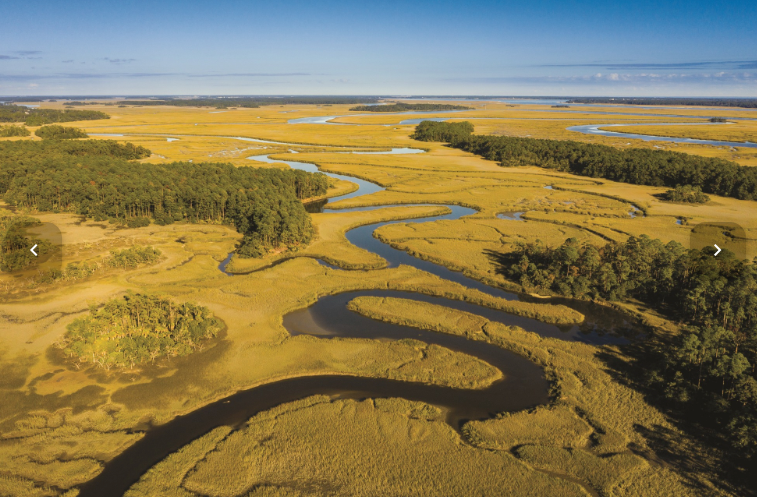
Our first destination was Hunting Island State Park. To get there, just follow Sea Island Parkway out of Beaufort, South Carolina, in the direction of Fripp Island. You will have no choice but to cross onto Hunting Island. A barrier island free from development, here you will find pristine maritime forest. The island boasts 5 miles of Atlantic Ocean beachfront—great for hiking, biking, tanning, and swimming. A beach without a backdrop of towering condominiums and parking lots is a rare find these days. It is a reality at Hunting Island State Park. On the northern end of the island, coastal erosion and sea-level rise have produced a driftwood-covered beach. Imagine massive trees toppled and scattered on the sand like sun-bleached skeletons. It is visually striking, especially at sunrise.
Once you’ve had your fun on the beach, get out and explore all this island has to offer. Other attractions include a lighthouse with panoramic views of the coast and forest, a marsh boardwalk with excellent sunsets, a top-notch nature center, and 8 miles of nature trails. Camping is not permitted directly on the beach, but don’t let this discourage you.
Camping on the beach is overrated, as sand always finds its way into tents, sleeping bags, and bodily crevices. (I won’t elaborate on the discomfort this phenomenon brings.) You’ll be much more comfortable at a campsite with shower/restroom facilities as well as hookups for potable water and electricity.
A lighthouse and 5,000 acres of beach, marsh, and maritime forest come together in a great recipe for a full weekend of fun. Be sure to reserve your campsite well in advance. Hunting Island State Park is a highly sought-after camping destination.
Our next journey begins in Walterboro and ends in Ridgeville, South Carolina. You’ll find the entrance to Colleton State Park just minutes from Interstate 95. This park is a mere 35 acres, but big things come in small packages. Here, you will find a short, yet diverse, nature trail leading down to the Edisto River. There are a handful of campsites that can accommodate RV or tent campers. Campsites #9 and #11 are the best choices, if available, as each overlooks the Edisto—the park’s main attraction. Although it will only take about an hour to see all this park has to offer, we recommend it because it’s a launching point for a kayaking adventure.
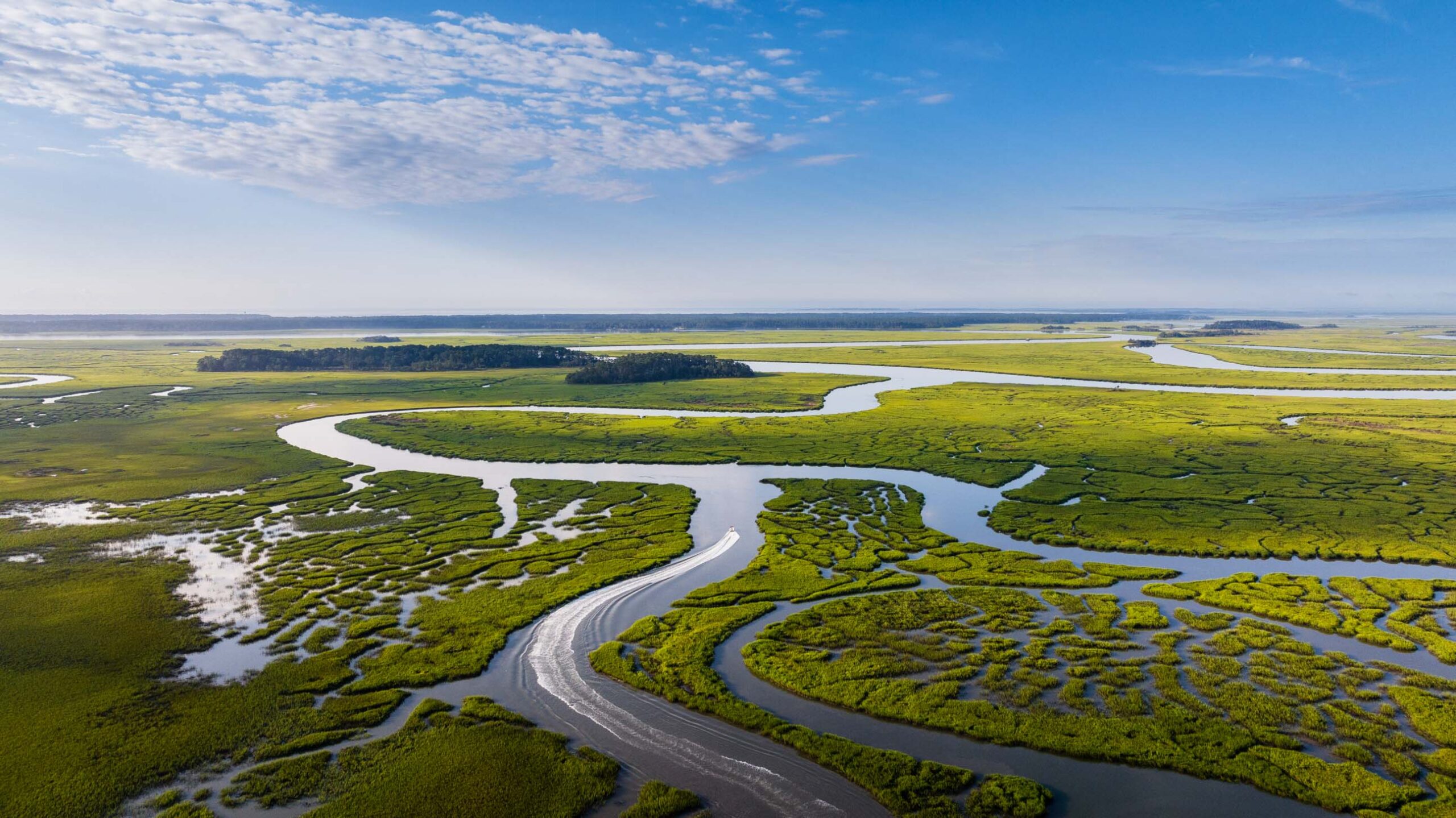
Pick a weekend. Since you’ll be visiting two parks, you will want to arrive at Colleton State Park in the early afternoon on Friday. This will give your group plenty of time to set up camp, get a lay of the land, have dinner, and relax. Break camp early Saturday morning, load your gear into your kayaks or canoes, and shove off into the wild and wonderful Edisto. This river is one of America’s longest free-flowing blackwater rivers. Dyed to the tone of sweet tea by leaf litter, a blackwater river is one that flows very slowly through forested swamp or wetlands. Once you set sail, your group can expect a leisurely 23-mile float downstream. Sit back and enjoy the ride, or bring a rod and catch your dinner along the way. This is multitasking at its finest. (Just make sure to grab a fishing license first.)
Your destination is Givhans Ferry State Park, where your group will make landfall Saturday afternoon. This park is 988 acres. Within its boundaries, you will find several miles of nature trails, playgrounds, and pavilions for lounging.
After a day of boating and floating, you will have a decision to make. Do you camp Saturday night at Givhans or load your gear and head home? The choice is yours. There are plenty of sites for RVs as well as tent-only campsites. (In the biz, we call this a primitive campsite.) No matter what you decide, you will need a way to return to your vehicle at Colleton State Park. Hopefully, you thought ahead and parked a second vehicle at Givhans on Friday afternoon for this purpose. If not, hitchhiking is ill-advised.
Good times! A camping trip is a way to attach yourself to a specific place and time. It is a single-serve moment in nature that can’t be re-created or repeated. Knowing this gives reason to get back out there for another round of chasing that perfect trip. Unfortunately, the camping trip that most folks remember with absolute clarity is the trip that went horribly wrong. You know. The one where your spouse or child got poison ivy, the one where the bugs were outrageous (and you didn’t have bug spray), the one where all of your gear got thoroughly soaked, the one where nobody remembered toilet paper. . . .
********************************************************************************
You CAN have a perfect camping trip by following a short list of recommendations.
1. Be prepared. Make sure all gear is functioning properly and packed neatly before departure. Commonly forgotten items that can make or break a trip include bug spray (extremely important in the Lowcountry), toilet paper (and a shovel to bury the evidence), a first-aid kit, and a chair or cushion to rest on.
2. Hydrate, hydrate, hydrate. The natural world has a way of sneakily sucking the moisture from your body.
3. Educate yourself on any local rules, regulations, or permit requirements as these can often vary from site to site. For example, firearms are not permitted in any South Carolina state park. Publicly consuming or displaying alcohol is also prohibited. (No guns or booze is a tough concept for me to grapple with, but it has its virtues nonetheless.)
4. All the clichéd adages addressing litter should be followed religiously. “Leave nothing but footprints and take nothing but photos.” “Practice no-trace camping.” We have all heard those a million times—and for good reason. Nothing diminishes time in nature quicker than the leavings of the sloppy. Litter is the worst.
5. Use the buddy system. Always travel with friends or family. This has obvious safety benefits but conversation around a campfire is time-honored.
For more information on the destinations mentioned in this article and much more, visit southcarolinaparks.com.