Drive along Old Moreland Road and you may see a black, house-cat-sized, bushy-tailed animal bounding along the grassy edge and then hastening up the side of a pine tree. If you slow down for a better look, you may find what appears to be a large, panda-colored squirrel regarding you from the safety of the tree. If you do, you’ve been lucky enough to spot one of the Lowcountry’s resident fox squirrels.
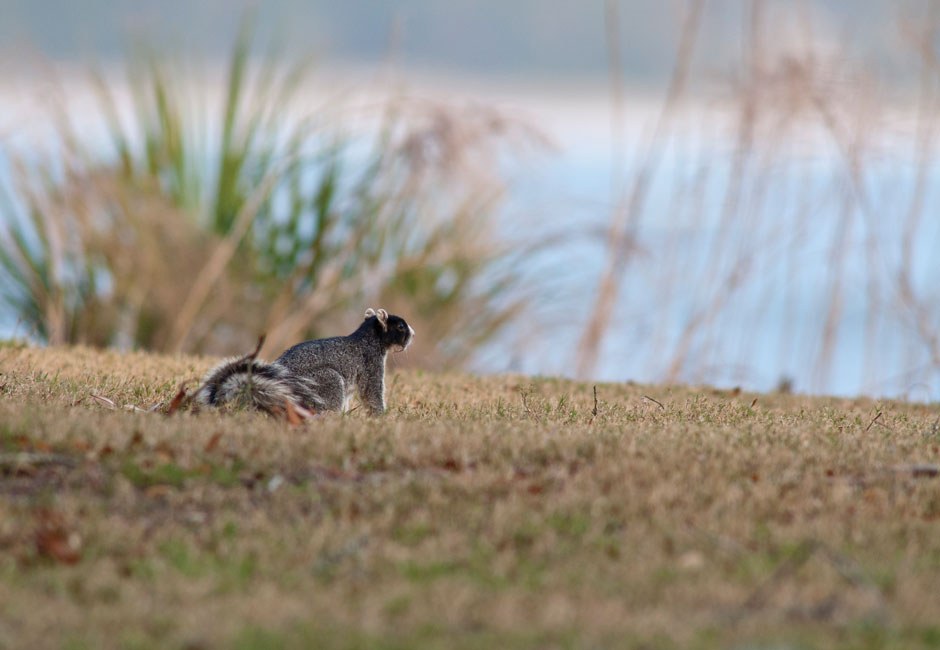
Fox squirrels are so named because in much of their range, their fur is orange-brown—and they’re not much smaller than a red fox. The subspecies found in the Lowcountry region, and in Palmetto Bluff in particular, usually shows little or no orange. Instead, they are marked with gray and black, with a white nose and ears. The Bluff’s fox squirrels are just as big as the red subspecies though, and they have the same bushy, foxlike tail. For their size, fox squirrels can be surprisingly elusive, remaining silent as they move through the treetops. They are big, strikingly patterned, and charismatic. One of their most endearing habits can be seen on warm, sunny spring afternoons, when fox squirrels can often be found lounging in the sunlight, lying flat on a branch, legs dangling. Unlike their smaller cousins, the gray squirrel, fox squirrels are laid-back, lazy, and sometimes completely unfazed by human presence. In some places, they’ve become tame enough to accept food right out of people’s hands. At Palmetto Bluff, they’re a bit more skeptical of humans, but they will still sometimes allow for a close approach (and the occasional lucky photo op). Where gray squirrels may be a nuisance at bird feeders, fox squirrels are exciting visitors, stopping by occasionally, but rarely causing much annoyance.
Fox squirrels adapted to more specific habitats than gray squirrels, which explains why we don’t find them as often in most of the country. They prefer mature, pine-oak forests with open understories and few shrubs. They’re unlikely to spend much time deep in the forest, though. They like to forage at the edges of fields, where they break apart pinecones and hickory nuts to get at the seeds within. (They particularly love the May River Golf Course and grassy, woodland edges of Palmetto Bluff!) But despite their predilection for forest margins, fox squirrels are perfectly designed for life in the treetops. They have sharp, curved claws that allow them to hang onto tree bark, even upside down. Their wrists and ankles are extremely flexible, allowing them to rotate their feet 180 degrees to facilitate climbing at almost any angle. Like other rodents, their front teeth grow constantly—a useful trait for an animal that wears down its teeth by chewing through tough hickory nut and acorn shells.
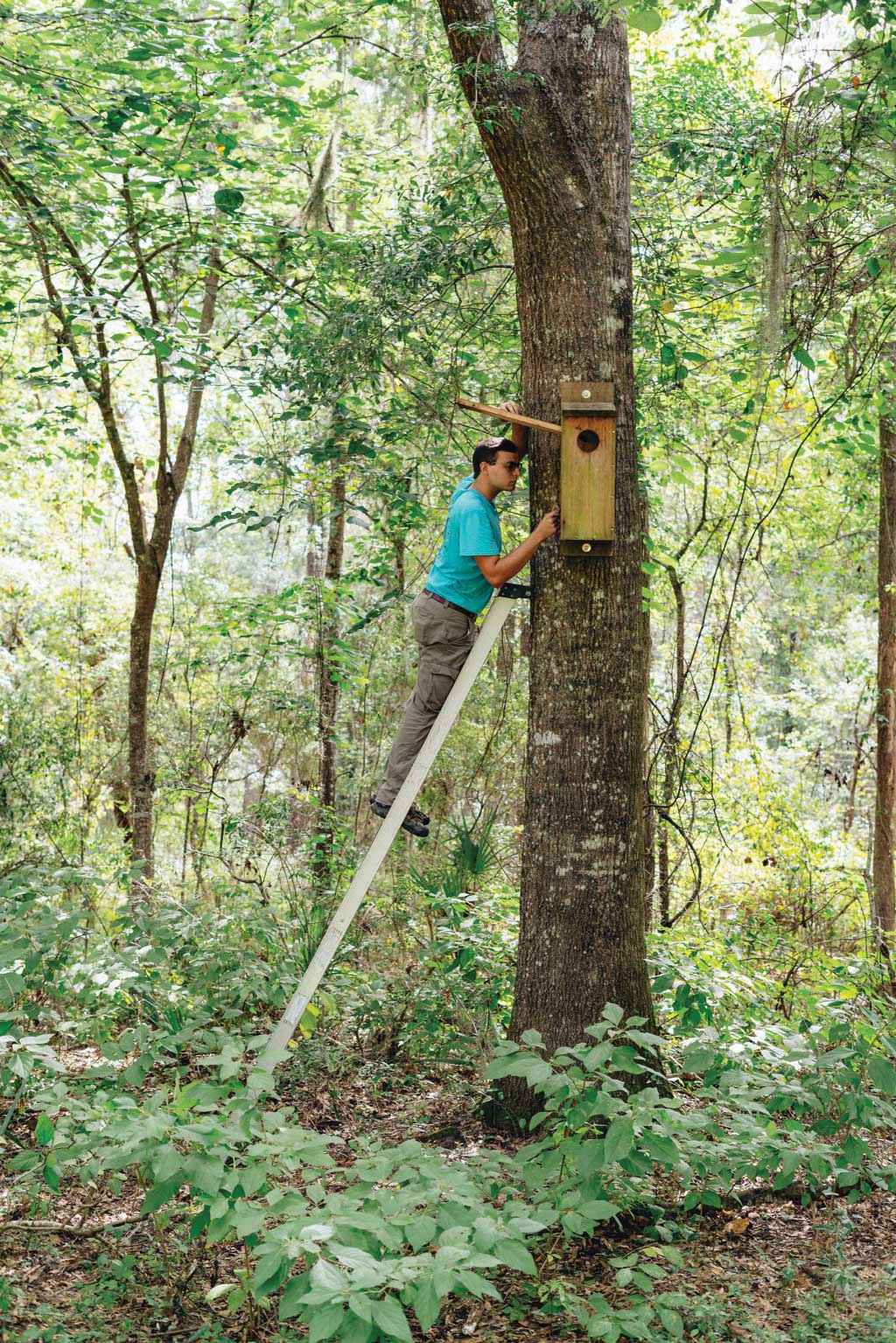
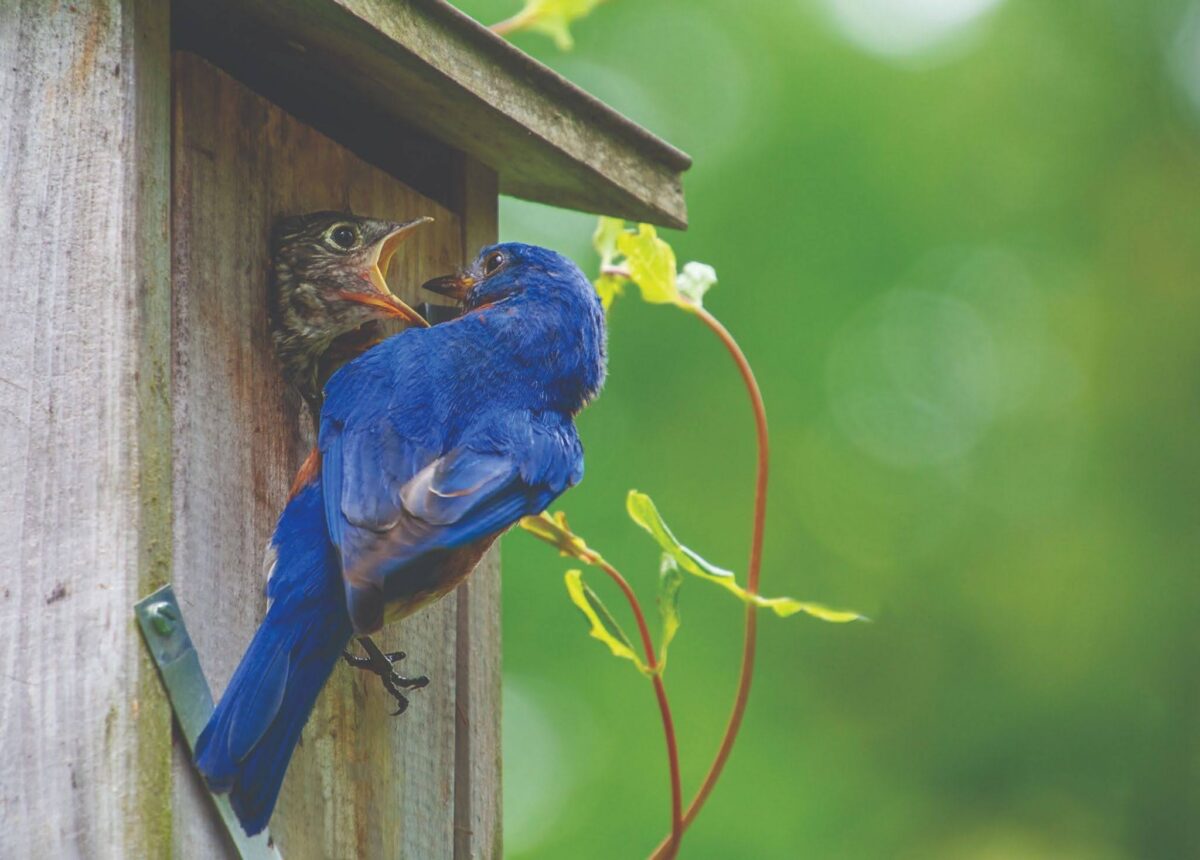
To shelter themselves from the elements, sleep, and raise their young, fox squirrels construct leaf nests, known as dreys. They may also use tree cavities—although, as you can imagine, it’s hard to find a cavity big enough to house an entire family of large squirrels. (The Palmetto Bluff Conservancy has begun an initiative to provide artificial nest boxes for wildlife at the Bluff—but despite success in attracting flycatchers, owls, and flying and gray squirrels, no fox squirrels have moved in yet.)
In spring, female fox squirrels give birth to small litters of pups. The newborns are tiny (weighing only around half an ounce) and helpless, and their eyes remain shut for the first month of their lives. In some years, a mother may raise two litters, one in early spring and one in summer. Pups remain with their mother for several months before setting out on their own. Adult fox squirrels are solitary animals, so the pups usually move away from their mother as soon as they can fend for themselves. Sometimes, finding a territory of their own can take a few weeks or more, so young squirrels may wander into unusual habitats, including gardens. Occasionally, they’ll find their way to Palmetto Bluff residents’ yards.
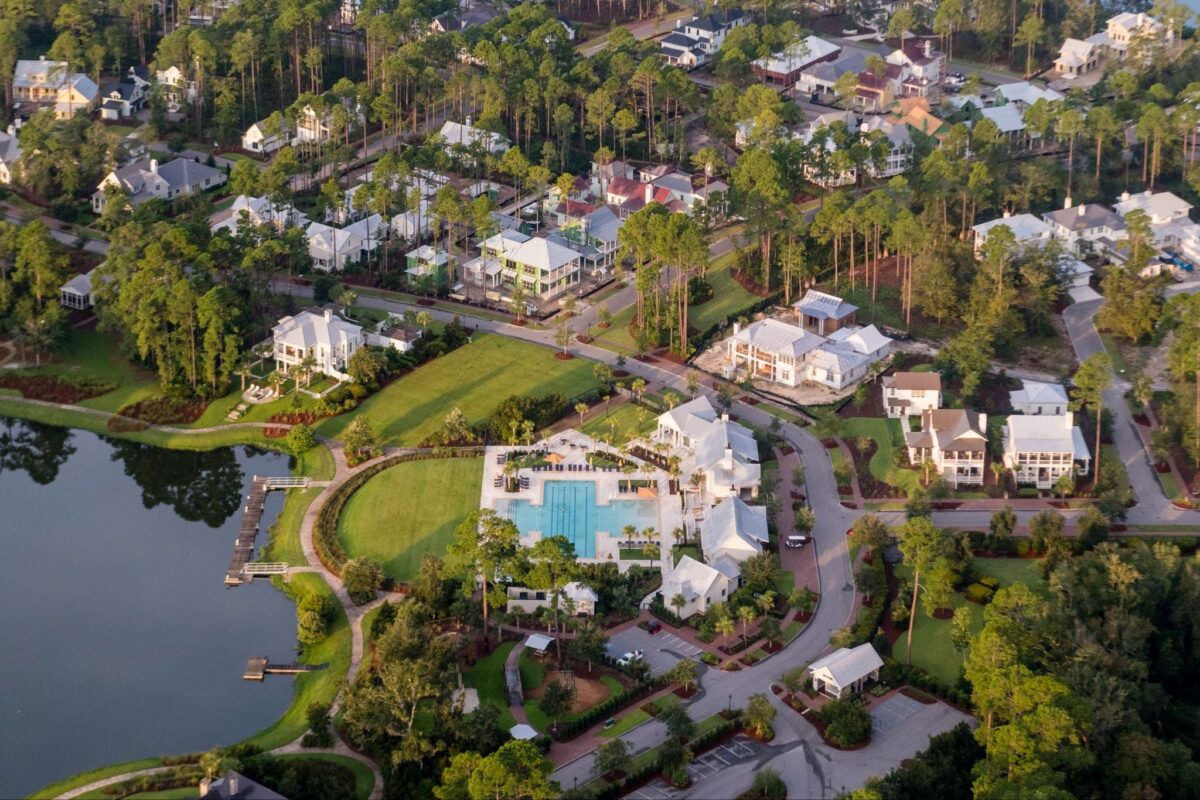
Over much of the eastern United States, fox squirrels are a vanishing species. Once common in woods bordering farmland, they were left with few suitable habitats after the expansion of suburbs and the mechanization of agriculture. In some regions, they are listed as endangered. Even in South Carolina, reintroduction attempts are being made in areas where they have disappeared completely. Palmetto Bluff is a remarkable exception: the development strategy of leaving old-growth trees intact, coupled with the open fields and golf course, means the Bluff is the perfect environment for these uncommon creatures. (A combination of hunting and habitat loss in nearby areas, including Hilton Head and Daufuskie Islands, led to the elimination of fox squirrels on these islands. A few years ago, conservationists came up with a plan to reestablish fox squirrels on Daufuskie: mainland squirrels would be captured and then released on the island. Any guesses where the squirrels were captured from? That’s right. It was Palmetto Bluff! So, if you’re ever visiting the historic district or playing golf on Daufuskie Island, keep an eye out for squirrels. They might look familiar. . . .)
Wherever land is being developed, certain species can act as indicators of whether too much habitat has been destroyed. Fox squirrels are one of these indicator species, and the fact that they have thrived at Palmetto Bluff is a testament to careful land management and thoughtful building practices. We’re lucky to have the opportunity to live alongside such creatures. From their striking colors to their curious nature, fox squirrels are some of the Bluff’s most interesting animal inhabitants. Whether they are bounding across a field or visiting a garden bird feeder, they’re always an exciting find, and with continued stewardship of Palmetto Bluff’s forests and fields, they’ll be a part of the Bluff’s animal community for years to come.
FOXY GLOW
Unique among mammals, fox squirrels accumulate a pigment in their bodies that causes their bones to glow pink when exposed to ultraviolet light. At first, that fact may seem inconsequential—after all, it doesn’t affect most of our interactions with them. But in the context of Palmetto Bluff’s archaeological history, it can be quite meaningful. The Bluff has been home to people for thousands of years, from Native Americans to European settlers to the modern day. Many of the early societies depended on hunting for sustenance, and fox squirrels were sometimes taken for food. For archaeologists, sorting through the leftovers from a thousand-year-old supper isn’t an unusual undertaking. But identifying what animals were on the menu can be difficult, particularly because bones are often tiny, fragmented, or incomplete. Even some intact bones can be tricky, like ribs, which share many characteristics across species. When it comes to fox squirrels, though, there’s never a question: if it fluoresces pink under a handheld black light, it’s from a fox squirrel. It’s remarkable that the pigment lasts as long as it does—some bones from up to 7,000 years ago still show a faint pink glow.
Written by Tim White
Photography by South Carolina Wildlife magazine