Photography by Photography by Anne, Inc. Florals by Lizzy Lancaster, The Woodsman’s Wife and Co.
If you look closely enough at holiday traditions, you’ll find that many are pretty strange. Why do we paint eggs at Easter? Why do we carve pumpkins at Halloween? Why do we set out cranberry sauce at Thanksgiving when no one will ever actually eat it?
And more to the point of this story, why do we put a log on display during the Christmas season? And how on earth did we decide to make a cake out of it?
As with most holiday traditions, the closer you look at it, the stranger it becomes. Let’s start with the original yule log that traces its roots back to pre-Christian pagan celebrations. The celebration that birthed the yule log was the winter solstice when ancient Nordic people would mark the end of the year with a 12-day festival they called “Yule.”
While the deepest point of winter might seem an odd thing to celebrate, according to Forever Conscious, “The winter solstice celebrates the longest hours of darkness or the rebirth of the sun and is believed to hold a powerful energy for regeneration, renewal, and self-reflection.”
Legend has it that the first yule logs were entire trees carefully chosen and cut down and then dragged into the house, the largest end placed in the fireplace. The tree would be lit using what was left of last year’s log, and throughout the 12 days of Yule, the log would be burned night by night, with each night’s relighting adding to the ceremony.
From there, the tradition spread (appropriately enough) like wildfire, with each country putting their own stamp on this festive holiday celebration. In France, they would burn a little bit of the log each night, sprinkling it with wine, because in France, even the logs drink wine. In the Netherlands, the leftover bit of the log was kept under a bed to protect against house fires and lightning. (Oh, the irony.)
In addition to putting their own spin on tradition, each country would celebrate their native flora as they adopted the yule log. In England, they would burn oak for 12 days while the Scots burned a birch tree. In France, they would burn a cherry tree. In some parts of the UK, the yule log was swapped out in favor of a bundle of ash twigs as a nod to the twigs burned by Mary and Joseph to keep the infant Jesus warm. Regardless of the type of tree, part of the tradition that endured was gathering up the ashes to sprinkle on plants. Maybe it was the yuletide spirit, maybe it was the nutritive power of potash, but these plants always seemed to endure winter with a little more greenery.
As the family home and hearth grew smaller over the years, and as more families began celebrating the season in the close quarters of towns and cities, burning a whole tree over 12 days became less and less feasible. As such, the yule log evolved into more of an ornamental centerpiece, elaborately decorated and lit only by candlelight. In this way, a tradition dating back centuries was able to survive even as the world around it changed.
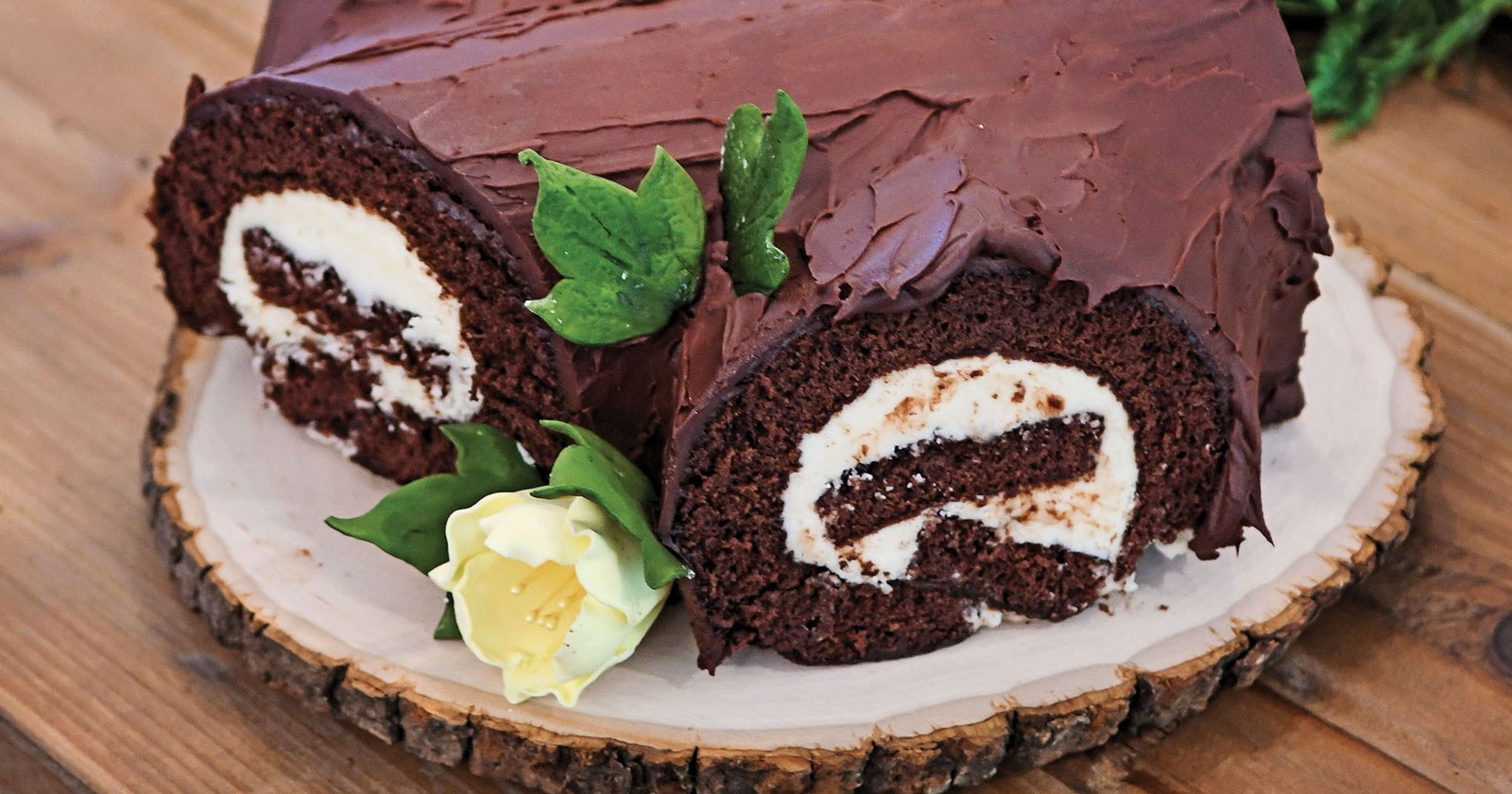
For all the various ways that cultures have reinterpreted the yule log, leave it to the French to turn it into a delectable dessert. The Bûche de Noël, as they call it, is a classic European holiday dessert involving a cake rolled up tightly and frosted to look like something that would go in the fireplace. Consisting of a rolled-up center of genoise (European sponge cake) and buttercream filling, it’s then coated in chocolate icing or ganache and decorated with everything from marzipan to sprinkles. While its exact origins are obscure, dessert historians (yes, they exist) note that the use of sponge cake suggests a 17th-century origin. What is known for sure is that the tradition really took off in the 19th century as Parisian bakeries made them a hot commodity around the Christmas table.
Christmas is a time of traditions, both the sacred and the somewhat strange. The yule log is a little bit of each. Its roots may have been nourished by the soil of pagan tradition, but its branches spread throughout Christianity in ways that reflected each culture and brought warmth and sweetness to the season.
Yule Log Recipe
If you’re like most of us, we need more yule in our lives. And we’re not talking about the tree-chopping, fireplace-burning, woodsy kind. However, not being expert bakers, we turned to Chef Jae Newby, training specialist for the pastry department at Palmetto Bluff and our Local Character featured on page 88
Break out your saw knife, because to the right is her recipe for a heavenly Bûche de Noël. (Trust us, we tried it. Twice.)
Chocolate Yule Log:
240 g all-purpose flour
42 g cocoa powder
1 tsp baking powder
8 eggs
100 g oil
298 g sugar
1 tsp salt
2 tsp vanilla
Preheat the oven to 350 degrees. Sift flour, cocoa powder, and baking powder, and set aside. In a stand mixer with the whisk attachment, whip eggs, oil, sugar, salt, and vanilla until ribbons form. Add the dry ingredients and mix until just combined. Pour batter into a prepared half sheet or jelly roll pan. Bake for 10–12 minutes.
Cream Cheese Buttercream:
1 ½ lbs butter
8 oz cream cheese
2 lbs powdered sugar
Cream butter and cream cheese until smooth. Add powdered sugar and mix on low until combined. Scrape down the sides of the bowl and beat until fluffy.
Dark Chocolate Ganache
282 g heavy cream
400 g dark chocolate (chopped or coins)
Heat heavy cream over medium heat until steamy. (You can use a microwave, but do it in 30-second intervals.) Pour over chocolate and allow to sit a few minutes. Stir until combined and emulsified (should be smooth). Allow to cool to thick and creamy before using on the cake.
To Assemble the Yule Log
Spread the buttercream on the chocolate cake roll. Starting on the short side, roll the cake into a tight yule log. Ensure there are no air gaps in the roll. Allow the cake to set in the refrigerator or freezer. Ice the cake with the chocolate ganache. Allow ganache to set in the refrigerator or freezer. Cut the yule log and assemble pieces to make desired tree design—using the cut pieces to resemble limbs and adhering the cut pieces with ganache. Decorate with sugared fruit or flowers.
%GALLERY%