Written by Palmetto Bluff
Jun 15, 2021
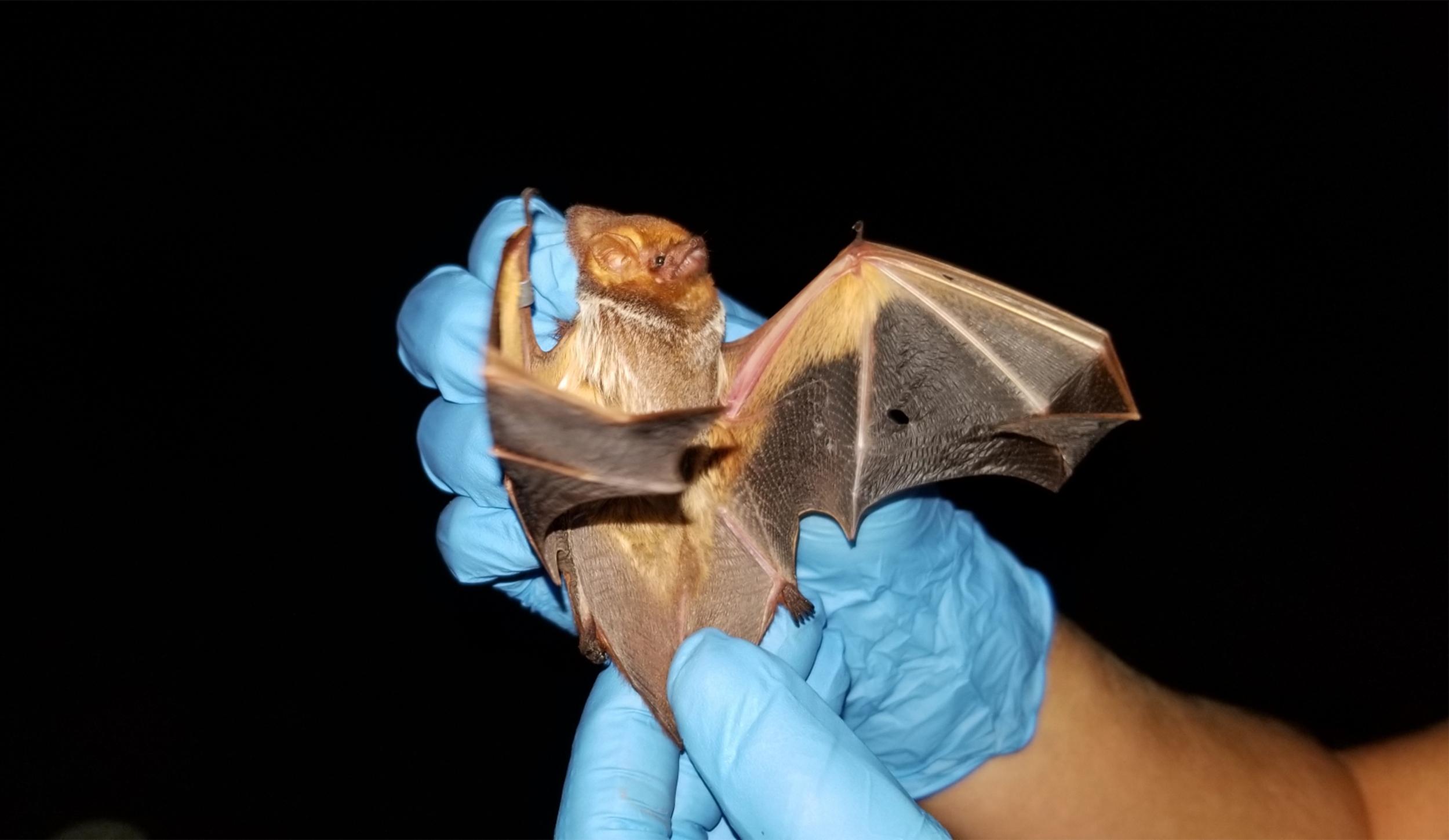
Last month, we discussed bats’ many beneficial traits and the assortment of important roles they play in the ecosystem. Now that I have (hopefully!) convinced you that bats are vital for our world, I have a bit of a depressing topic this month and will be covering some of the threats bats are facing and the essential work we can do to help them.
Populations of bats are in decline worldwide for a variety of reasons. We are going to focus on three of the significant stressors bats are currently facing: climate change, habitat loss, and disease.
With climate change comes an increase in the frequency and intensity of extreme weather events. In November 2018, at least 23,000 spectacled flying foxes (so named because of the light circles of fur around their eyes) perished over two days during an extreme heat event
in northern Australia where temperatures exceeded 108℉. This was one-third of Australia’s spectacled flying fox population. Decimated. In two days. Even worse, this is not the largest flying fox die-off event. It is second to a heatwave in 2014 that killed >45,500 flying foxes. There is evidence this is the new normal. On average, Australia has one major die-off event that consists of 1,000 or more dead bats each year.
In addition to extreme weather events that directly kill bats, there are indirect effects that have concerning implications. Climate change is altering migratory behavior and shifting the timing of reproduction – two cyclical processes closely linked to seasonal food availability. Insectivorous bats in temperate zones typically give birth in the spring when insects are in large abundance. If females begin birthing their pups in the winter, this shift in phenology, or seasonal timing of biological phenomena, can result in the death of pups born early when insects are not usually prevalent in cold climates.
Climate change also affects bats by causing range expansions, altering the abundance of food sources, and shifting hibernacula temperatures to those that are not optimal for hibernating bats. A recent study suggests that increasing temperatures may even affect bats’ ability to echolocate!
Bats around the world often use different kinds of habitats for foraging and roosting. For example, the northern long-eared bat hibernates in caves or large tree cavities in the winter, roosts in trees in the summer, and forages in large parcels of intact forest. Because they require many different forms of habitat, the loss of one kind of habitat can be detrimental to their survival.
Habitat loss comes in many forms, including clearcutting land for timber, creating pastureland for livestock, or converting forests to cropland. These are drastic and noticeable changes to forests that affect bats worldwide. What is sometimes less obvious is the fragmentation of habitat as opposed to its outright destruction.
Habitat can be fragmented through urbanization, leaving communities with small, isolated patches of forest. Many imperiled bats, like the federally protected northern long-eared bat, cannot thrive in small patches of habitat and instead require large parcels of unfragmented forest. In a recent study in coastal North Carolina, the majority of northern long-eared bats were captured in wetlands on large tracts of public lands – areas that are the least affected by agriculture and urbanization.
This threat hits home. Beaufort County is one of the fastest-growing counties in our state. With rapid growth comes rapid development, often with little concern for ecological processes. This highlights the importance of places like Palmetto Bluff, which put ecology and wildlife at the forefront of the planning process. Providing large parcels of unfragmented habitat benefits many species, like the northern long-eared bat, that have distinct habitat requirements. In fact, the first known record of northern long-eared bats on the coast of South Carolina was at Palmetto Bluff.
Bats have been blamed for transmitting several diseases (including SARS-CoV-2) to the human population. Bats are, in truth, predisposed to be fantastic reservoirs for viruses. They can harbor diseases while being healthy and relatively resistant to them! Bats have incredibly unique immune systems that are thought to have evolved alongside their ability to fly (check out this video to learn more). There is so much we can learn about their immune response that can help us better fight infections. They may even teach us how to age gracefully and ward off cancer!
Even though bats are not susceptible to these diseases, they are susceptible to the indirect consequences of harboring viruses. Bats are inevitably blamed when these viruses spread to human populations, even though there is often an intermediate host that actually transmits the pathogen from bats to humans. The result? Global acts of retribution. After the emergence of SARS-CoV-2, bats around the world were subject to mass killings, despite that SARS-CoV-2 has not been confirmed to have originated in bats, despite that bats outside of Asia do not carry the precursor for our current coronavirus, and despite that SARS-CoV-2 is not the same virus found in bats! So even though bats are not susceptible to all viral diseases, their ability to host disease-causing pathogens makes them patients of blame.
Unfortunately, bats are not immune to all pathogens. Populations of bats that hibernate in caves in the United States are in dramatic decline due to a disease called white-nose syndrome – so named for the characteristic white fuzz it produces on bats’ muzzles. This disease is caused by the fungus Pseudogymnoascus destructans (Pd). And destruct it does. This fungus was first discovered in New York during the winter of 2006-2007 and has spread to a new county every year since. As of this writing, Pd has been documented in 40 US states and 7 Canadian provinces. By 2012, over 6 million bats died because of this disease. Six million bats in six years.

The rapid spread of Pd and lack of pre-exposure hibernacula data make this 2012 assessment the last accurate estimate of mortality, at least until recently. A study
published earlier this year estimates that populations of three species, the northern long-eared bat, little brown bat, and tri-colored bat, shrank by 90% within ten years of Pd being detected in their hibernacula.
How does the fungus kill bats? Hibernating bats have just enough fuel reserves to make it through winter without starving. A healthy bat usually wakes up a few times during winter months to urinate or drink water, but their active bouts are short so they do not burn up precious energy. If a bat is infected with Pd, it wakes up much more frequently and uses up its energy during a time when its food (in this case, insects) is not available. Eventually, the bat starves.
We do not have white-nose syndrome, nor the fungus that causes it, here in coastal South Carolina. Or, at least, we do not have it yet (we are, after all, in a white-nose positive state). Even if Pd
does appear on our coastline, our winters are mild. We have insects year-round, providing ample food for bats on warm winter nights. With mild winters and abundant insects, our bats do not need to hibernate. They certainly are not spreading the fungus by congregating in caves since we do not have any. It is not known what will happen to our coastal species if the fungus arrives here, but it is possible that if bats on the coast of South Carolina are infected with Pd,
they may not experience the dramatic population declines seen in other parts of the country. And that makes our coastline – and Palmetto Bluff – an important refugia for species hard hit by this disease in other parts of their range.
This list is by no means complete. Wind turbines, pesticides, and harvesting (for both food
and décor) all take their toll on these winged mammals.
Regrettably, the reproductive strategy of bats does not lend itself to helping rebuild decimated populations. Unlike mammals that produce litters, like dogs, cats, and rodents, most bats have a single pup each year. When a population declines, it takes a long time for it to recover.
Further exacerbating the stressors mentioned above is the threat of human apathy. Bats are widely feared, and it is difficult to secure funding to conserve bats or pass legislation to protect them when the public doubts whether they matter.
It is easy to feel overwhelmed and hopeless after hearing what bats are up against. But there are so many small steps you can take to provide them with a chance of survival.
These lands are often large parcels of intact habitat. Support them with day-use passes, DNR license plates, or buy a duck stamp or hunting license – even if you have no plan to use it. The funding from these purchases goes towards maintaining these public lands.
Bat Conservation International does vital work to aid bats around the globe. And they need financial support!
Georgia and South Carolina Bat Working Groups are always looking for volunteers! You can offer to give a presentation on bats to the public or provide much-needed assistance in the field. Contact Lydia Moore at lmoore@pbconservancy.org
to learn more.
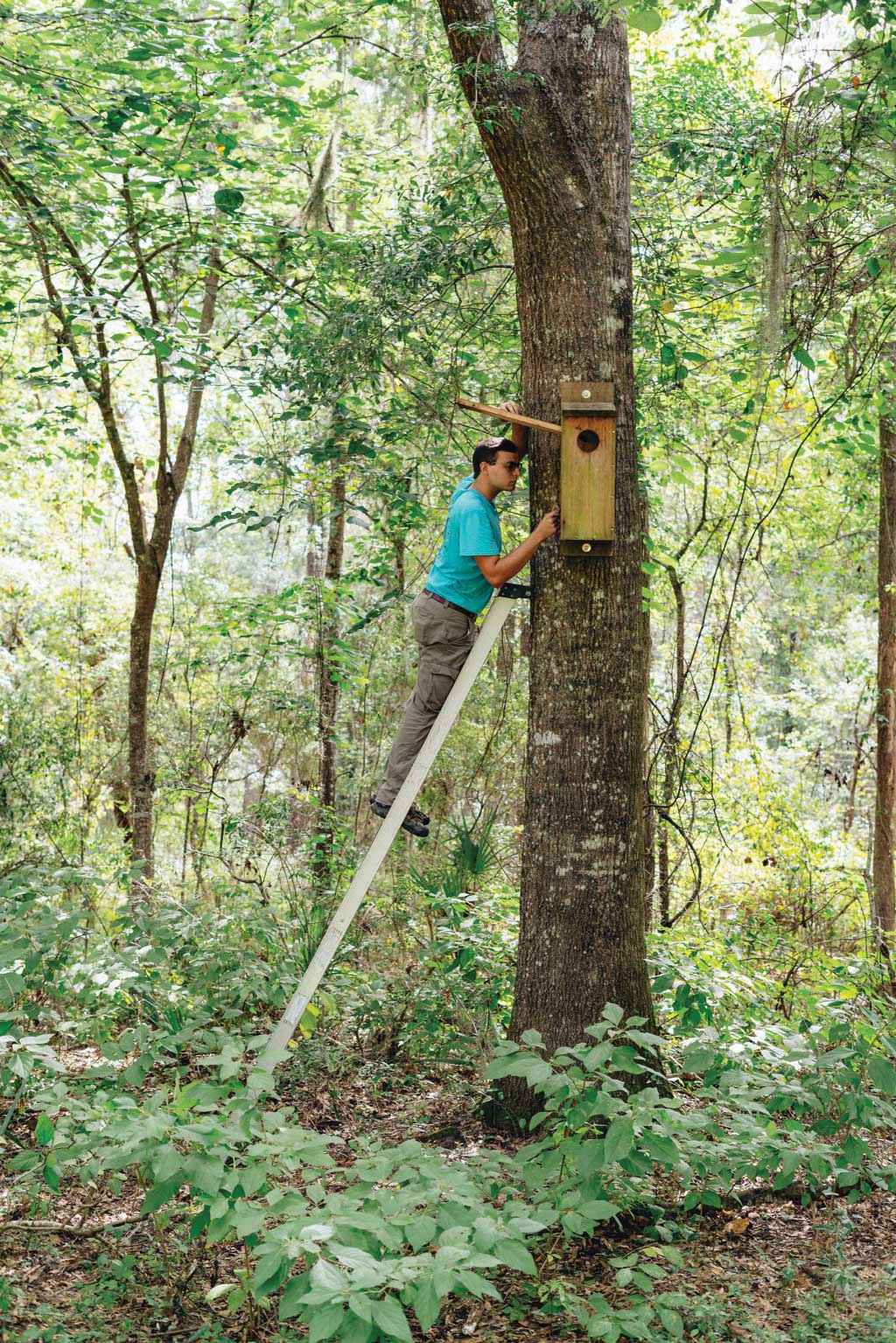
You can provide roosting habitat for bats by putting up a bat house. Check out Bat Conservation International’s website to learn more.
Many species roost in cavities or the exfoliating bark of snags, or dead trees. Cutting down snags removes valuable roost habitat. If a snag is not threatening to fall on its own, consider keeping it upright.
Pesticides can accumulate in bats’ tissues. While the full ramifications of this accumulation are not well understood, it is likely to be disadvantageous to bats.
The greatest impact you can have is to spread the word about bats and help change public perception of these remarkable mammals. Simply starting a dialogue to ameliorate the fear of bats is a huge step in the right direction. This is a great resource if you want to learn more about bats in our area so you can educate others.
The Palmetto Bluff Conservancy has been researching bats since 2015 and our spring netting session is in full swing! Next month I will give an update on our spring research from 2021, show you some cool bat finds, and discuss some surprising captures. As always, feel free to contact me at lmoore@pbconservancy.org with any bat-related questions.