Written by Palmetto Bluff
Jun 05, 2025
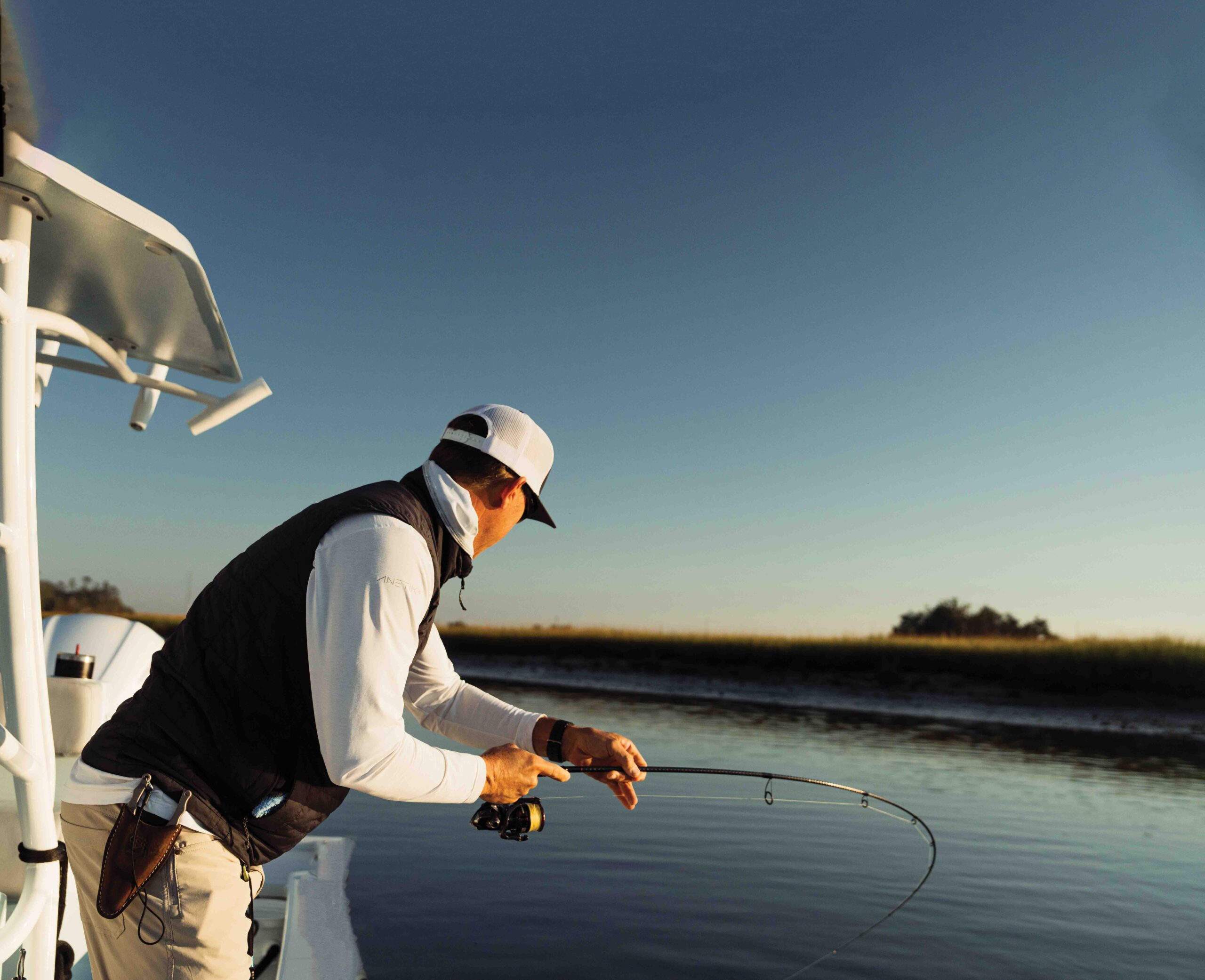
It is a sunny morning in October and the water is calm and glassy. The silence is punctuated by a gush of breath from a nearby dolphin and the sounds of a spinning reel, the plop of a lure.
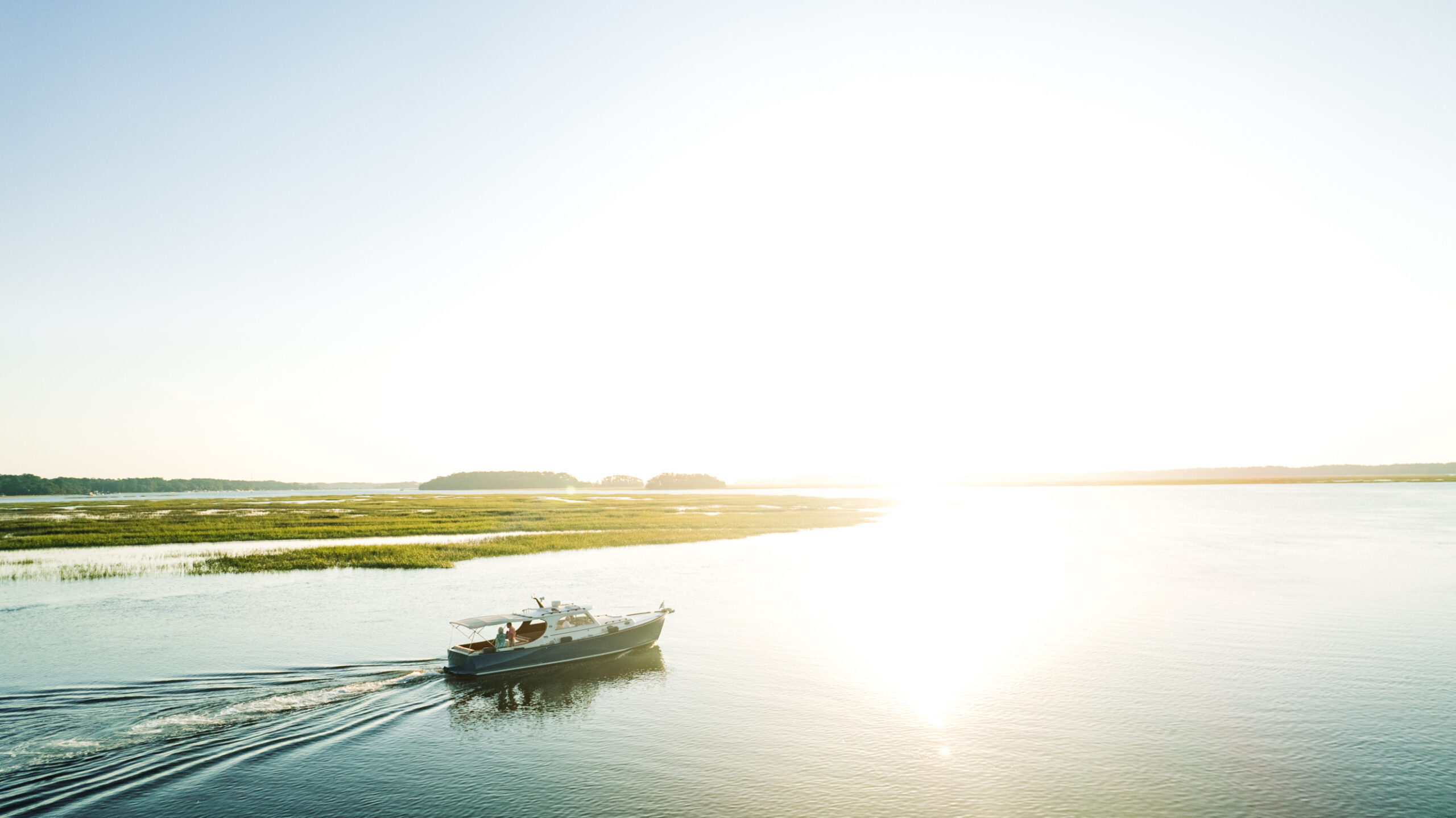
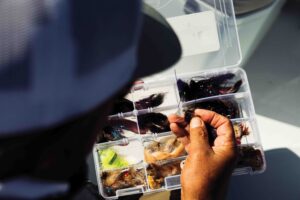
“That should be in fish,” says Captain Brian Vaughn of Hilton Head Island, as he casts toward the bank and watches the line drop. He reels in, twitching the mullet-like lure on the topwater—creating a “walking the dog” cadence to emulate a baitfish. These are Vaughn’s home waters—he grew up just a few miles away—and he’s fishing with a spinning rod, while at the other end of his 24-foot Hells Bay boat, Palmetto Bluff resident Will Stephens is casting a purple and black fly, made to look like a shrimp.
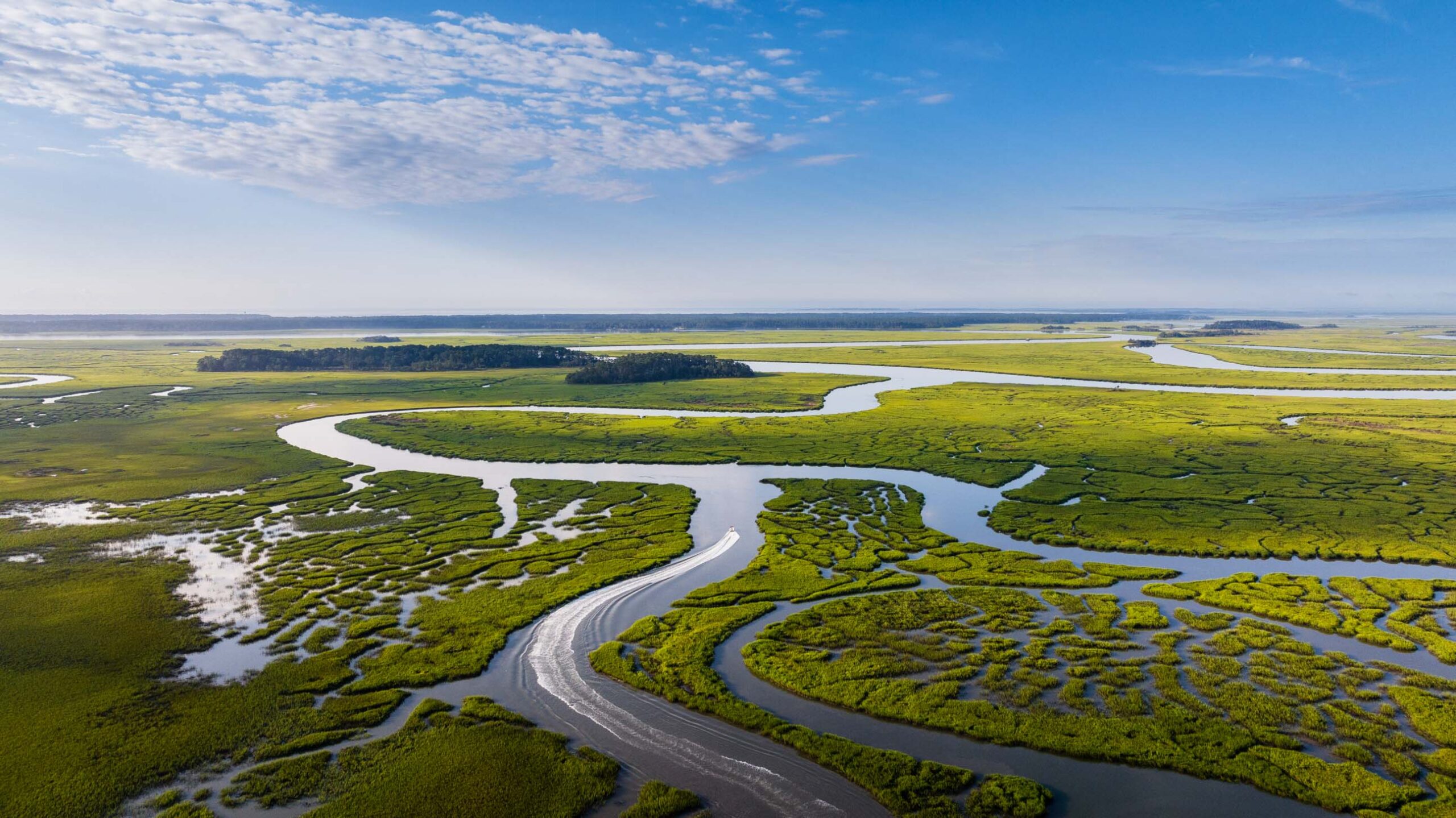
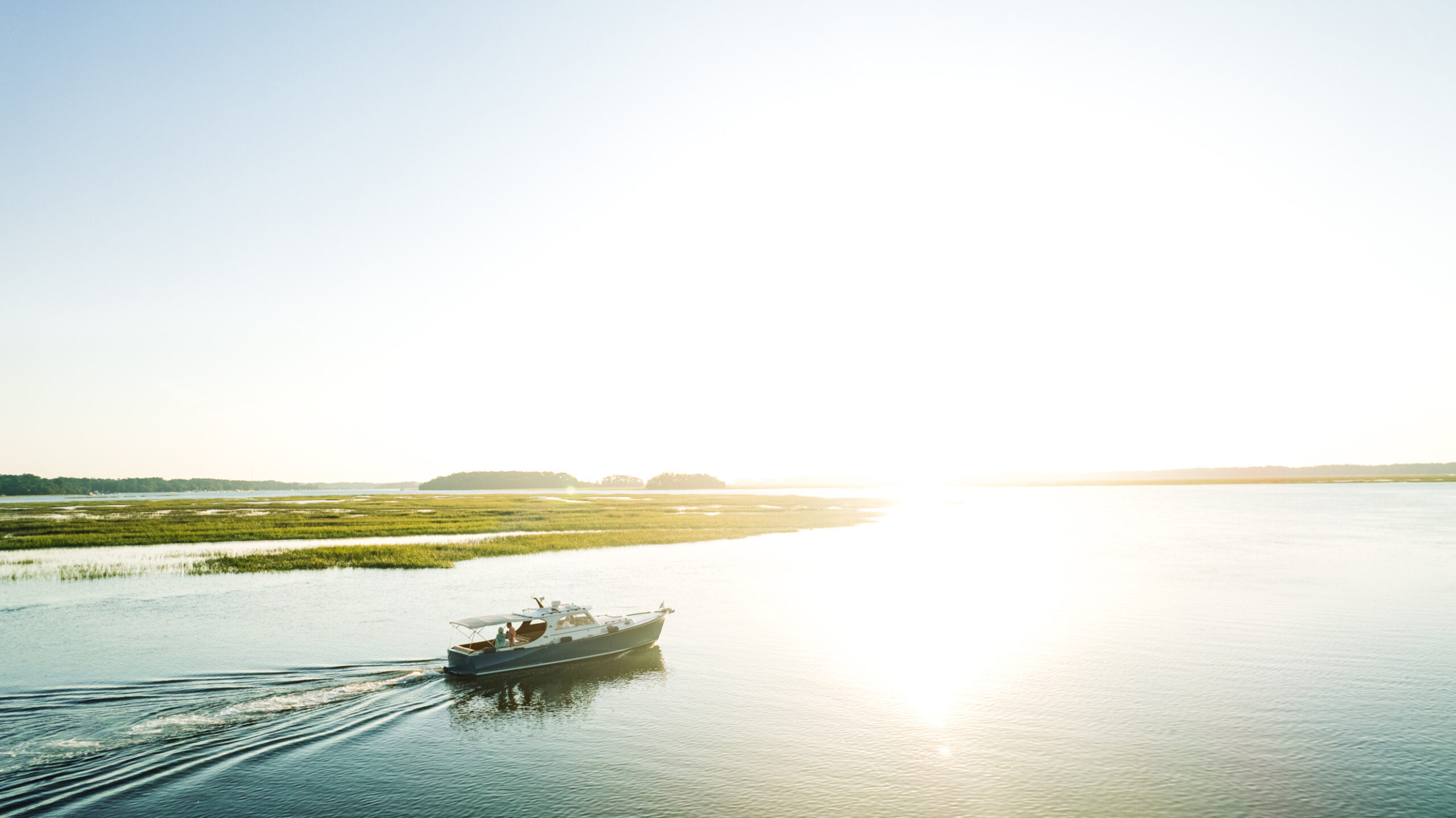
 It’s been a peaceful morning exploring along the pluff mud banks topped with spartina grass. An osprey flies high overhead. Sounds of other boats are too far off to hear. In the serene scenery of creeks, rivers and bays around Hilton Head Island, there’s action underwater. The fishermen have seen the saltwater suddenly churn with mullet, and the silver glint of what looks like redfish in the shallowest edges.
“Looks like some happy fish out there,” Vaughn says, scanning the water. “We’re in the zone.”
He’s positioned the boat in a more sheltered spot after motoring away from the chop of open water—the ever-changing conditions of water depth, tides and temperature are just some of his considerations when fishing. Vaughn thrives in his seaside life, “soaking in sunshine and salt air keeps you feeling young.”
The captain, now fifty-one, founded Off the Hook Fishing Charters in 2005 after growing up fishing here. He guides full-time, estimating that he’s on the water about three hundred days a year. He and his team lead inshore and offshore fishing charters year-round. Stephens is also an accomplished angler and boat captain, fishing part of the year in Belize.
The men met just before sunrise to board Vaughn’s boat and venture out into the sounds and estuaries around Hilton Head Island, an easy thirty minute boat ride from Palmetto Bluff. Stephens brought his own gear, fly rod and case of flies. Along the way, the two watched for other boats (to steer clear of them), for herons stepping along the banks (a likely indicator of fish nearby), and for ripples in the water. “I look for wakes,” Vaughn says, “like there’s a miniature submarine that’s not surfacing.”
While watching and fishing, their conversation turns to the lore and superstitions of fishing—like the old adage “red sky at night, sailors delight; red sky in the morning, sailors take warning,” and the persistent idea that it’s bad luck to have a banana on a boat. (That one apparently began centuries ago with sailors storing bananas in holds with other fruit, causing everything to spoil faster.) Vaughn scoffs at the banana myth. “We bring bananas out all the time, and still catch plenty of fish.”
 The men talk of the inshore fish they may catch—seatrout, flounder, black drum, and redfish. The appeal of redfish is strong in South Carolina. Vaughn says it’s because whether a one-pounder or a twelve-pounder, you’re sure when you’ve hooked one because they give a sporting fight. “And you never know what they’re going to look like,” he explains, because each has a unique pattern of spots. The fish have a reputation for being hearty. The captain says they’re ideal for catch-and-release. “But only if you net them, remove the hook quickly, and get them back in the water,” he advises. Vaughn is an advocate for protecting the fishery—not always fishing the same places (to avoid overfishing), and releasing fish whenever possible.
That brings them back to the trolling run they’ve just made, parallel to a pluff mud edge at low tide. Everything’s been lining up perfectly all morning. Temperatures around fifty degrees at daybreak warmed into the upper-sixties after sunrise—about the same temperature as the water, which Stephens and Vaughn note is remarkably clear that day. In the shallower depths, the clarity has been good enough to watch for shadows and mud clouds (when fish stir up the water).
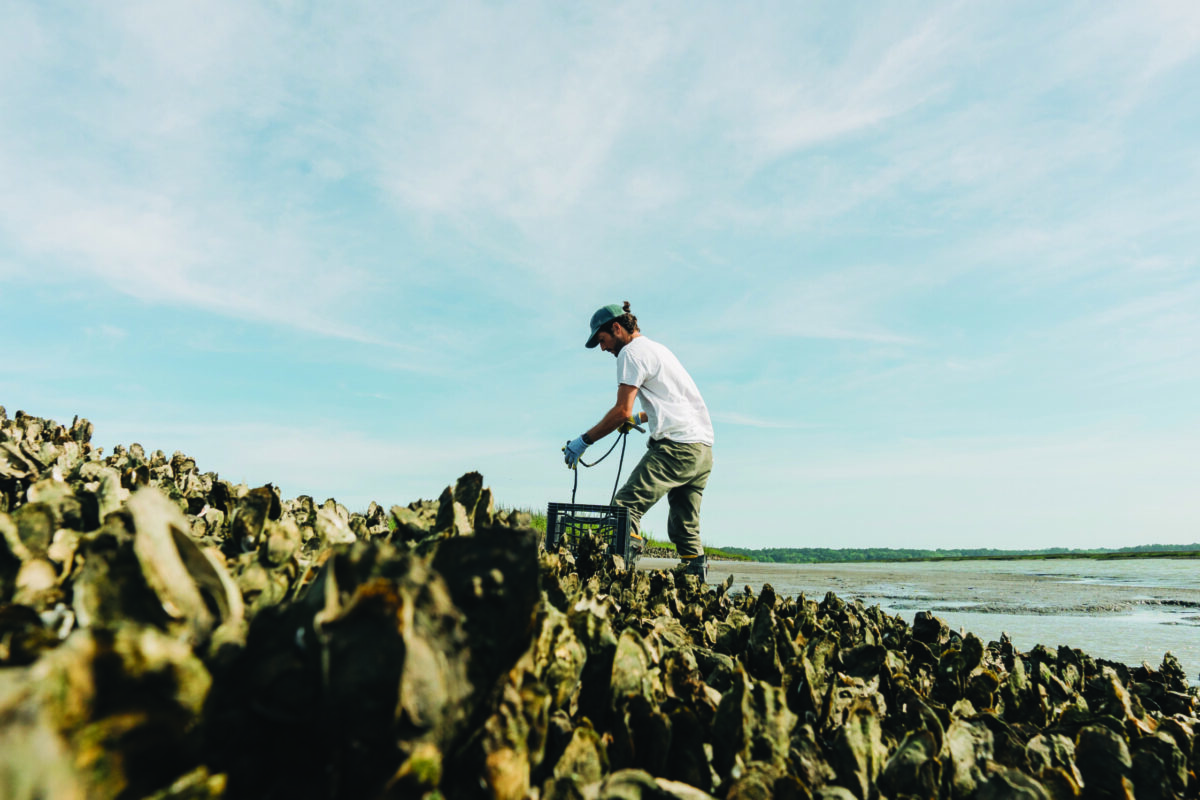
 Vaughn rigs up a topwater lure that’s chartreuse-yellow, intended to look like a finger-sized mullet—and his next cast drops in front of a school making its way along a bank edged by oyster beds. All of the knowledge,calculations and luck have come to this. There’s a sudden pull on the line. Fish on! At almost exactly official low tide, a big, feisty redfish goes for it.
—
A FEW TIPS & TRICKS from Captain Vaughn
Tide watching
Especially when fishing in new areas, going out a couple of hours on either side of a low tide can make for a better, safer trip. Shallow areas, oyster beds and sandbars will be above the waterline and more visible at low tide—you can get to know the surroundings. Vaughn recommends checking the weather reports for wind, too. “Look for days when it’s blowing 15 miles per hour or less,” he advises.
Edges and structures
The best inshore fishing spots provide safety to the fish and what they feed on (shrimp, mullet and minnows, crabs). Vaughn says he’s always on the lookout for docks, submerged or fallen trees, oyster “rakes” (banks of oyster shells), flats, and creeks. To get to these spots, smaller boats with shallow drafts and without V-hulls are ideal, like skiffs and bay boats. Or you can fish from a kayak or directly from a dock. “To paddle up in the shallows is great—just be careful not to get stuck,” Vaughn says. “Or fish right from the dock and you can catch trout all spring.”
Follow the birds
Symbiotic relationships and food chains abound in the marine ecosystem. An egret walking the bank, or a flock of gulls swooping and feeding are often a sign that mullet and shrimp are schooling nearby—and when there’s bait fish around, game fish species like redfish and Jack Crevalle may be in the vicinity too.
The dolphin effect
Seeing dolphins can be a mixed blessing—if swimming in your direction, the predators may actually help to drive fish toward a fishing spot. But when Captain Vaughn approaches a creek or mudflat and sees dolphins swimming out, he says he’ll typically change course. “The dolphins have already worked up the fish.”
Watch your step
People often whisper or speak softly when fishing, but it’s not voices on boats or land that alert a catch. Fish sense sound that travels through the water via underwater vibrations. To avoid spooking the fish, it’s best not to slam the cooler lid or boat latches—and don’t stomp when casting. (Captain Vaughn says some fly fisherman inadvertently step on the bow repeatedly as they cast, creating vibrations that may scare off fish.)
Purple & black magic
Lowcountry creeks and waterways are rife with organic matter and the water is often more tannic and murky than clear. Through the silt, a hungry fish looks for dark shadows made by shrimp, mullet and minnows swimming past. That’s why many of the most popular soft lures and flies used here are in purples, blacks and browns.
 Drums to know
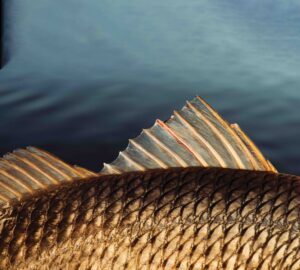
Red drum (Sciaenops ocellatus), often referred to as “spottail bass” or “redfish,” is the most commonly targeted sportfish in South Carolina’s inshore waters. Catch-and-release is extremely popular with redfish. To conserve the fishery, anglers may only keep up to two redfish per person and six per boat per day—and each must measure between fifteen to twenty-three inches in length. (Larger and smaller fish must be released.)
Spotted seatrout (Cynoscion nebulosus), also known as “speckled trout,” is another of the most popular saltwater fish in South Carolina. Not a true trout, these are also in the drum family, and can be found in saltwater creeks, rivers and estuaries throughout the year. Anglers may keep up to 10 sea trout per person per day, each with a minimum size of fourteen inches total length.
Gear up
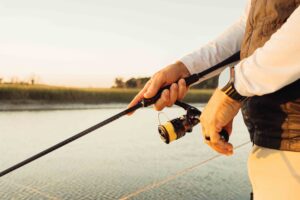
For Lowcountry inshore fishing, guides suggest you’ll need a spinning reel (maybe a seven-foot rod with 3000-4000 reel, and braided fifteen to twenty pound line); or a fly rod with floating line (an eight-weight rod and eight-weight line can work well). Then you can start trying options for live bait, soft or hard lures, and flies. Having different colors and sizes on hand allows for a switch if fish aren’t biting. Guides and local tackle shops are the best bet for learning more about gear and what the fish are striking lately—loads of options out there.
Licensed to fish
Everyone sixteen or older needs a license for recreational saltwater fishing in South Carolina—except when on a licensed public fishing pier or when fishing from a licensed charter boat under hire. The S.C. Saltwater Fishing License is fifteen dollars a year for residents and seventy-five dollars a year for non-residents. For more information, visit saltwaterfishing.sc.gov