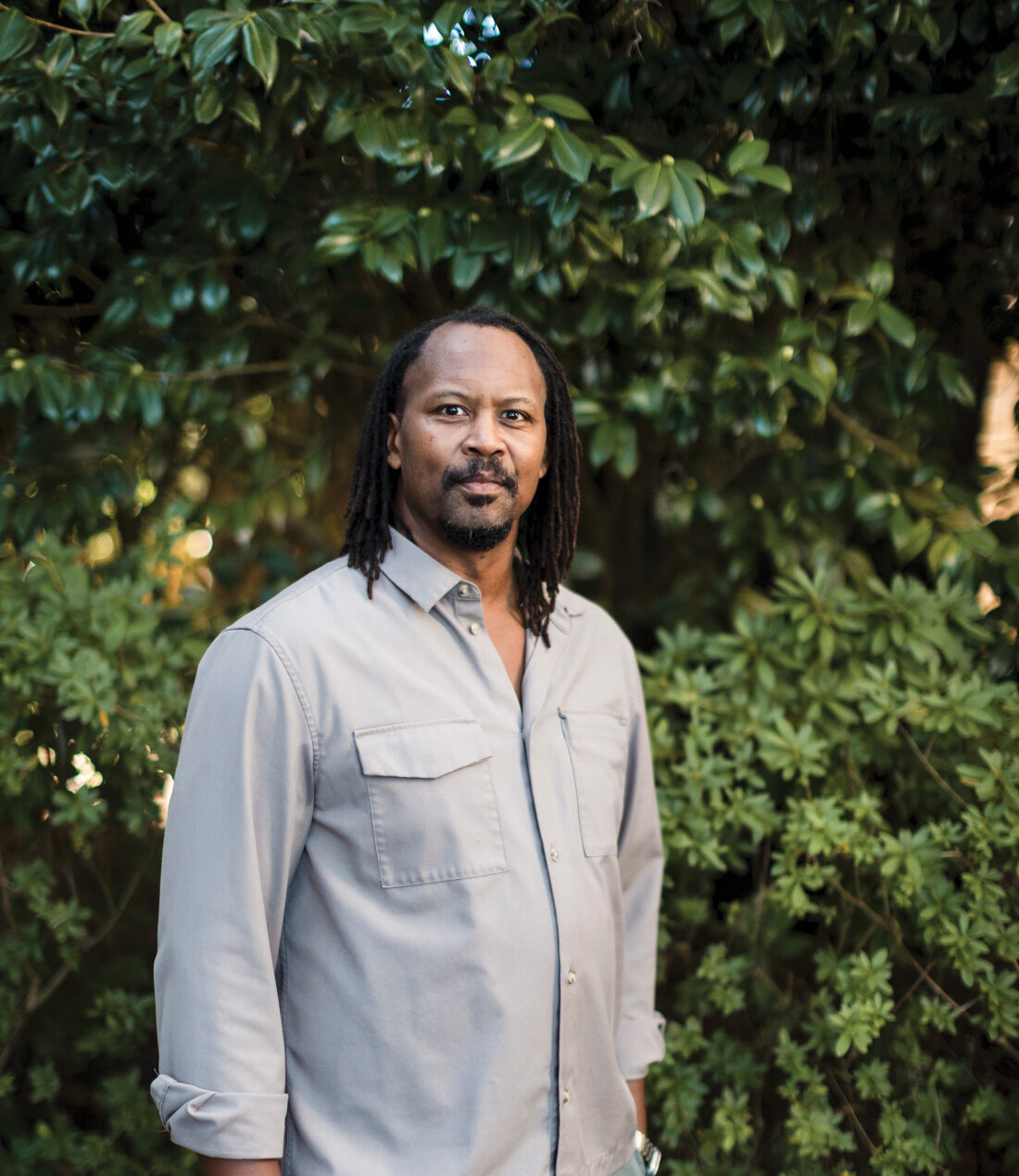
Dallas, North Carolina, is a sleepy town of a few thousand people between Gastonia and Charlotte. In 1977, it didn’t have much. But what it did have was arrowheads – thousands of them – scattered in the soil and trees of its forests, tiny reminders of a long-gone tradition of native hunting. As a child, that’s all James Parker needed.
He gathered them where he could, and before too long, he was making his own. Of course, you can’t do much with an arrowhead on its own, so young Parker started making his own bows and arrows, soaking up ancient knowledge from every book he could get his hands on. From Time Life’s series on the emergence of man, he learned flintknapping. “That’s the layman’s term for the scientific phrase ‘lithic reduction continuum,’” he said, “which is the making of stone tools.” If you ask him where he learned to make a bow, he’ll list off books written by J. B. Hunt, Jim Hamm, Dr. Charles Grayson, Adam Karpowicz, and more.
It’s a decidedly intellectual path to take toward a way of life that perished around the time such intellectual pursuits were born. But Parker soon realized he could only go so far on natural ability alone. “The first bow I made, my teacher still has that thing. I begged her for it back,” he said. “It’s pretty pitiful.”
Parker’s teachers encouraged his interest in primitive technology, with one history teacher even basing an entire lesson on it for the sole benefit of one student. As part of the lesson, the teacher showed a film on French flintknapper Francois Bordes plying his trade. “It was the first time I ever saw someone flintknapping,” Parker said. “When I saw that, I knew I was doing it wrong.”
His research would put him in the company of some of the leading experts in primitive living. Dr. Errett Callahan, considered one of the grandfathers of primitive technology, was an early mentor. It was during his workshops that Parker encountered a whole world of techniques for crafting everything from axes to knives using materials pulled from the ground. Another mentor was Steve Watts, who served as a prop maker on the film Cast Away and has written several books on how primitive man lived. He not only shepherded Parker through his journey from student to teacher, but he also introduced him to an entire way of life that harkens back to man’s roots. “He taught me everything that you would have to know to live in a primitive setting. It takes hundreds of skills,” he said. “Just making bows and arrows you’re going to starve. You have to know plant identification; how to make friction fires, baskets, clothes, and medicine; how to find water; how to hunt and trap. . . . This is how we lived for thousands of years, and then we just messed it up.”
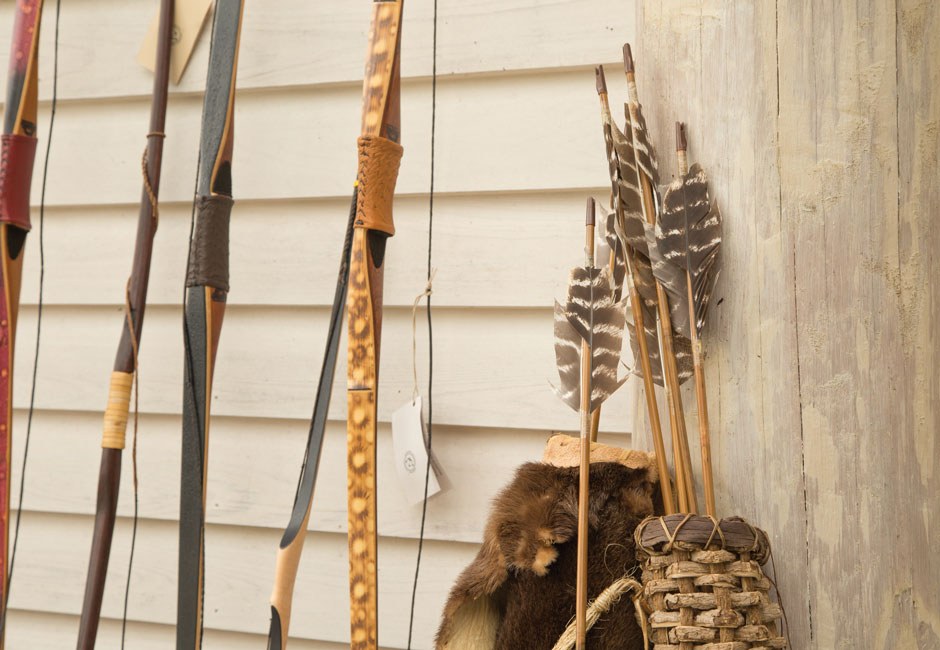
Today, Parker is trying to bring back these old ways. Those who attended Palmetto Bluff’s Field + Fire will recall the large clutch of men standing off to one corner of the River House’s expansive lawn. They were there in awe of Parker and the array of historical bows and arrows at his table. There was the stick bow, the simple bent piece of wood employed by both Native Americans and English bowman. Then there were horn composite bows, the next great leap in weapons technology pioneered by the nomads of the Asiatic steppe. Crab bows, which look like curls of wood until contorted into deadly form by a rope. Bows from Egypt, Mongolia, and Greece, each with a different take on the design as the weapon marched toward modernity.
And with each piece, he told the story of how mankind’s march to modernity was defined by the weapons we used to hunt.
“Without this technology, there would be no compound bow. There would be no rifle,” he said. As his audience eyed the bows in rapt silence, he told of how these weapons evolved. How a Turkish prince once shot an arrow half a mile, a record for the longest projectile that would stand until the single-fire cartridge was invented. But that’s just how he preaches the gospel of man’s forgotten skills one person at a time. Beyond leading workshops like the one at Field + Fire, he teaches primitive living classes, guiding students through the basic survival skills we all once shared. He also teaches classes on making your own bow, giving hunters a chance to reconnect with that primitive euphoria that has been diminished by firearms technology.
“You’re at the top of your game when you make your own bow, arrow, and arrowhead and take game with it. You can’t top it,” he said, adding with a laugh. “The only way to top it is to jump on its back and knife it or bite it.”
And with each student who passes through his class, he helps preserve a way of life we’ve left behind.
“These skills used to be passed from family to family, from group to group,” he said. “Some of these skills were lost because they weren’t passed down, and now they’re long forgotten.”
But for those that remain, Parker is here to pass them on.
Photography by Krisztian Lonyai%GALLERY%