Photography courtesy of Jonathan Green.
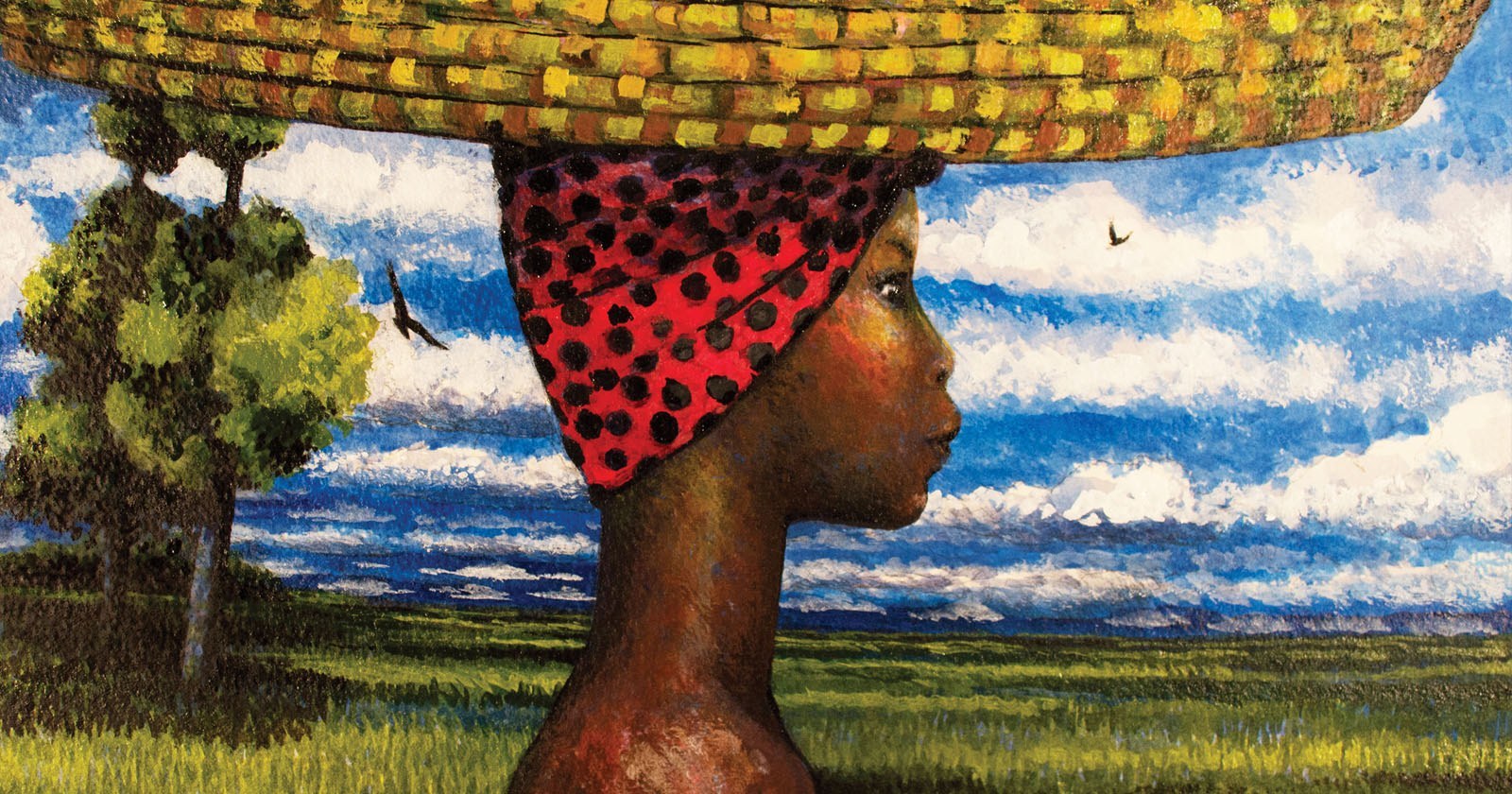
His works are as instantly recognizable as they are blissfully approachable. The vivid colors, the way they capture a Lowcountry breeze as it billows a scarf or the hem of a hoop skirt, and, most important, the simple agrarian lifestyle they reflect mark each portrait as an unmistakable work of the Lowcountry’s most celebrated artist Jonathan Green.
And while the skill behind each piece informs a body of work that has rightfully raised his profile around the world, it is the way that body of work has elevated a culture that is perhaps his biggest achievement.
“When Black people in rural communities started seeing themselves on walls, it totally changed their perspective. They felt more interested in where they came from,” he said.
For Green, knowing where he came from was just part of growing up Black in the South Carolina Lowcountry. “We were taught to know where you came from,” he said. “The average Black kid of my generation would know their family four generations back and which plantation they came from. It wasn’t a knowing of shame; it was a knowing of pride. It wasn’t about being owned; it’s what they did with the land.”
His mother, a seamstress, and his father, an educator, shared ownership of a nightclub in Gardens Corner where Green grew up, but looking back on his upbringing, he talks mostly about his grandparents—how they married young and raised six kids. His grandfather was a moonshiner and a sharecropper. His grandmother, perhaps most importantly, was one of the first to recognize the immeasurable talent brewing in young Jonathan.
“My career as an artist was almost preordained. Kids doodle when they have free time, but my grandmother recognized how much I liked drawing,” he said. His early works were crafted from scraps of coal snatched from the fireplace, but with his grandmother’s support, he was soon focusing on his craft. With success would come an early lesson in the uphill battle he would face as an African American artist.
“I won a county-wide contest for the 4-H Club in the fifth grade in segregated schools, based on drawing ability alone, because they didn’t know who submitted the artwork,” he said. That award-winning work showed a pair of Siamese kittens, his grandmother’s, batting around a ball of yarn. When it came to light that the young prodigy behind the work was Black, the response from the largely white powers that be was less than congratulatory. “At first, they did not want to recognize that a Black kid won a county-wide art contest. They refused to do interviews or feature my work in the paper.”
If young Jonathan Green had been handed a lesson in systemic racism, he chose instead to see a lesson in his own self-worth. “I didn’t focus on the fact that I didn’t get the prize. I realized then that I had enough talent to be on the level of any kid my age.”
Around this same time, he was also discovering the world beyond the bucolic borders of Gardens Corner. Green left South Carolina and lived in New York City for a few years with his mother. The bright lights and towering skyscrapers of New York City could not be any more different than the pastoral Lowcountry, but Green recalls his main impression being “I didn’t have to walk in the ditch during the day.”
“I didn’t have a culture shock. It was a moment of discovery,” he said. “I was fascinated by how well people looked. In the country, you dress for activity or comfort. In the city, people dressed for fashion. Sundays in Harlem were beautiful.”
Green eventually returned to South Carolina, where he graduated from Beaufort High School. With no specific career plans (except a love of art), he joined the US Air Force, serving as a cook. During this time, Green was encouraged to further pursue his talent and later enrolled in the Art Institute of Chicago. It was here that he was introduced to the artistic community at large and, in turn, the artistic community was introduced to the then-obscure Gullah culture of the South Carolina Lowcountry.
“When I was in Chicago, I didn’t meet one student who knew anything about South Carolina.… People saw me as a cute country bumpkin,” he said, adding with a chuckle, “which was a mistake.”
His relentless drive and talent saw him taking part in his first gallery show while still a sophomore—attracting the attention of great artists of the Works Progress Administration (WPA) period including Jacob Lawrence. Created by President Roosevelt in 1935, the WPA was an American New Deal agency, employing millions of job seekers to carry out public works projects. In one project, Federal Project Number One, the WPA employed musicians, artists, writers, actors, and directors in large arts, drama, media, and literacy projects. This laid the groundwork for an explosion of works by Black artists. Despite their progress, forty years later, Green saw a greater opportunity to express his love for his culture in the art world.
“You could drive up the Magnificent Mile and not see one painting of a person of color. All the Black artists who were well known were abstract,” he said. “My mentor, Jacob Lawrence, said, ‘Jon, sell your story. Don’t worry about what’s in vogue. If you know how to draw, you need to find your avenue.’”
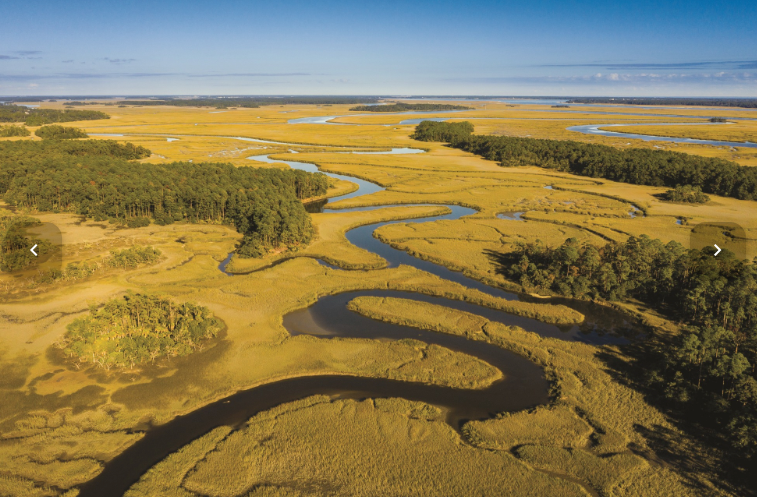
He returned briefly to the Lowcountry to reconnect with the colors and the movement of the home he had left behind and also practice drawing the one bit of Southern scenery that had eluded him. “I remember thinking, ‘You mean I have to go to the Lowcountry and these tedious grasses?’” he said with a laugh. “The first time I drove back, I drove right into downtown Beaufort and sat on a marsh with a pencil trying to copy the grass.”
As you can probably see, he quickly got the hang of the wispy Spartina that signifies our little slice of the South. But, more important, he was finally able to truly inform his experiences living in and growing up among the unique indigenous culture of the Lowcountry with the keen eye of an artist he had developed under the tutelage of the greats of African American art. And the world took notice.
Soon, Jonathan Green’s works were popping up at venues not just across the South but around the world. One of the first footholds he found was in Hilton Head Island’s famed Red Piano Art Gallery. “Hilton Head was the powerhouse in promoting my work,” he said. Capturing the attention of the island’s wealthiest patrons saw not only the value of a Jonathan Green original soaring, but also the profile of the artist himself. And with each new exhibition, whether here or around the world, his status as one of the South’s most important artists grew, as did the awareness of an often-overlooked culture.
“My niche was to create a storyline of imagery, not just of people but of my culture of the Lowcountry,” he said. “I never became a painter to paint Black people but to paint the Lowcountry.”
Green now lives in Charleston, where he serves as the city’s Ambassador for the Arts and is co-chairing the city’s 350th anniversary celebration. These days, he’s found himself slipping into that mentorship role, helping African American artists find their voice and supporting them any way he can.
“Every artist needs people to support them and their work,” he said. “As an artist, helping galleries understand the Black community and helping the Black community understand galleries, that’s been my role.”
And after traveling the world and serving as an ambassador for his art and his culture, he still makes his way to Gardens Corner for service at Huspah Baptist Church on the first Sunday of every month.
Captions:
Hobcaw Barony Woman, 2013
Carrying the Harvest, 2005
Clam Diggers, 1997
End of the Harvest, 2005
Communal, 2019
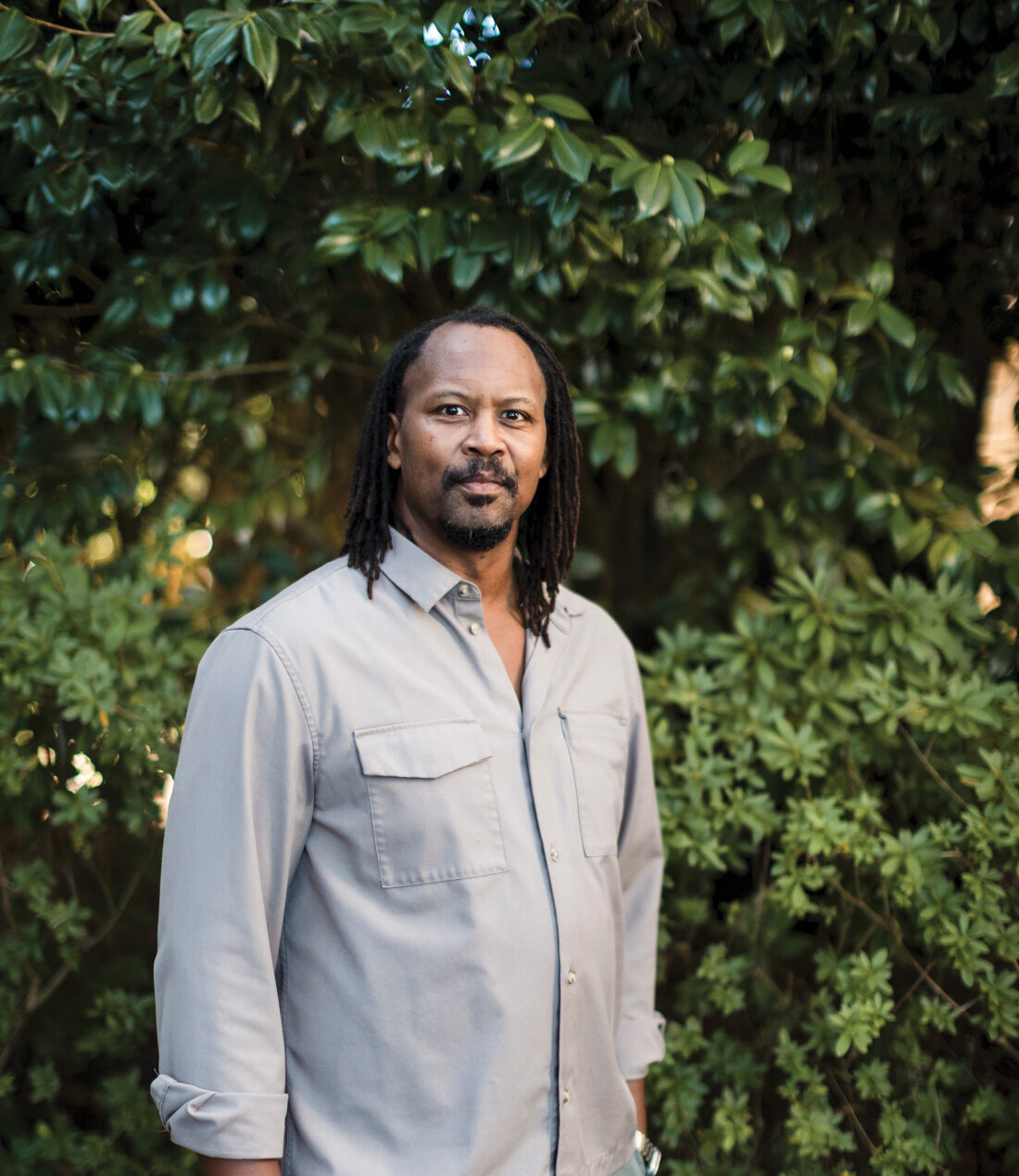
Artist Jonathan Green
%GALLERY%