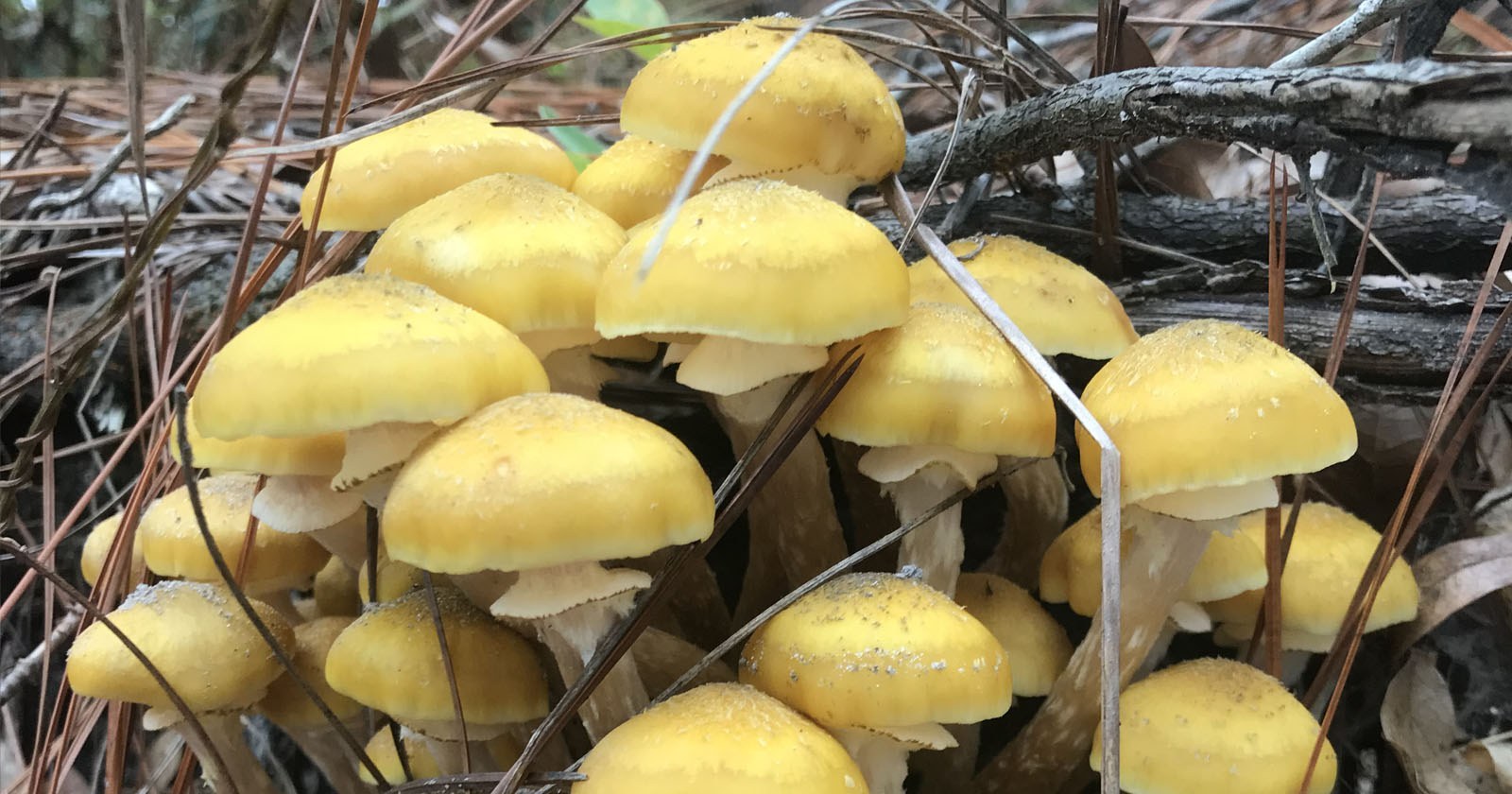
Walking down River Road Preserve after a good rain shower can provide hours of entertainment by observing what life is active after the rain. I spend the time looking for frogs hopping through puddles, snakes looking for a dry spot to sunbathe, and birds moving through the leaf litter trying to find a tasty grub. Something else I see but may overlook from time-to-time are flashes of yellow, white, red, and other bright colors that break up the shades of green and brown. These various hues may be attributed to one of the many fungal species that call the Lowcountry home.
Fungi are an exceptionally diverse group of organisms that are neither plant nor animal. South Carolina is home to over 3,000 species while an estimated 2.2-3.8 million are thought to exist in the world! This large variety makes it no surprise that different species of fungi have good or bad connotations attached. For human-based relationships, some species can produce infections such as ringworm, Pneumocystis pneumonia, and candidiasis. On the other hand, we have a strong admiration for edible fungi such as yeast, chicken of the woods, chanterelles, and the delectable truffle! Some fungi are used in the medical field where they have led to discoveries like penicillin. These positive and negative relationships are not restricted to humans either, as plants and animals alike are connected with fungi in multiple ways.
While not as culinarily refined, multiple animal species also enjoy consuming mushrooms. At Palmetto Bluff, you may find periwinkle snails cultivating and eating fungus that grows on spartina grass, or you may see the occasional fox squirrel running off with a chunk of mushroom in its mouth. There is also a fungal species found within the stomachs of white-tailed deer which aids in breaking down plant material for digestion. While these fungi are beneficial, there are plenty of harmful species that wildlife encounters. In 2006, the fungus that causes white-nose syndrome was introduced in North America and has been decimating native bat populations ever since. Meanwhile, the fungal genus Cordyceps took a page out of horror stories as it parasitizes the minds of insects and uses them to spread their spores as far as possible. Thankfully, the only effect Cordyceps has on humans is providing great material for books, video games, and movies.
Plants are also safe from Cordyceps, but there are plenty of detrimental fungi they may experience. Root rot, cankers, wilt diseases, and powdery mildew all have fungal associations attached. These various diseases can weaken the plants to other pathogens or kill them outright. Conversely, there are crucial relationships between plants and fungi that aid in healthy ecosystems. Mycorrhizal fungi form a symbiotic relationship with the root systems of plants. The plants receive nutrients and water that would be out of reach of their roots, while in return, the fungus receives carbohydrates produced during the plant’s photosynthesis. This relationship may occur right below our feet as we stroll down the nature trails at Palmetto Bluff. There is another important role that fungi fulfill in the environment and that is as decomposers. Walking through Sandhill Loop and River Road Preserve you may spot stumps, fallen branches, and even downed trees with mushrooms growing from their wood. These fungal species break down dead plant material and release locked nutrients back into the soils. Living plants then use these nutrients to help with their own growth. Someday in the future, they too will be broken down by fungus and provide nutrients for the next generation of plants.
Fungi’s broad diversity can hardly be conveyed in a few paragraphs, but I think it is essential to know that they are a key component in both ecosystems and in human lives. While some species may be the cause of diseases, there are many more that recycle nutrients in the ecosystem, provide food for wildlife and people, and are used in the creation of medicines. I hope this has been an enlightening read and that it may have been enjoyed with a nice cold beer or maybe some aged cheese atop of a slice of bread. If that is the case, then you can confidently say that there is a fungus among us.
For those interested in documentaries about fungi, I suggest “The Magic of Mushrooms” and “Fantastic Fungi.”
%GALLERY%