










Written by Palmetto Bluff
Jun 20, 2025
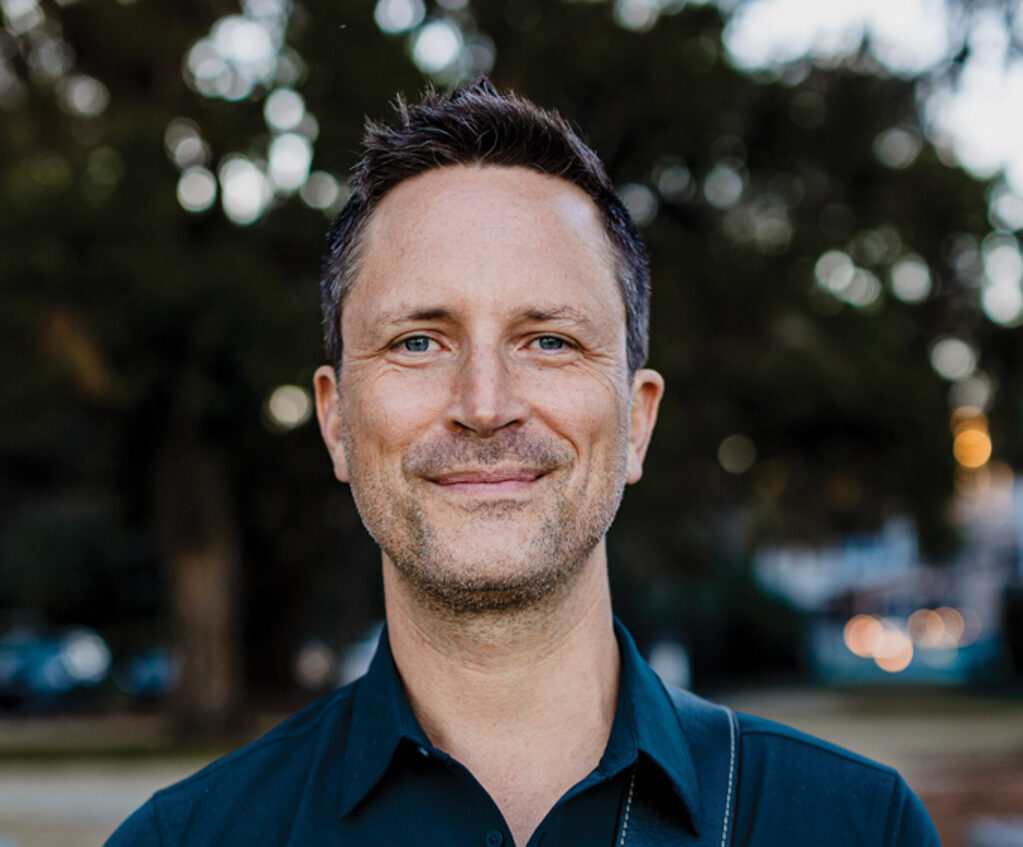
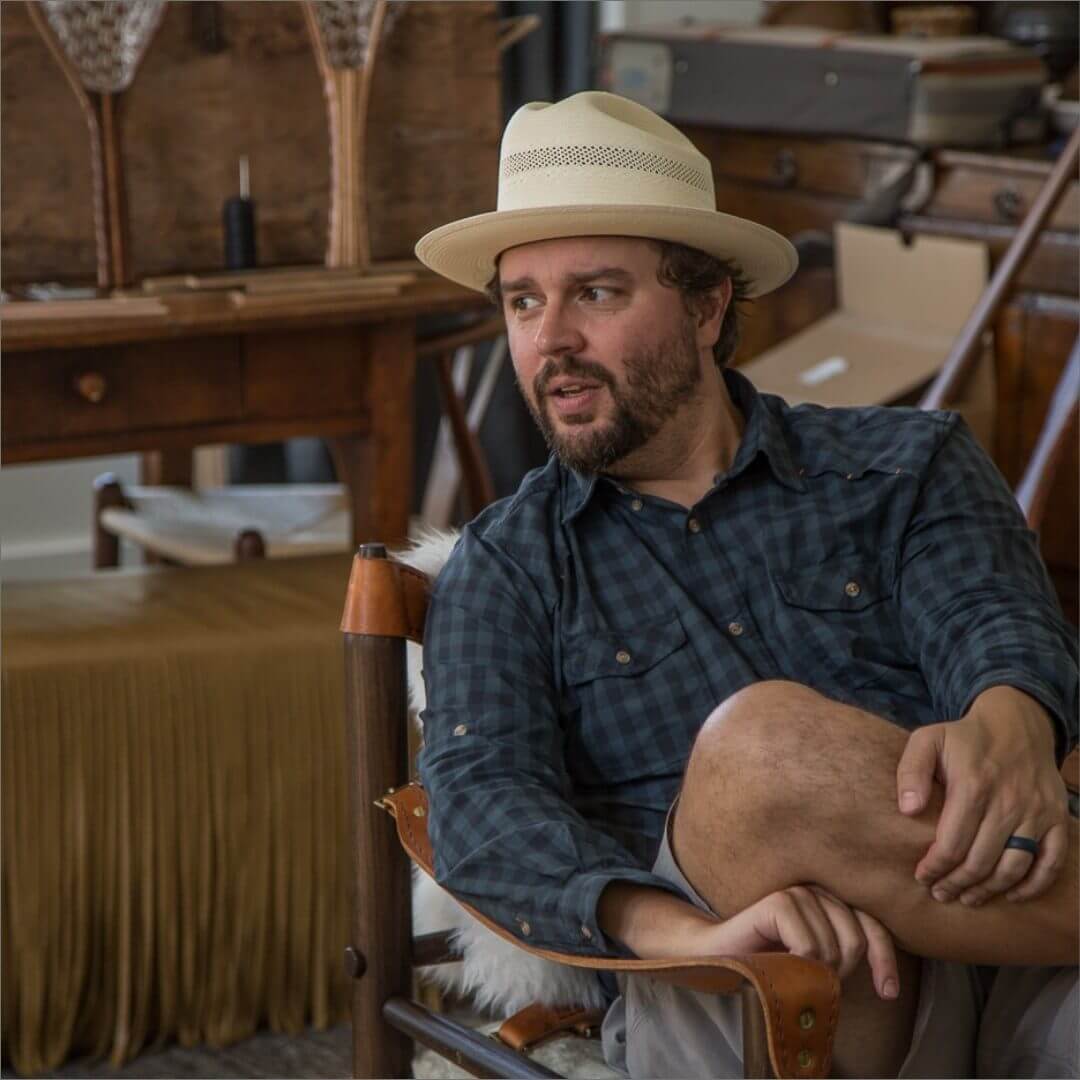
When Clay Ross came to Charleston from the suburbs of Anderson, South Carolina, he arrived with a perspective forged by a white-picket fence upbringing. He had come to the Holy City to pursue music, even if his own tastes only ran as deep as basic cable allowed.
“I played a lot of Nirvana, Metallica and Guns ‘n’ Roses,” he remembers. “All the hit songs I heard on MTV.”
That all changed when he walked into a Charleston cafe and heard the siren song of jazz, filtered through the spiritual-scented folk songs of the Lowcountry. Performing that night were Quentin E. Baxter and Kevin Hamilton, two musicians who would ultimately change the trajectory of Ross’ life.
“I bugged these guys relentlessly to play with me,” he says. “They were very kind, took me under their wing, and taught me everything I knew about music.”
The lessons went far beyond minor chords and major scales. As native Gullah, Baxter and Hamilton taught Ross all about context—the roots and meaning of music.
“You listen to the Mississippi blues, and you can see how Gullah culture and influence migrated across the Southern states and became something a little bit different,” he explains. “This music has inspired, influenced, and informed so many styles that we love—from jazz to hip to rock and roll. I refer to myself as a disciple of Gullah music.”
This appreciation for how the music of the Lowcountry has changed the world changed everything for Ross. In 2016, he formed roots music group Ranky Tanky along with Baxter on drums, Hamilton on bass, Charlton Singleton on trumpet, and vocalist Quiana Parler. Their jazz-flavored take on Gullah spirituals, not to mention their authenticity (Baxter, Hamilton, and Singleton are all native Gullah), quickly set them apart in the industry. They won their first Grammy in 2019, followed by another win in 2022.

“The African diaspora has been such a huge part of the music that I love and American music in general,” Ross says. “If you follow that thread, you follow it to the source of this incredible music. I’m very lucky to have spent a lot of time traveling and making music.”
And travel he has. With the support of the U.S. State department, Ross has traveled the world as a sort of ambassador of American music, from Senegal and Ghana to Kosovo and China. His latest project is another roots-focused band, American Patchwork Quartet. If Ranky Tanky is a love letter to the Gullah influence in American music, American Patchwork Quartet showcases how immigrants have made their irrevocable mark on our soundscape.
In addition to Ross’ southern influence is the Detroit church stylings of drummer Clarence Penn, Japanese-born bassist Yasushi Nakamura, and Indian vocalist Falguni Shah.
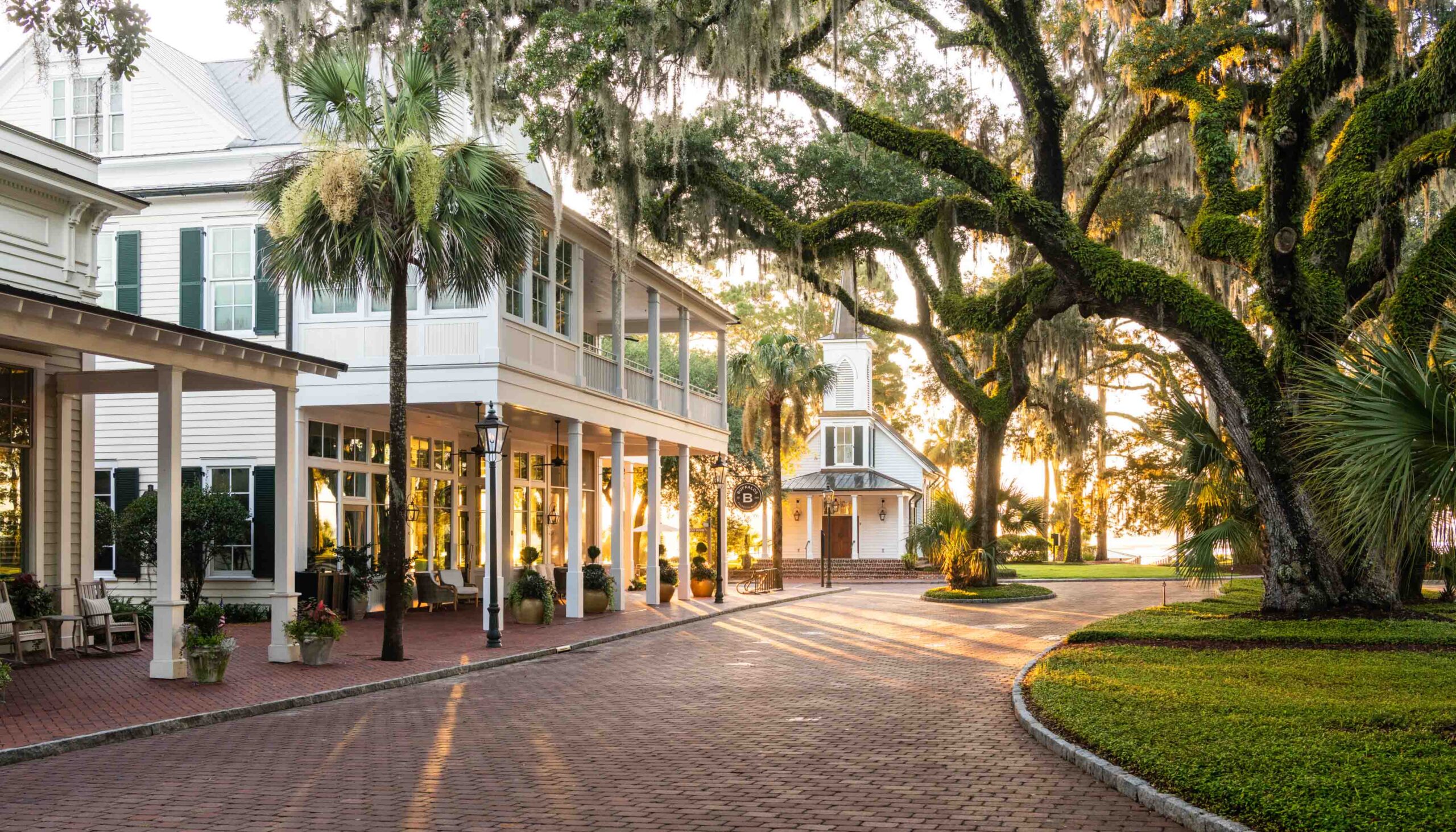
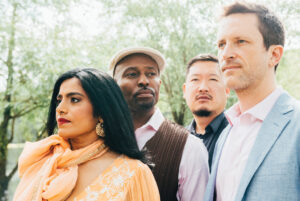 “We played the Grand Ole Opry last June, and we believe that we may have brought the first Indian vocalist to the Opry. They wouldn’t confirm or deny that, though. They just said, “Our records are incomplete,” he told the crowd gathered to hear him play at Palmetto Bluff’s May River Chapel in Wilson Village. “Our goal is to bring diversity and representation to American roots music, and to be invited to the mother church of country music in Nashville was tremendous.”
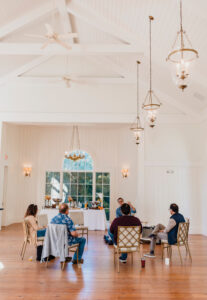
The day after his performance, Ross led a songwriting workshop at Somerset Chapel to give further insight into his process. Several aspiring songwriters joined in an hours-long roundtable to discuss big picture philosophy but also to dig into the practical, hands-on work of writing music.
“I like getting into music history and bringing some of those inspirations into contemporary times,” he told the group. “I’m always trying to find bits of timeless nuggets, things that have become so ubiquitous in American culture you take them for granted. When you start to unpack where they came from and why they arrived in the first place, you can start asking how it’s relevant to your life and thinking about how to write from that perspective.”
To demonstrate, he pulled up the archives of Alan Lomax, a historian who traveled the world collecting songs from small isolated villages. Sifting through recordings, Ross deftly wove together two melodies into what he referred to as an “American Mongrel” of a song.
The first, a polyphonic ballad from somewhere in the Italian Alps called “Dona Lombarda.” The second, a nameless Irish folk song that hewed very close to the classic “Irish Washerwomen.”
“There are twelve notes in the musical scale, at least in Western music,” he said. “We have harmonies and we have these twelve notes. That’s the language we’re working with. And a lot of things connect with people because of ancestral memory.”
Over the next few hours, Ross challenged attendees to look at music the way he does. It’s a gift to be passed down, it’s a story that you never finish telling. It’s a melody that you can fall into at any moment, subconsciously harmonizing with the generations of Americans, immigrant and native-born, that came before you.
“I’m looking for songs that tell a universal truth,” he said. “Songs about love, songs about loss, songs about nature… Am I any more American because my ancestors came to this country hundreds of years ago than Falguni who came here herself? Music is a safe space to ask those questions.”
These were the questions considered at the workshop, as he and a handful of aspiring songwriters came together over these ancestral songs to craft their own message of love, loss and nature. Feeling both timeless and new, universal yet personal, the song they crafted was, appropriately enough, titled “American Mongrel.”
And it speaks to the spirit Clay Ross brings to his music. He is a disciple of an art form that existed long before him, and will continue to inform the musicians of tomorrow long after he’s gone. In the meantime, he remains its humble steward.
The Palmetto Bluff Arts Initiative’s Artist in Residence program brings world-class artists and talent to the community. Through workshops, classes, concerts, and demonstrations, visiting artists provide hands-on education and foster a dialogue about art, nature, and connection.