March in Beaufort County is the time when people start putting away their winter jackets, cleaning the grill, prepping the garden, or maybe planning for their summer vacation. Birds, however, are thinking about laying eggs.
American robins, yellow-rumped warblers, rubycrowned kinglets, and other species that spend the winter with us head north to raise their young for the summer. Those that overwintered in the Southern Hemisphere, such as barn swallows, yellow-billed cuckoos, and swallow-tailed kites, will migrate to North America for the nesting season. Meanwhile, northern cardinals, brown-headed nuthatches, eastern bluebirds, and other year-round species do not have to worry about traveling and have already begun finding their mates, building their nests, and producing eggs. While all birds share this behavior of building nests for their eggs, each species has a unique design for these summer abodes.building
Before we delve into the more stylish nests, let’s talk about the basics first. The most common type of nest that many species of songbird utilize is the cup-shaped nest, which is built within shrubs and trees. Pine warblers build their nests in pine needle clusters (a big surprise for many people I’m sure!). Meanwhile, summer tanagers are slightly more versatile and build grass-and-twig nests along horizontal limbs of pines and oaks. The tanager’s cousin, the cardinal, prefers being lower to the ground and forms leaf-and-twig nests within dense shrubs. An example of a shrub that many songbirds enjoy is a hawthorn (Crataegus), as the thorny branches deter predators from entering. However, hummingbirds use an alternative defense by building their tiny cup nests close to hawk nests. While hummingbirds are not a good meal source for hawks, animals that would raid a hummingbird nest are the perfect size.
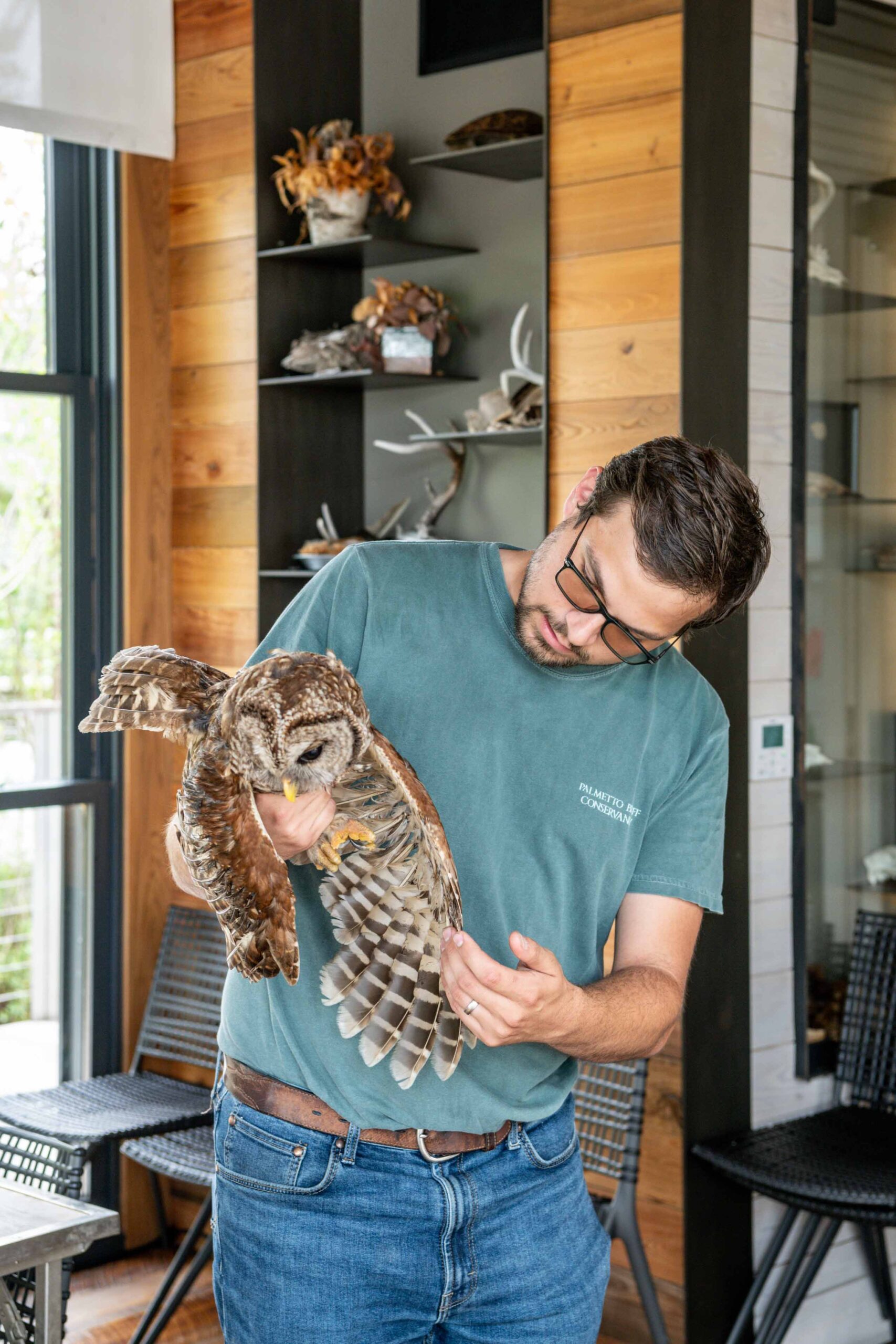
Woodpeckers, bluebirds, chickadees, screech owls, and many others can be found nesting in natural or artificial (e.g., birdhouse) tree cavities. These tree cavities may sound like a drab affair, but cavity-nesting birds have a variety of nest types that make each hole distinct. Bluebirds build bowls for their eggs out of pine straw and grass, while great crested flycatchers take it a step further by adding snakeskins and raptor feathers to act as a predator deterrent. Chickadees, on the other hand, prefer using soft materials such as plant fiber and sphagnum moss. Eastern screech owls skip the design and build process altogether and choose pre-built nests made by other birds. Among the woodpeckers, red-cockaded woodpeckers are the only species in the Southeast to create a nest in living trees, specifically longleaf pines. (Hint: If you see any of the other woodpecker species starting a nest in the cavity in a tree, that tree may not be as alive as it looks.)
Delving into the realm of exaggerated and unique nests, bald eagles build their homes in the forks of living pine trees. New material is added every year, which eventually results in a nest that is large enough for a person to occupy. The largest eagle
nest recorded was 10 feet wide, 20 feet deep, and weighed roughly 2 tons! Red-winged blackbirds modify the cup nest by weaving grasses between cattails to create nests suspended over water. Ovenbirds, unlike other warblers, use dead leaves
to build domed nests on the ground. Herons and egrets build platform nests in large communal rookeries usually above and surrounded by water. While a platform of sticks may not seem unusual, the location is what makes this nest distinctive. Raccoons, snakes, and other predators would prey on wading bird eggs if they did not have to risk their own lives by swimming through the water and possibly becoming lunch for an alligator.
While it might not be possible to attract these more unique nesting birds to your yard, you can still provide habitat for a multitude of bird species by adding shrubs and trees. Native plants such as eastern red cedar, yaupon holly, wax myrtle, and wild olive can provide shelter throughout the year as they never drop their leaves, while deciduous plants such as spicebush, native viburnums, toothache tree, and dogwood are additional nesting sites during the summer. The mature oaks and pines in your yard are used by birds that prefer to nest higher than other species. Even dead trees are important nest sites. If you have a few in your yard, and they are not a threat to your own nest, I would leave them standing for the birds. These native plants will help attract birds by not only offering shelter but also by providing a steady food source in the form of fruit and insects.
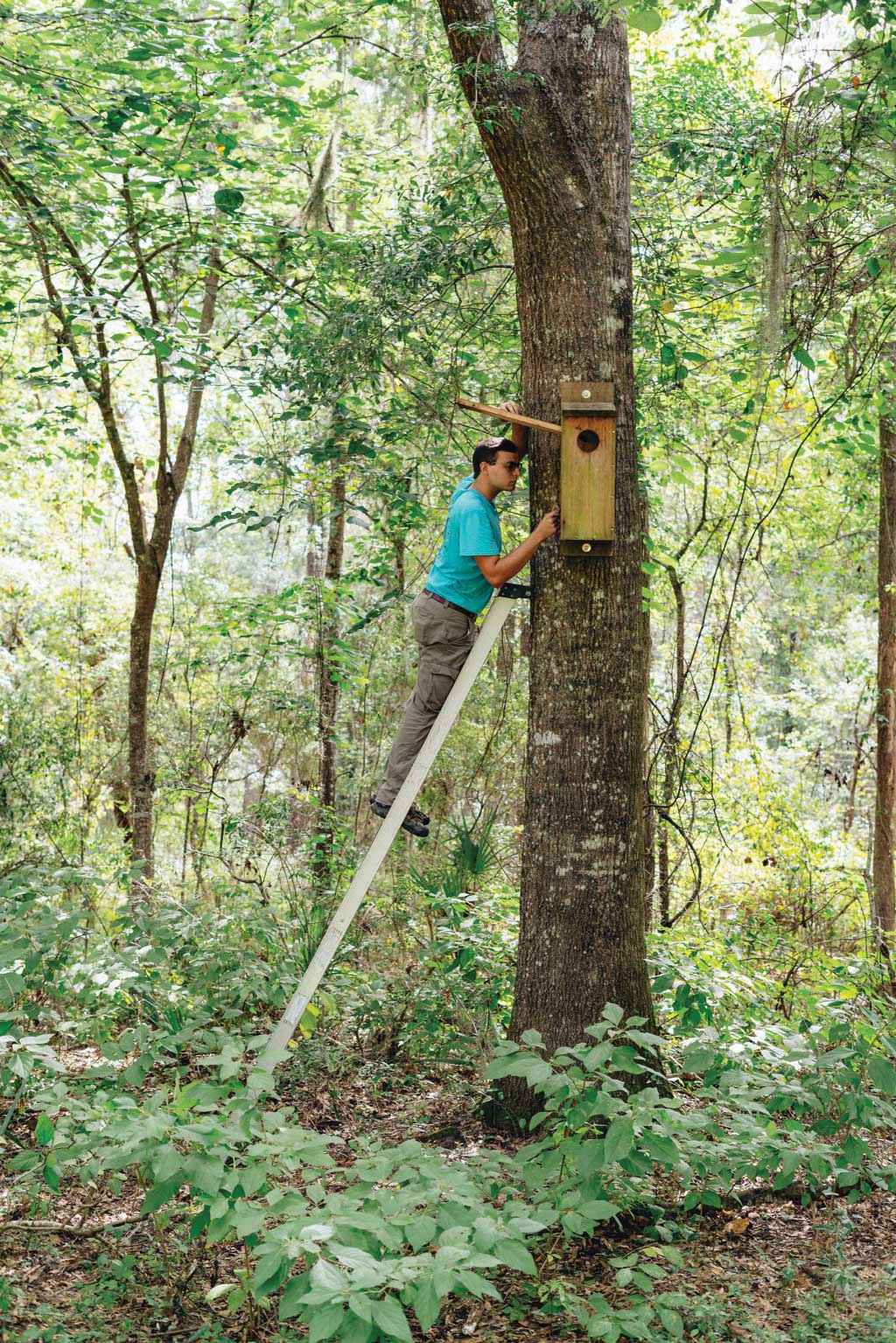
The Palmetto Bluff Conservancy plays a large part in providing habitat for many bird species by building and placing multiple types of nest boxes throughout the Bluff. Among these, you’ll find 30 cavity nest boxes located on trees in five different habitats; these are used by screech owls and great crested flycatchers. There are also 20 barn owl boxes that were erected in 2019 with the goal of attracting barn owls to the property. Finally, there are roughly 70 bluebird boxes that have been on the Bluff for over a decade. The diversity of these nesting boxes accommodates different cavity-nesting birds, allowing the Conservancy to form research initiatives based around them.
I challenge everyone to get outdoors this spring and start transforming your yard into a bird haven. Add native plants to your landscaping, hang a birdhouse, put out bird feeders and birdbaths, and then prepare a big batch of sweet tea. While the new plants may be too young and fragile during the first nesting season, eventually you will be able to kick back on your porch, sip some sweet tea, and enjoy a bounty of beautiful birds nesting in your yard.
If a yard makeover isn’t in your future, you can also help native birds by sponsoring a Palmetto Bluff Conservancy bluebird box. For more than a decade, the Palmetto Bluff Conservancy has been building, maintaining, and monitoring nest boxes designed for eastern bluebirds. These boxes provide important data on the behavior and success of these beautiful birds. By adopting a box, you can ensure that a bluebird family has a home for years to come and help the Conservancy in their mission to conserve the natural and cultural resources of Palmetto Bluff.
For more information on sponsoring a bluebird box, please contact the Palmetto Bluff Conservancy at info@pbconservancy.com or stop by the Conservancy office in Moreland Village.
Tips for attracting eastern bluebirds:
1. Place your bluebird house near a garden to help control insects and other pests.
2. Your birdhouse for eastern bluebirds should have an entry hole measuring about 1 1/2″, while western and mountain bluebird house entries should be 1 9/16″.
3. Don’t let your bluebird house entry directly face the sun. This prevents overheating and keeps the birdhouse temperature comfortable.
4. Bluebirds don’t often come to feeders so consider adding mealworms to your feeder and a heated birdbath nearby to encourage roosting.
5. Use light colors for your birdhouse and make sure to keep it in a shady location.
6. Consider putting up a nest box as it may attract a breeding pair.
7. Make sure you construct your bluebird house out of wood, particularly cedar or plywood.
8. Face the opening of your bluebird house toward a tree or bush so that young bluebirds learning to fly have a place to land.
9. Keep in mind, you may need housing for sparrows nearby. Otherwise, they might pester the bluebirds.
10. Clean your bluebird house at the end of the summer to make it a more inviting and healthy space for next year’s bluebird family.
Written by Aaron Palmieri.
Photography by Elizabeth Angelone Photography.
%GALLERY%