He once laid a mother-of-pearl script on the fretboard of elvis presley’s guitar; engraved oak leaves on a guitar for johnny cash; and built custom instruments
for the likes of eric clapton,
bill monroe, and emmylou harris.
For many in the music industry,
Randy Wood is a household name.
Growing up in Coffee County, Georgia, Wood was introduced to music at a young age. His father and uncles played in a bluegrass band, and every Friday night, the family would dust off the battery-powered radio and tune in to the Grand Ole Opry. Wood would lie on his back and stare at the ceiling as red sovine and hank williams told tales through songs.
“I still think about those songs,” Wood said from behind a band saw in his repair shop nestled along highway 80 in Bloomingdale, Georgia. “They told stories about everyday life. It’s different nowadays. Some musicians can take three or four words and make a whole song out of it. It doesn’t have any relevance beyond that person who wrote it. But back then, in the ’40s and ’50s, almost every song you heard was a song you could relate to somehow. Old country, bluegrass music, they have a way of making you feel like you belong.”
The 75-year-old luthier works in his shop daily, as he has for the past 17 years. It’s a routine, he says, arriving as the shop opens at 10:00 a.m. and staying well into the night to finish custom projects.
He’s a night owl—one of the perils of working in the club scene in Nashville for many years. And although he’s been surrounded by music all of his life, Wood doesn’t consider himself a musician. He can easily hold down rhythm on a guitar and he played in bands in his youth, but he’s always been more interested in wrenching guitars than playing them.
Craftsman at Work
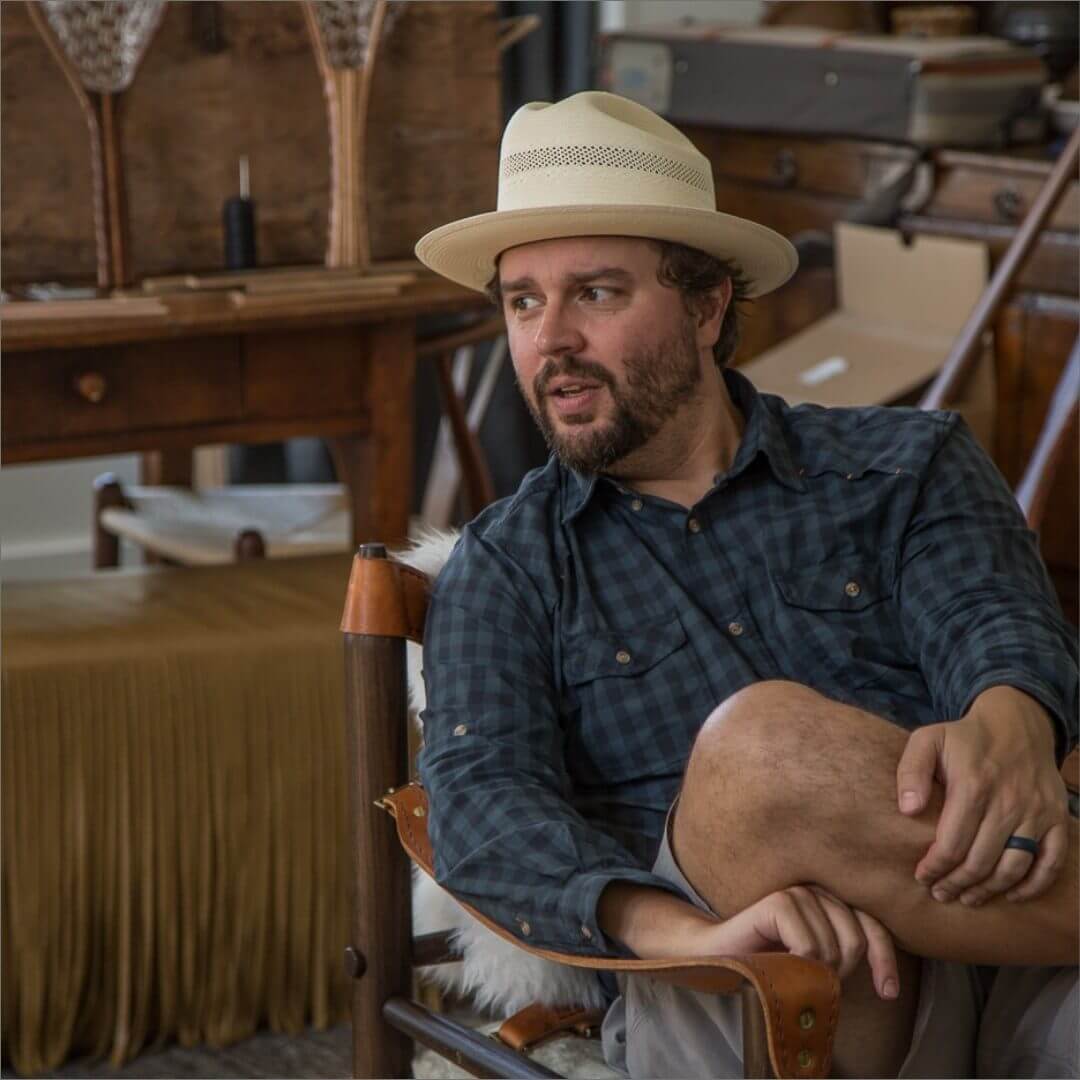
The band saw shoots wood shavings onto the floor as Wood begins to shape braces. Next, he’ll bend the side and begin assembling the body. The initials RW are engraved on the head before the guitar is sprayed with lacquer. The process of building these instruments takes around 40 to 50 hours over a four-week period, and this particular guitar is larger than the small-bodied bluegrass guitars he’s known for. His tastes are constantly changing, and, with decades of woodworking under his belt, he has the freedom to explore.
“We make a lot of custom orders, special things that people want, but I’m at a point that if I have an idea or get a wild hair, I can create,” Wood said. “And like forms of art, when you express yourself in what you do, sooner or later someone will come along and understand it. Sooner or later, someone will buy it.”
Wood is a self-taught craftsman. He has carried a pocketknife as his trusty sidekick since the age of four and can do more with it than most can with a bevy of tools at their disposal. His resourcefulness, however, comes from necessity over desire.
“When I was coming up, there wasn’t anyone to show me how to do it,” he shrugged. “There was no internet, no books on the subject. I had to figure it out.”
This resourcefulness guided him through his early years in the military stationed in Hawaii. As a young soldier, he rolled his Jeep down a mountain and spent a few weeks at Tripler Army Medical Center. In that time, he taught himself to play guitar.
“It starts with the chords; you teach yourself chords subconsciously,” Wood said. “That’s the foundation. Whatever you’re learning or making or doing—it all begins with a solid foundation. You learn to grow from there.”
Armed with newfound musical knowledge, Wood returned to Georgia and formed a band called
the Swamp Men, holding down rhythm and crooning vocals. Together, the band leased a nightclub in Brunswick, and Wood got his first taste of the scene. But it didn’t last long.
He was a draftsman by trade and desired to do “normal work.” Soon thereafter, he moved to Atlanta and began working for an engineering company. He made a life there with his wife, Irene, and young daughter, until a new opportunity presented itself. As Wood said, simply, he met a guy.
This led to a subsequent move to Nashville in the early 1970s, where he partnered with vintage guitar guru george gruhn and bluegrass musician tut taylor to run GTR Inc., the legendary shop now known as Gruhn Guitars. Famous musicians—such as elvis—often wandered in before playing at the nearby Ryman Auditorium, and Wood became a trusted repairman and craftsman to many.
He honed his craft in Nashville, but a decade in the rat race inevitably wore on him. After a particularly harsh winter, Wood moved his family back to the Lowcountry, buying land in Isle of Hope. He kept up his craft at the marina, working on boat interiors. He also set up a small woodshop in his garage to work on instruments for his regular customers, but the customer base kept growing. Musicians from all over the country (and a few international ones as well) sought out his services.
“I guess there weren’t too many folks who could do what I do,” Wood said. “I had too much work for my little garage.”
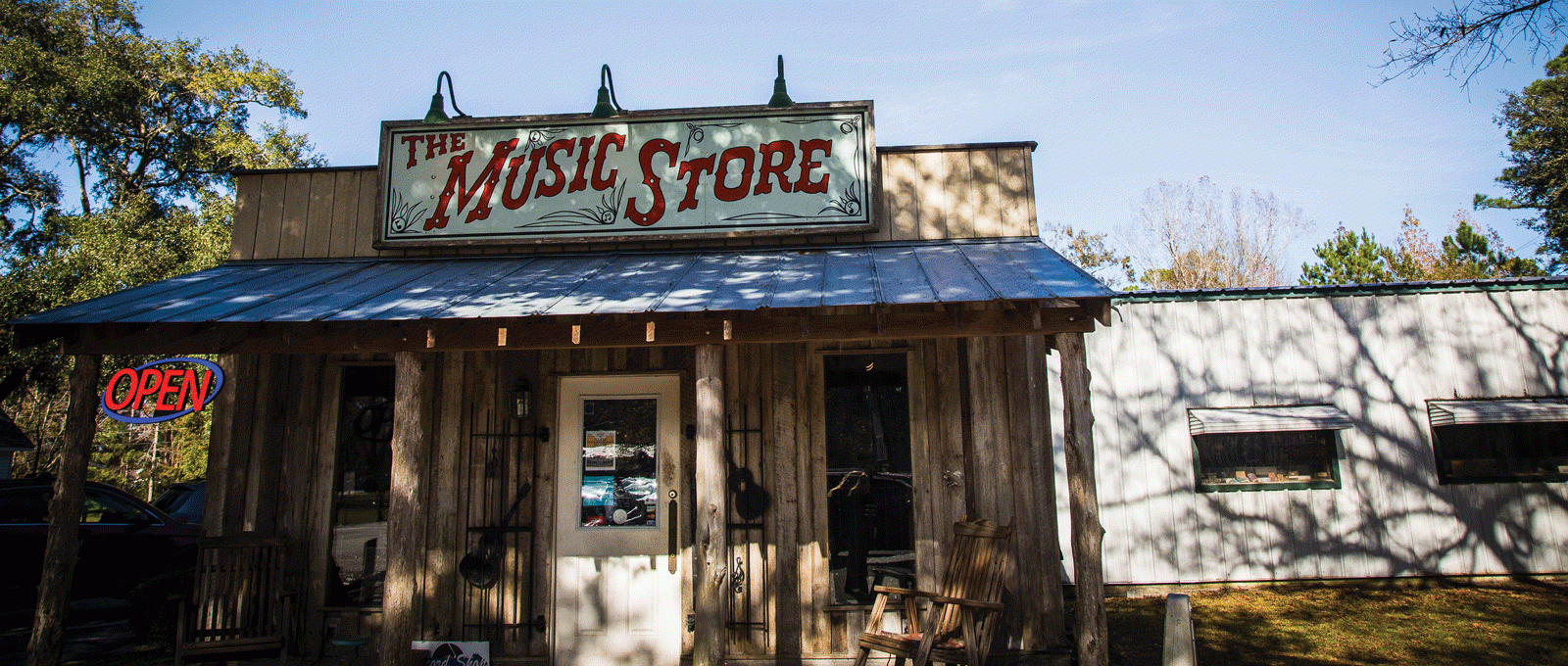
In 1999, he bought the land that now houses Randy Wood Guitars. He built a house next door and slowly added a record shop and 110-seat performance hall called Randy’s Old-Time Pickin’ Parlor. He did much of the work himself.
The Pickin’ Parlor is known for its stellar acoustics and intimate setting—the people in the front row can easily rest their feet on the stage. Guitar guru tommy emmanuel and mandolin prodigy
sierra hull, both of whom are used to playing for crowds in the thousands, have taken the stage here for more personal performances. Shows take place monthly and almost always sell out.
Wood packs the house in an unassuming way. He also mentions prominent life moments subtly in passing. He speaks of playing with his grandchildren and working with keith richards with the same affectionate drawl. the charlie daniels band shot their first few albums at his shop in Nashville, but for Wood, it was just another weekend.
Back to Basics
It’s nearly closing time, and the shop is quiet except for the news playing in the background. Wood likes to stay informed—and he wants his small staff to as well. He’s also looking forward, finding innovative ways to continue to help musicians. Right now, he is designing custom-made lightweight banjos.
“Folks are getting tired of carrying around a 17-pound instrument,” he says, handing over a smaller 6-pound version. “Hard to convince some though. Bluegrass musicians are traditionalists.”
In many ways, Wood is as well. His calloused hands tell a story of decades in the industry. He returned to his Georgia roots to lay the foundation for the next generation. And he’s not stopping anytime soon. Slowing down, maybe, he says. But that’s all part of his Southern charm.
%GALLERY%
Photography by: Molly Mayden