If you take care of the bees, they’ll take care of you.
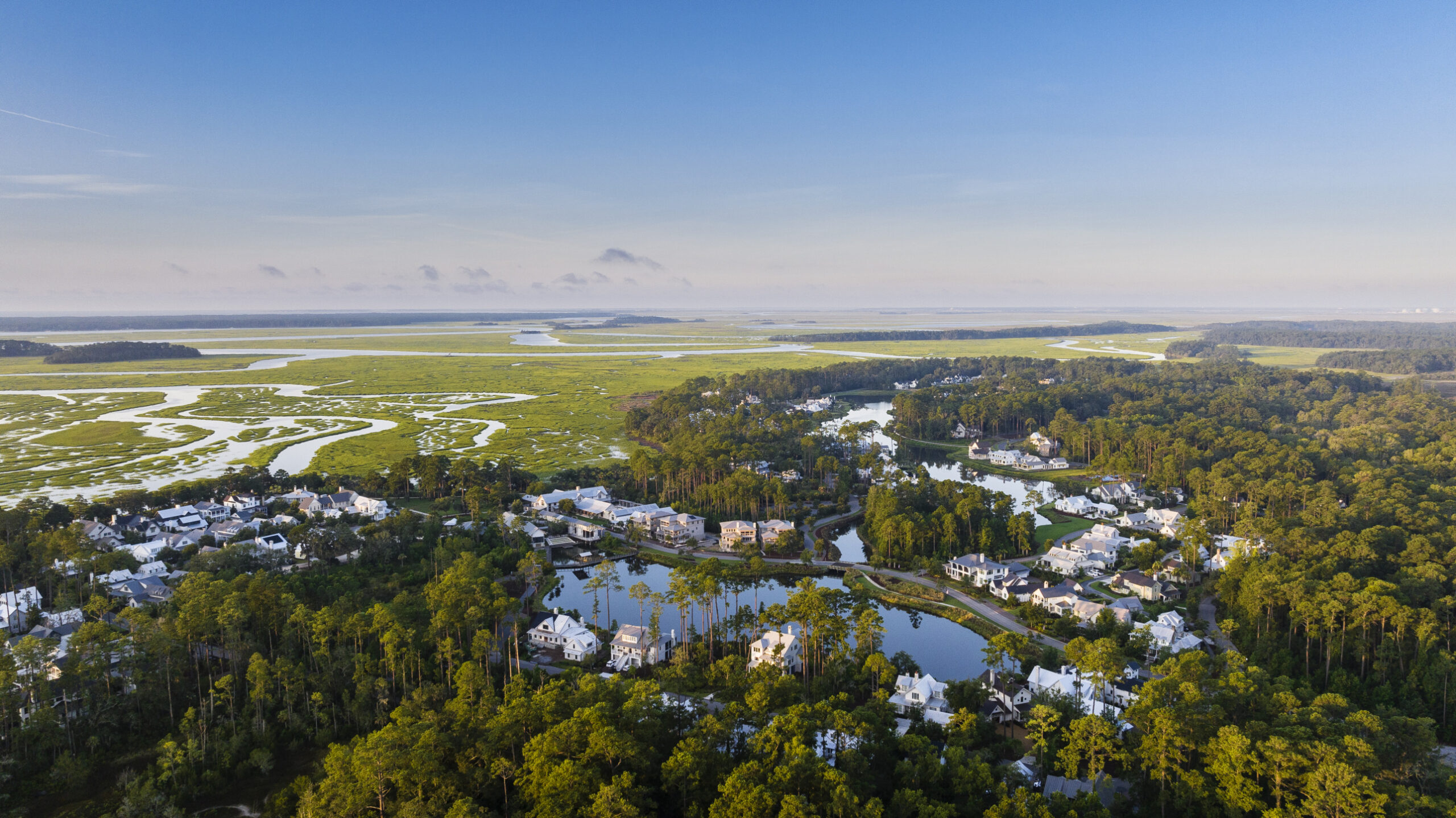
It’s a mantra that has been passed down through six generations of beekeepers in the Wilbanks family. The nearly 100-year journey has led the family from the elevated living of Banks County, Georgia, all the way to the Lowcountry beauty of Palmetto Bluff.
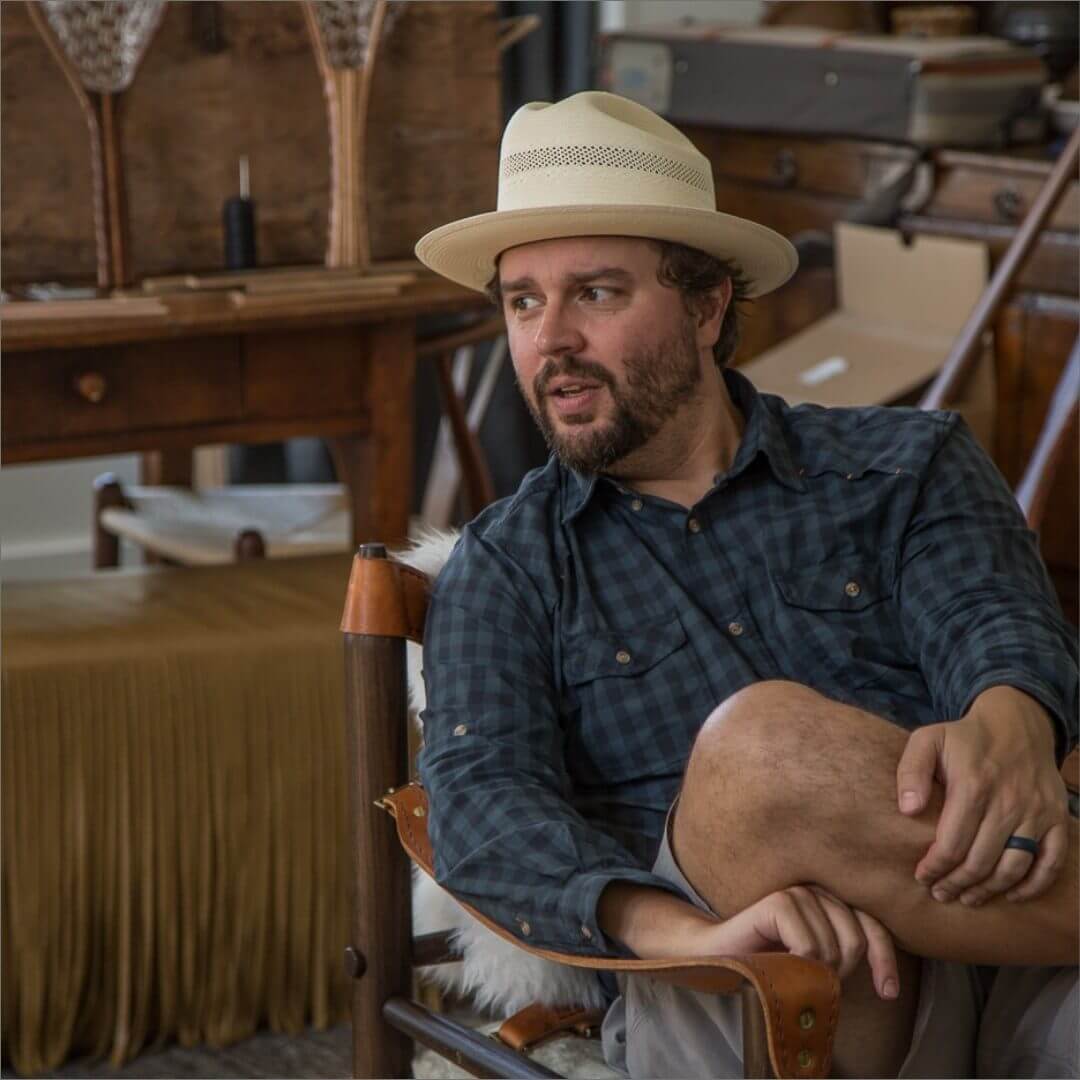
“It’s not an easy life; it’s filled with incredibly hard work, but I feel blessed to carry on the family tradition,” said Patrick Wilbanks, the fifth-generation leader of Wilbanks Farms in Metter, Georgia. It’s just one arm of the family bee empire, but it has become synonymous with the Bluff. “It’s a rewarding way of life, to work in nature and experience something different every day.”
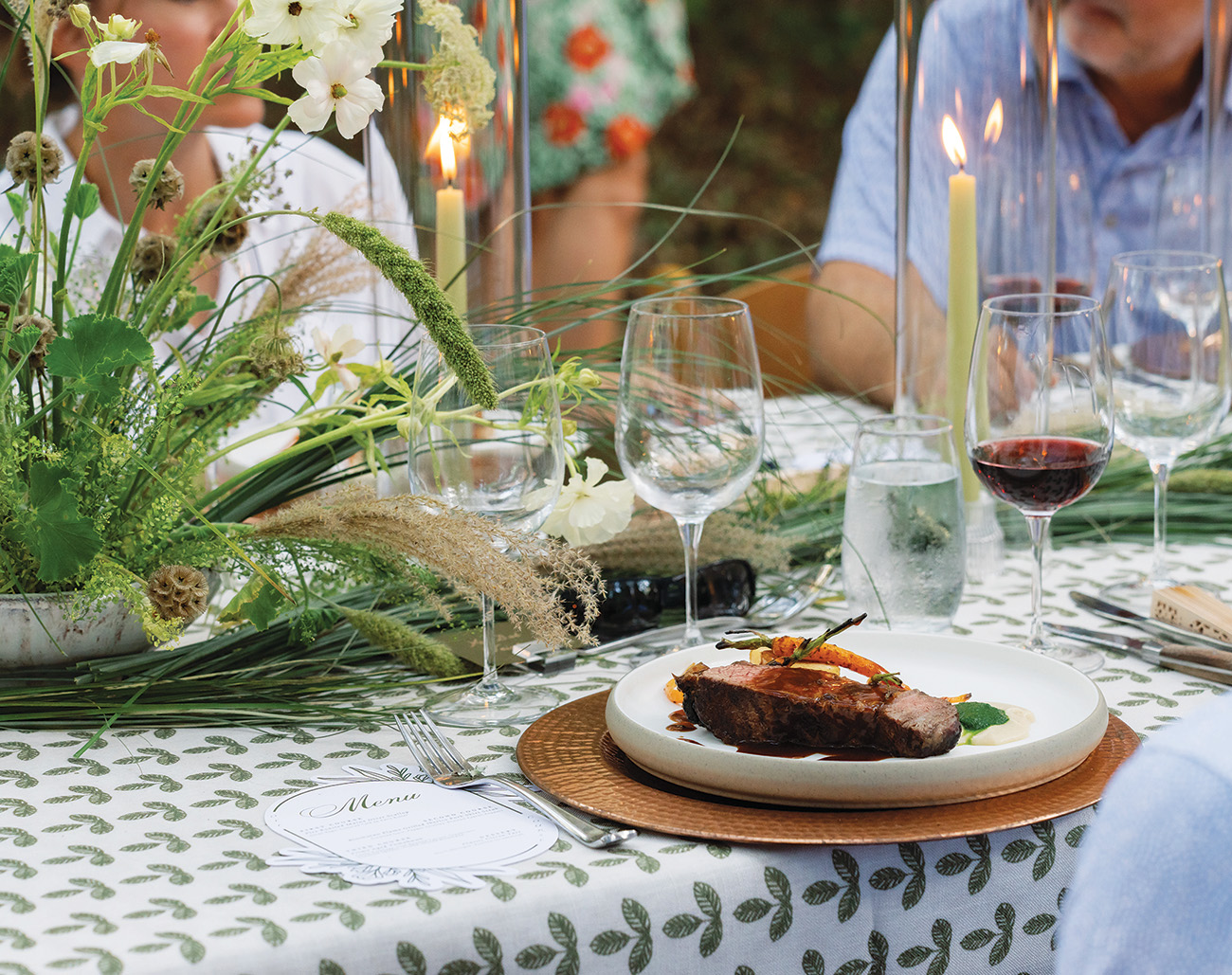
Wilbanks has had a long love affair with the Bluff as one of the first property owners. The family’s signature tupelo and gallberry honeys can be found at RT’s Market and in several of the dishes on the menu at the River House and Buffalo’s. He has been featured at the First Friday lecture series and is currently working with Palmetto Bluff to add honeybees as another conservation and sustainability effort of the Palmetto Bluff Conservancy.
“It’s an honor to be associated with the Bluff. It is a truly special place,” Wilbanks said. “They care about conservation and taking care of nature, so we’ll begin here just like my family’s business began, with a couple of hives.”
The family business has grown from a few hives to a 7,000-hive operation over 120 farms in Georgia and South Carolina, but it all began with a time-honored dowry.
The Wilbanks family legacy began in the north Georgia mountains in the early 1900s. Wilbanks’ great-great-grandfather, Gresham Duckett, was a farmer and a small-scale beekeeper. When his daughter, Dona, was ready to marry in 1919, Duckett decided on a different approach to a wedding gift.
It was common local practice during that time to give gifts to help the newlyweds live off the land. Rather than giving cattle or chickens, Duckett gave his new son-in-law, fellow farmer Guy Wilbanks, four hives of bees.
“That’s when the family business truly kicked in,” Wilbanks said.
Guy, Patrick’s great-grandfather, became so enthralled with the bees that he transitioned from farmer to full-time beekeeper. He produced honey and then sold it in the markets in Atlanta. Guy’s son, Warren, joined the business and helped him expand his honey-making operation.
“A fire destroyed the family’s log cabin, so they decided to relocate to southeast Georgia in Claxton in the ’40s where there were larger and more consistent honey crops,” Wilbanks said. “The climate, the weather patterns, the agricultural diversity and the native floral sources all add up to this being a prime spot for producing honey.”
But Patrick’s grandfather had bigger ideas.
Due to the harsh northern winters, beekeepers had to leave 75 to 100 pounds of honey on each hive to have enough food for the bees to make it through the winter. And even then, when spring came, the overwintered hive would consist of mainly older, worn-out worker bees, which were slow to build up the population to pollinate and produce honey. Innovative beekeepers like Warren offered an alternative. The northern keepers could remove all of the honey from the hives in late summer and restock in the spring with freshly-raised Southern bees that the Wilbanks would provide. Package bees consist of three pounds of approximately 12,000 to 14,000 freshly-raised worker bees and a new queen bee used to start a new hive.
“This allowed us to really diversify beyond just honey and provide pollination service to fruit and vegetable farmers,” Wilbanks said. “My grandfather and grandmother would spend winter nights writing letters to beekeepers in the northern U.S. and Canada, and they really created a pipeline for us.”
Wilbanks’ father, Reg Wilbanks, continued to grow the business and became a vocal leader for the beekeeping industry. He served as president of the American Beekeeping Federation and as a board member of the National Honey Board. For Wilbanks, the natural progression was an honor, not a duty.
“ you lived in the country, kids had to work, either picking tobacco or getting involved with the family business,” he said. “I chose the bees and started working at age nine. I would work in the wood shop building bee shipping containers or caging queen bees up for shipment. I learned every part of the business and loved every step of it.”
That’s when Wilbanks received his first four hives from Warren and Reg. By the time he was an early teen, young Patrick was driving with his mother all over the Southeast delivering his homemade honey.
“We must have had 20 stores buying my honey,” he said. “I’d present the deal, and if necessary, my mom, with her Southern charm, would lock it down.”
The lessons he learned from his father and grandfather went far beyond beekeeping.
“My granddaddy was probably my most important teacher, as my dad was always hard at work in the bees. Granddaddy had more time to be patient and teach and share. They taught me about business and work ethic and managing your money,” said Wilbanks, who went on to earn an engineering degree from Georgia Tech before returning to the family business. “I was independent of my family’s financial support throughout high school and college, thanks to all the hard work with the bees. If you wanted or needed something, you worked and saved to buy it, or you did without.”
Today, the Wilbanks family business consists of three branches. Wilbanks Apiaries, based in Claxton, Georgia, raises bees and queens. It is one of the largest producers of package bees and queens in the U.S., with approximately 20,000 package bees and 60,000 queen bees sold annually.
Kalona Honey Company, based near Washington, Iowa, is operated by Patrick’s younger brother, Tim, and his family. They truck hives from California to Maine, following the bloom, pollinating everything from almonds to blueberries, apples to avocados, cherries to cranberries, and producing many of the over 300 varieties of honey.
“We call him the migratory beekeeper,” Wilbanks said of his brother. “He became a chiropractor, but he couldn’t give up the bees. He travels all over the country, delivering the bees for pollination and honey production.”
[vc_single_image image=”4849″ img_size=”full”]And then there’s Wilbanks Farms, which manages hives for honey production and pollination of fruit and vegetable crops for farmers in the Southeast.
“Over a thousand acres of watermelons, cantaloupes, squash and blueberries are pollinated by our bees in the Southeast each year and, on a good year, over 150 barrels or 100,000 pounds of honey are produced,” Wilbanks said. “We’re proud to play our part in that production.”
Perhaps his greatest pride has come in seeing his two sons, 10-year-old Ben and 8-year-old Barrett, take an interest in beekeeping. In 2013, he gave his sons four hives of their own to manage and has watched as they have become young entrepreneurs. The pair have formed the Wilbanks Brothers Honey Farm brand and are producing their own honey for sale. You can occasionally find the honey for sale in Buffalo’s and RT’s at Palmetto Bluff.
Wilbanks, now 46, has helped steer and grow a multi-faceted operation into the next generation, but he says he has felt no greater joy than watching his kids embrace their place in the family bee tree with such excitement.
“Watching them become the sixth generation of beekeepers in the family feels like my highest accomplishment in beekeeping thus far,” he said. “To watch them working with the bees, listening to them talk about growing their business, seeing how they talk to customers to make a sale, it just fills me with pride and hope.”
As the kids grow, Wilbanks will teach them about the harvest and the business of beekeeping.
Today, there are 1,600 commercial beekeepers in the U.S., working 2.5 million hives. Studies show that one-third of our diet is derived from honeybee-pollinated crops. In all, 80 percent of insect crop pollination is done by honeybees, a $14 billion annual value to U.S. agriculture, according to the U.S. Department of Agriculture.
Beekeeping is a year-round endeavor. There’s a constant demand for the Wilbanks’ bees, queens, honey and pollination. The California almond pollination calls for 1.5 million hives alone in mid-February, and brother Tim takes bees to the almonds for pollination. After almonds, Tim and the bees “follow the bloom,” studying weather forecasts and blooming cycles across the country to determine where to send the bees next for honey or pollination. They head to Oklahoma for canola honey, to Florida for orange blossom or palmetto, to Georgia for gallberry, then to Maine for blueberry pollination, followed by New York, North Dakota or Wisconsin for summer honey production and pollination.
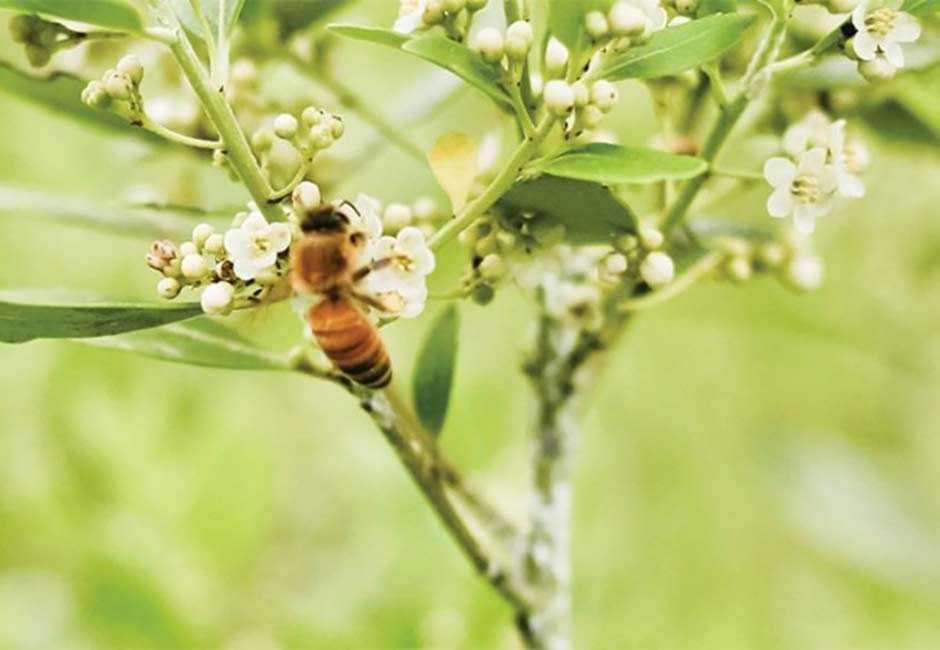
Patrick stays in the Southeast raising bees to restock northern beekeepers’ winter losses, pollinating a variety of fruit and vegetable crops, and producing honey. The honey harvest in Georgia and the Lowcountry begins in April and ends in September with a succession of honey varieties produced, including tyty, blackberry, tulip poplar, tupelo, gallberry, palmetto, Chinese tallow and cotton. Many of these honey sources, such as blackberry, palmetto and gallberry, are native to the Bluff.
The most famous of the honeys produced by the Wilbanks’ bees is the prized tupelo honey. Bees produce a very limited amount of pure tupelo honey from the white tupelo gum trees (Nyssa ogeche), where it grows in large enough concentrations along a few river swamps in the Southeast. Going after the tupelo honey is high risk for beekeepers.
“We’d probably have better odds going to Las Vegas than the tupelo swamps most years,” Wilbanks said.
The one- to two-week stretch at the end of April and beginning of May is a make-it-or-break-it time in tupelo honey production. The tupelo has a very small blooming window, and the conditions must be perfect to produce even the smallest amount of the decadent honey. River swamps can flood overnight and drown hives, and the weather is often too wet or too cold – far from favorable conditions. As a result, tupelo only yields a decent-size honey crop during one of every four years.
“The gallberry has a very strong taste, with a little bite at the end,” Wilbanks said. “But the tupelo has a very sweet, mild, buttery taste with a hint of vanilla.” That’s why “the gold standard of honeys,” as Wilbanks calls it, makes the perfect spread for biscuits and waffles.
In Van Morrison’s song, Tupelo Honey, he describes his girlfriend, “as sweet as tupelo honey.” Harvesting tupelo honey can provide the biggest payoffs and the sweetest memories.
“Those hives are placed deep down in the river swamp where the tupelo trees are concentrated. We’re talking 10,000-acre tracts with not a person for miles. Driving through the river swamp, with the water up over your truck tires, you see the tupelo trees; it sounds like the trees are alive with the hum of the bees working the blooms. You walk down in the river sloughs, and there are blooms glistening with nectar all over the trees. You smell the sweet aroma of tupelo nectar, and it’s so intense it’s like an outdoor air freshener,” he said. “Finally, you reach the bee yard. The bees are roaring in and out of the hives. You go to a hive, pull out a frame, see they’re making a lot of honey, see how much they’ve done, and that’s just about as rewarding as it gets. I’ll tell you, that’s what it’s all about. It doesn’t get any better.”
And at the heart of it all is a very delicate, all-important relationship with the land around them. The family lives back in the woods down a long dirt road. The boys have grown up hunting and fishing and respecting their natural surroundings.
“We’re outside in nature, so we see something different every day, and we’re still learning something new every day, facing new challenges,” Wilbanks said. “We’re in a partnership with Mother Nature, and during some years, she can be kind and during other years not-so-kind.”
The work of harvesting the honey is far from simple; it is an often grueling and arduous process filled with patience and pain.
“I was fortunate enough to grow up in it, as my kids have,” Wilbanks said. “It’s a life that doesn’t attract much of today’s youth. You start at daylight, hands-on in the hives. If you’re never exposed to it, this isn’t the most attractive job.”
But there have definitely been many perks over the years. Patrick provided bees and honey during the filming of both “Fried Green Tomatoes” and the Kevin Costner movie “The War.”
The Wilbanks sell their honey in bulk to suppliers of specialty honeys such as Savannah Bee Company and Cloister Honey, but Palmetto Bluff is one of the few places to which they provide honey directly.
“I always make that delivery myself,” he said with a smile.
Patrick is also working with Chef Nathan Beriau of the Inn at Palmetto Bluff on a special tupelo honey-inspired dish that the chef plans to enter into Montage’s Food and Wine Festival in Park City, Utah.
“I have always admired the beauty of Palmetto Bluff since its days under Union Camp ownership. So when a banker friend told me that Crescent was developing the property, I immediately made a visit,” he said. “I remember pushing through the palmettos to see the May River and seeing the River House under construction. I fell in love with the property, and soon after I became a property owner. I quickly developed a relationship with the chefs at Palmetto Bluff and educated them about our limited-harvest tupelo honey and gallberry honey, and they have been treating their guests to our specialty honeys ever since.”
Wilbanks has been a vocal force in showing the importance of honeybees to the sustainability of the environment. He found a like-minded advocate in Palmetto Bluff Conservancy Director Jay Walea.
“I truly respect Palmetto Bluff’s approach in creating and maintaining such a unique balance between Palmetto Bluff’s natural beauty and a place to call home,” he said.
And just as Gresham Duckett gifted Guy Wilbanks nearly a century ago, Patrick is donating two hives to Palmetto Bluff and the Conservancy. Patrick is working with Walea to find just the right spot.
“The bees are another important piece to the sustainability of the trees, plants, flowers and gardens on the Bluff,” he said. “We hope they’ll be part of Jay’s tours, and we plan to do occasional demonstrations.”
As for what the future holds, Patrick looks forward to spending more time at the Bluff. And he looks forward to shepherding another generation into the family business.
“God has blessed our family with this ability. It’s what we do. It’s how we live. It’s what’s in our blood,” he said. “It’s not the easy path, but if it’s the path they want to take, I’ll show them the way.”
Written by Tim Wood
Photography by Rob Kaufman & Laura Olsen