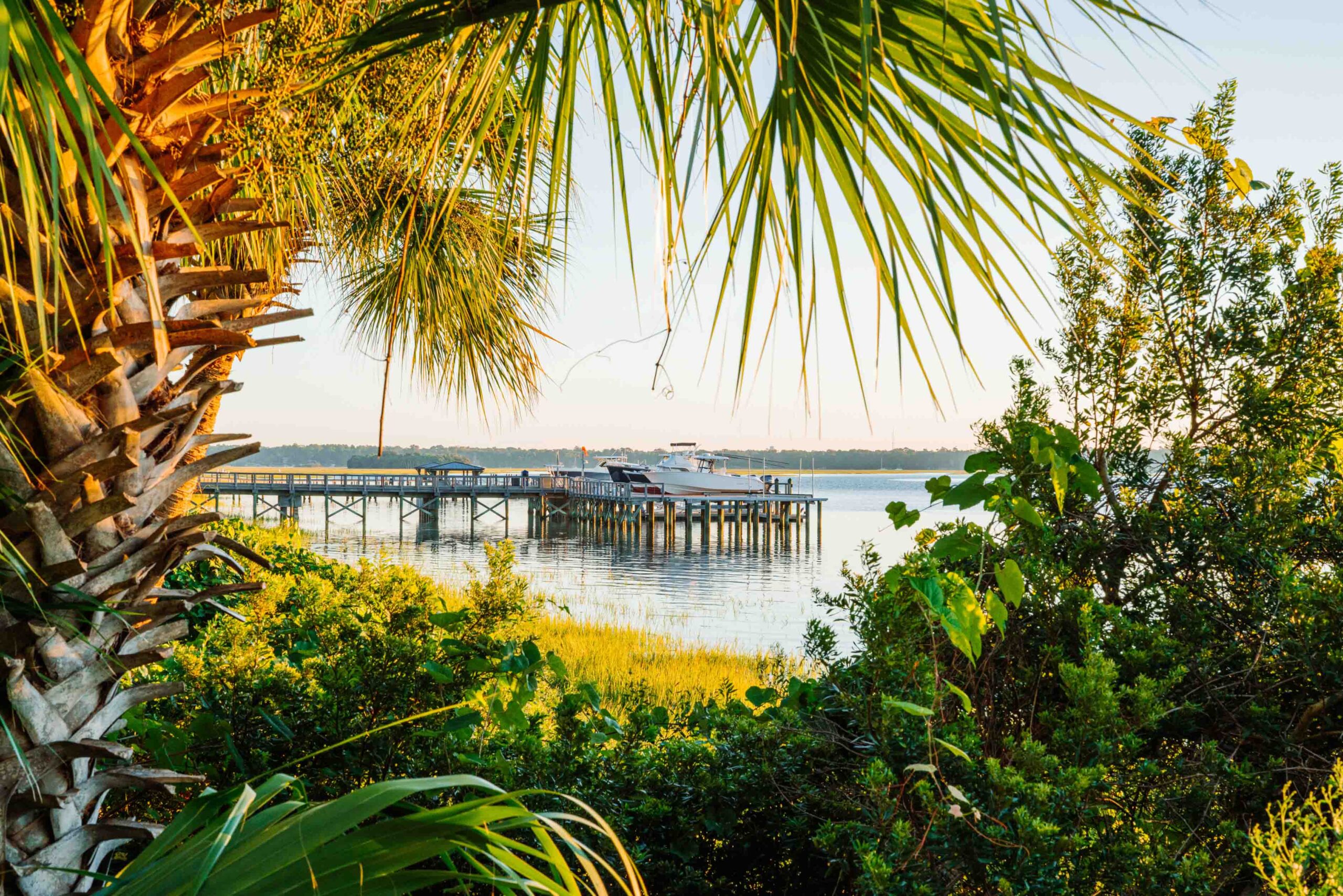
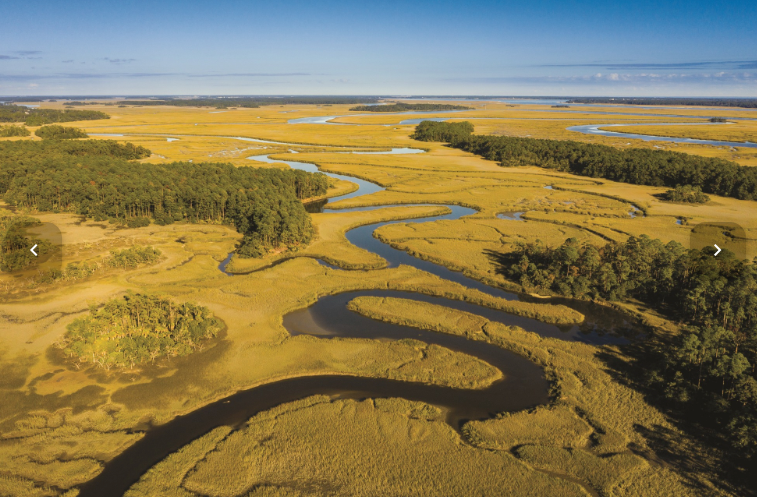
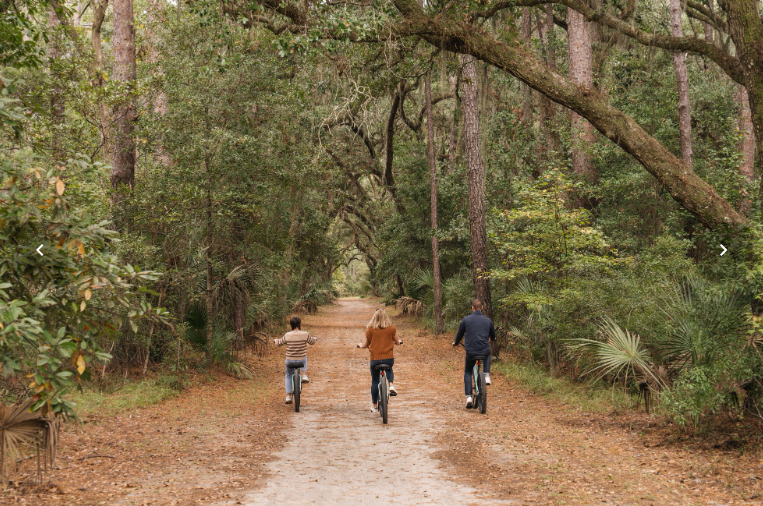
In preparation for proper penmanship, I have reported directly to Theus Point in the far reaches of Palmetto Bluff’s vast expanse of maritime forest. Here, pristine salt marsh proliferates outward only to abruptly end on the backside of Long Island. The scene is one worthy of worship. I sit cross-legged on the ground under a canopy of ancient live oaks and towering pines. Before me is a warm, crackling fire born of my own making. This fire is the subject of the paragraphs that follow. Ah yes! The creative juice (a.k.a. bourbon) is flowing.
What is fire anyway? If you want to get scientific about it, fire is defined as the visible effects of combustion. Combustion is a chemical reaction between a fuel source (wood is generally preferred) and oxygen. The catalyst of this reaction is heat which can be generated any number of ways. Once the reaction has begun, fire produces its own heat which will keep the reaction alive until the supply of fuel or oxygen has been removed from the equation.
If you want to define it in a more simplistic fashion, as I do, think about it this way. Fire is a living, breathing companion. If you take care of it, it will take care of you. Feed it and keep it dry. If these fundamental requirements are met, fire will return the favor by providing you with warmth and light. This longstanding relationship between man and flame is one of pure symbiosis.
For millennia, humans have relied upon fire’s giving nature. Yet, modernity abounds. Electricity now fulfills humans’ requirements for heat and light. It is, no doubt, convenient. The trouble with convenience, however, is that it makes a for a fickle companion. If electrical currents are lost within a dwelling, little can be done by the average dweller to reinstate its flow. Now what? It’s getting colder. The microwave and stove are useless boxes. No hot water? No hot coffee? Panic ensues…
Our old friend fire greets us with bitterness as we return with hat in hand. Fire was left out in the cold for so long, many members of the modern era don’t know where to begin when attempting to rekindle a relationship. Pun intended.
Fear not! Bringing a warm, vibrant fire back from the literal and metaphorical ashes can be easily accomplished. Whether a shivering subject intends to build a fire at a campsite, in a fireplace, in the backyard, or on Theus Point… a tried and true set of steps must be followed for success.
Step 1: Site Preparation
It is important to give yourself some elbow room before attempting to make fire. Pick a nice, open area. If you are building fire directly on the ground, be sure to do so on bare dirt because grass, pine straw, and most vegetation is flammable. Having a fire propagate outward uncontrollably is something you’ll want to avoid. Perhaps this strikes you as common sense. For a select few, it is a sad and sobering afterthought.
Step 2: Gathering Fuel
Fuel should be gathered methodically.
Start with the collection of a fuel known as tinder. Tinder is basically anything that will combust readily. Think small. Here in the south, Mother Nature has supplied a bounty of top-notch tinder including many tall dry grasses, pine straw, and the feathery bark from cedar trees. Speaking of feathers, an old, empty bird nest can prove to be the optimal tinder. As a rule of thumb, tinder must be very dry.
Next, collect or process sticks that are small in diameter (less than half an inch). These can be obtained by breaking the tips off fallen branches or by splitting larger sticks into pieces. Choose pieces that are dead and dry. As with tinder, it is extremely advantageous if dry materials are collected.
The final fuel source needed is good ol’ fashioned fire wood. It is exactly what you would expect. Large pieces of wood that will burn for an extended period with little tending.
Step 3: Assembly
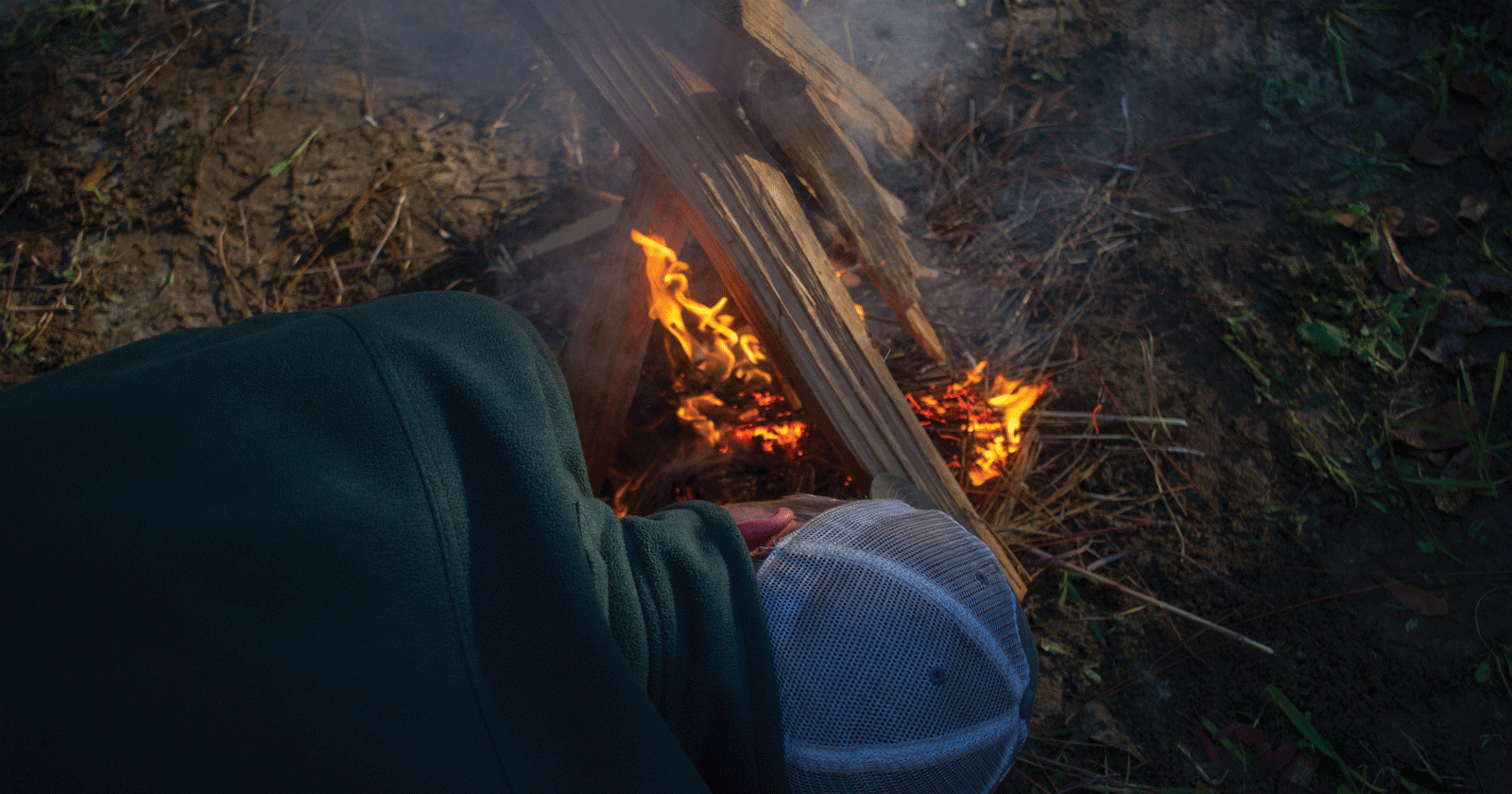
Start with a pile of tinder. On top of the tinder, arrange your small sticks and twigs in a way that resembles a small, lazily-constructed teepee. Continue teepee construction and begin incorporating larger sticks into the mix. Remember to leave gaps in the teepee so that oxygen and an ignition source can find their way into the tinder bundle.
Step 4: Ignition
If the previous steps are followed closely, ignition will be a cinch. There are many methods to igniting a fire. You can rub two sticks together, create a spark from flint and steel, use a magnifying glass. A $0.95 Bic lighter works every time (unless frozen, wet, or misplaced). No matter your chosen method for ignition, tinder is your target. The tinder will take a flame much easier than the larger wooden brethren that surround it. As the flame in the tinder builds, the small sticks reach their ignition temperature. The fire comes to life. As the reaction progresses, large sticks take to flame. Now, you have created a glorious, sustained fire.
Step 5: Enjoy
The circle around a well-built fire is hallowed ground. Humans have come together in this space for endless generations. It is where stories are told, laughs are shared, and friendships are made. A good fire earns its keep. It provides light in dark times and warmth in the cold and asks, only, for another log every now and again.
Just don’t leave it unattended. Fire is also a hungry, wild psychopath with a dark side…
%GALLERY%
Photography by Tyler Dewland
Illustrated by Amanda Davis